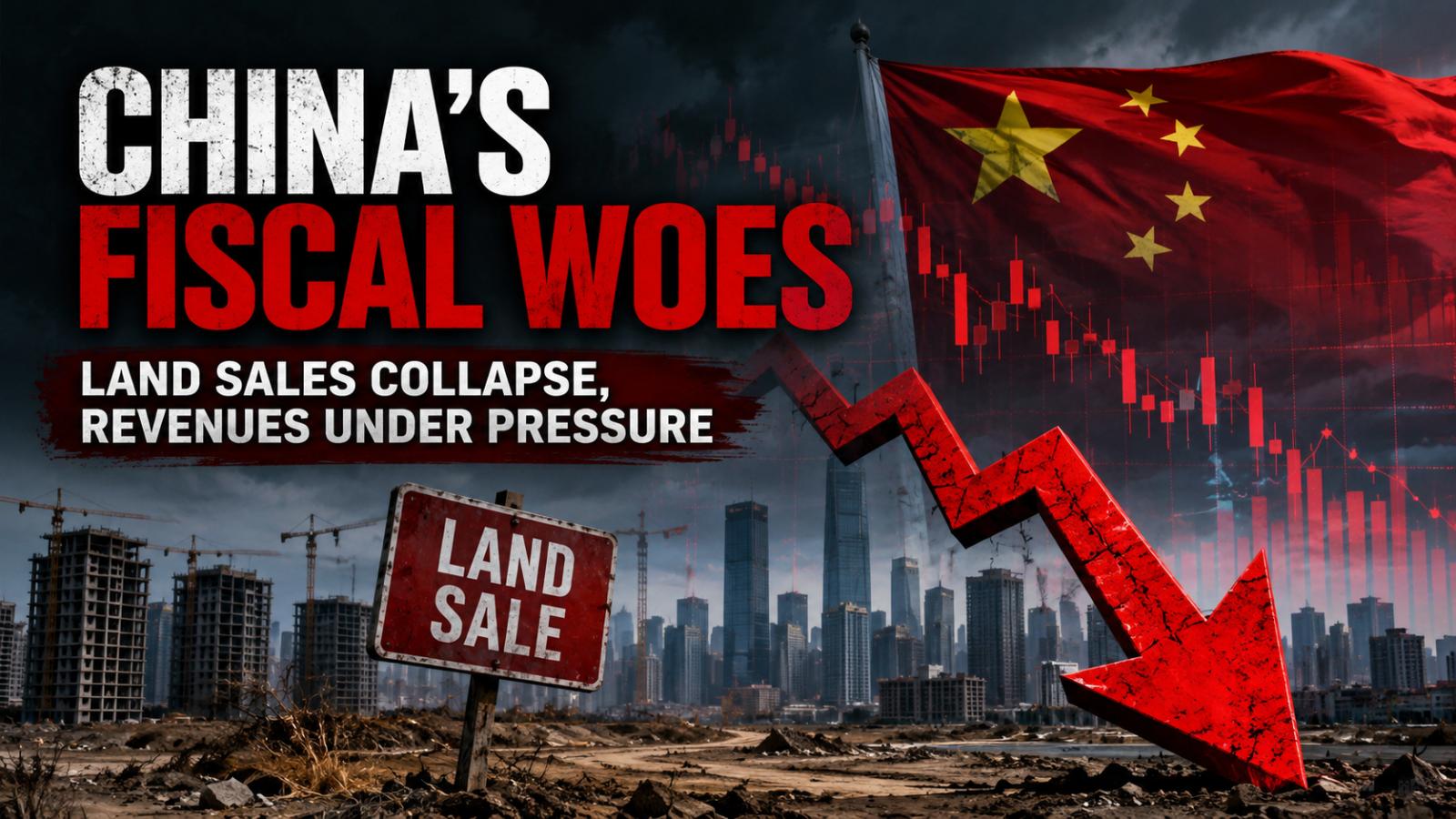
China’s fiscal system is under growing pressure as land sales weaken, property activity remains subdued and government spending continues to exceed revenue. Official figures suggest a deeper shift in how Beijing and local authorities fund services and infrastructure.
Land slump cuts a major funding source
For years, local governments relied heavily on selling land-use rights to developers. That model worked while housing demand, construction activity and land prices were rising. It has become far less dependable since China’s real estate downturn began.
Land-sale revenue reached approximately 8.7 trillion yuan in 2021 but fell to roughly 4.15 trillion yuan in 2025. The decline continued in early 2026, with government land-sale income dropping 27.2% year on year to around 680.1 billion yuan during the first four months, according to Ministry of Finance data. The fall reduces funding available for local development projects.
Local debt pressure grows
Many local authorities built their spending plans around property-related income. When that revenue falls, officials must postpone projects, request larger transfers from Beijing or depend more heavily on borrowing.
China has expanded bond support and refinanced some hidden local liabilities. However, restructuring debt does not create lasting income, while local governments continue to carry large spending responsibilities.
The falling value of land sales also affects financing vehicles created by local authorities to fund infrastructure. Weaker land values can reduce their ability to repay loans or raise money for new projects.
Tax revenue provides limited relief
China’s general public budget revenue declined 1.7% in 2025 to approximately 21.6 trillion yuan, marking its first annual contraction since 2020. Tax revenue increased only 0.8%, while non-tax income fell 11.3%, according to official fiscal figures.
Value-added tax, corporate income tax and individual income tax remain central to government finances. However, weak demand, pressure on company profits and the housing slump make rapid tax revenue growth more difficult.
Securities transaction stamp duty provided one notable improvement, rising 57.8% as stock market activity strengthened. The increase supported government income but remained too narrow to offset weakness across broader revenue sources.
Budget gap remains wide
Government expenditure increased 1% in 2025 to approximately 28.7 trillion yuan, leaving a substantial gap between annual public revenue and spending.
Beijing continues to fund infrastructure, technology programmes, consumer incentives and transfers to local governments even as traditional income sources weaken. The central government can issue debt and redirect funds to support growth, but those measures carry costs and cannot permanently replace a healthy tax base.
Official data show that general public budget revenue improved during the first five months of 2026, rising 4% year on year. However, the continuing decline in land income indicates that the structural pressure on local government finances has not disappeared.
Housing slump tests the fiscal model
China’s economy expanded 5% in 2025, according to the National Bureau of Statistics, but the fiscal data reveal uneven foundations beneath that growth. Property investment remained weak, domestic demand faced pressure and local finances stayed closely connected to the real estate cycle.
Beijing now faces a difficult trade-off. Additional borrowing and public spending can support economic activity in the near term, but they may increase long-term fiscal strain.
A more durable solution would require stronger household consumption, broader local tax sources and less dependence on land finance. Until that transition advances, China’s government revenue model will remain vulnerable to the housing slump, weak demand and rising local debt pressure.