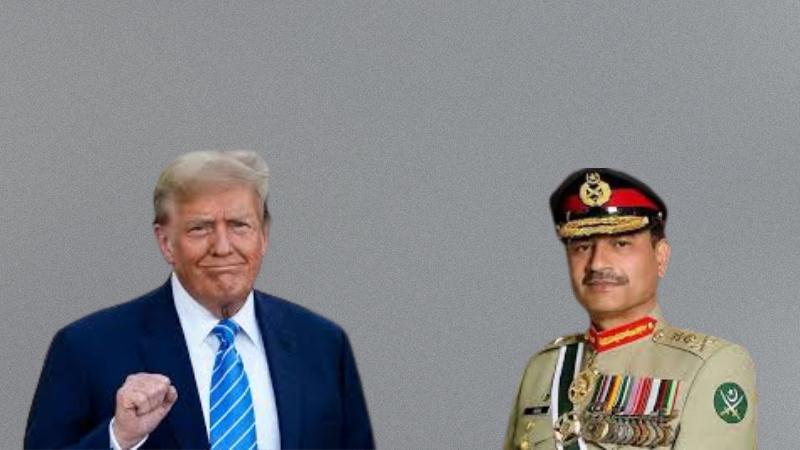
In a significant move reflecting renewed military and diplomatic engagement, United States President Donald Trump hosted Pakistan Army Chief Field Marshal Asim Munir for a private luncheon in Washington, signaling a rare high-level interaction between the leadership of the two countries. Held on Wednesday in the Cabinet Room, the meeting was closed to public and press coverage, but has drawn considerable international attention due to its rarity and timing.
Field Marshal Asim Munir, who took over as Pakistan’s Chief of Army Staff in 2022, is on his second official visit to the United States since assuming the position. His latest trip began last Sunday and included this headline-making engagement with the American President. The meeting marks the first direct interaction between a sitting US President and the Pakistani military leadership in nearly two decades, underlining the strategic importance both nations may be placing on restoring defense dialogue amid shifting regional dynamics.
Historically, direct meetings between the US President and the Pakistani Army Chief have been exceptional. Such exchanges were more common during periods when Pakistan’s military leadership played a formal governing role, and the US was deeply invested in South Asian security affairs, especially during the early 2000s. Over the years, as geopolitical priorities shifted and Pakistan moved toward civilian rule, top-level direct military engagement with Washington had become increasingly infrequent.
This latest meeting is significant given the current global and regional context. There has been speculation about renewed US interest in accessing Pakistani airspace or infrastructure for intelligence-gathering or operational flexibility in the broader region. The conversation likely extended to regional stability, counterterrorism cooperation, and Afghanistan’s evolving security situation, especially considering the security vacuum following the US military's withdrawal and the return of Taliban control.
Pakistan’s geographic and strategic location keeps it relevant in discussions involving regional military logistics and counterterrorism frameworks. The meeting also reflects the role Pakistan’s military continues to play in its foreign policy, often functioning as the principal interlocutor in matters of defense cooperation and security planning. Munir’s presence in Washington at this level signifies continuity in this institutional role and an attempt to maintain influence in strategic dialogues with key powers.
For the United States, the engagement provides an opportunity to assess Pakistan’s current defense posture, its stance on regional developments, and the potential for collaboration on specific security challenges. Amid growing influence from other regional players, such as China, and evolving dynamics in the Middle East and Central Asia, the US appears interested in revisiting some of its older partnerships while adapting to a changed geopolitical landscape.
Although the details of the discussion remain undisclosed, the broader implications are evident. Both sides may be exploring pathways to reestablish reliable defense channels and strategic alignment on issues that affect South and Central Asia. These include cross-border militancy, counter-extremism operations, regional military balance, and nuclear deterrence. The presence of President Trump in a meeting with a foreign military leader outside a multilateral forum also underscores the importance being attached to the occasion.
From Pakistan’s perspective, this visit and meeting serve multiple purposes. Beyond reaffirming military ties, it positions Pakistan as a relevant actor in any regional security framework that the United States may be planning. It also signals Islamabad’s intent to balance its defense diplomacy between traditional partners and emerging global powers. Asim Munir’s engagement in Washington sends a message to multiple audiences—domestic, regional, and international—that Pakistan remains engaged, cooperative, and strategically indispensable.
As regional instability grows, with conflicts and rivalries intensifying across various borders, direct military-to-political interactions like these help establish clarity and forward-looking frameworks. Even if the immediate outcome remains confidential, the symbolism alone carries significant weight. It may lead to further rounds of diplomatic and military dialogue, whether formalized or through backchannels, to build trust and renew coordination.
The meeting between President Donald Trump and Pakistan Army Chief Asim Munir represents a noteworthy moment in international military diplomacy. It signals a revival of strategic conversation between two countries with a complex but enduring relationship. As global security challenges evolve, such direct engagements become essential in managing mutual interests and sustaining regional balance. The visit sets the tone for potential future cooperation and underscores the critical role that military leadership continues to play in shaping bilateral ties in South Asia.
Field Marshal Asim Munir, who took over as Pakistan’s Chief of Army Staff in 2022, is on his second official visit to the United States since assuming the position. His latest trip began last Sunday and included this headline-making engagement with the American President. The meeting marks the first direct interaction between a sitting US President and the Pakistani military leadership in nearly two decades, underlining the strategic importance both nations may be placing on restoring defense dialogue amid shifting regional dynamics.
Historically, direct meetings between the US President and the Pakistani Army Chief have been exceptional. Such exchanges were more common during periods when Pakistan’s military leadership played a formal governing role, and the US was deeply invested in South Asian security affairs, especially during the early 2000s. Over the years, as geopolitical priorities shifted and Pakistan moved toward civilian rule, top-level direct military engagement with Washington had become increasingly infrequent.
This latest meeting is significant given the current global and regional context. There has been speculation about renewed US interest in accessing Pakistani airspace or infrastructure for intelligence-gathering or operational flexibility in the broader region. The conversation likely extended to regional stability, counterterrorism cooperation, and Afghanistan’s evolving security situation, especially considering the security vacuum following the US military's withdrawal and the return of Taliban control.
Pakistan’s geographic and strategic location keeps it relevant in discussions involving regional military logistics and counterterrorism frameworks. The meeting also reflects the role Pakistan’s military continues to play in its foreign policy, often functioning as the principal interlocutor in matters of defense cooperation and security planning. Munir’s presence in Washington at this level signifies continuity in this institutional role and an attempt to maintain influence in strategic dialogues with key powers.
For the United States, the engagement provides an opportunity to assess Pakistan’s current defense posture, its stance on regional developments, and the potential for collaboration on specific security challenges. Amid growing influence from other regional players, such as China, and evolving dynamics in the Middle East and Central Asia, the US appears interested in revisiting some of its older partnerships while adapting to a changed geopolitical landscape.
Although the details of the discussion remain undisclosed, the broader implications are evident. Both sides may be exploring pathways to reestablish reliable defense channels and strategic alignment on issues that affect South and Central Asia. These include cross-border militancy, counter-extremism operations, regional military balance, and nuclear deterrence. The presence of President Trump in a meeting with a foreign military leader outside a multilateral forum also underscores the importance being attached to the occasion.
From Pakistan’s perspective, this visit and meeting serve multiple purposes. Beyond reaffirming military ties, it positions Pakistan as a relevant actor in any regional security framework that the United States may be planning. It also signals Islamabad’s intent to balance its defense diplomacy between traditional partners and emerging global powers. Asim Munir’s engagement in Washington sends a message to multiple audiences—domestic, regional, and international—that Pakistan remains engaged, cooperative, and strategically indispensable.
As regional instability grows, with conflicts and rivalries intensifying across various borders, direct military-to-political interactions like these help establish clarity and forward-looking frameworks. Even if the immediate outcome remains confidential, the symbolism alone carries significant weight. It may lead to further rounds of diplomatic and military dialogue, whether formalized or through backchannels, to build trust and renew coordination.
The meeting between President Donald Trump and Pakistan Army Chief Asim Munir represents a noteworthy moment in international military diplomacy. It signals a revival of strategic conversation between two countries with a complex but enduring relationship. As global security challenges evolve, such direct engagements become essential in managing mutual interests and sustaining regional balance. The visit sets the tone for potential future cooperation and underscores the critical role that military leadership continues to play in shaping bilateral ties in South Asia.