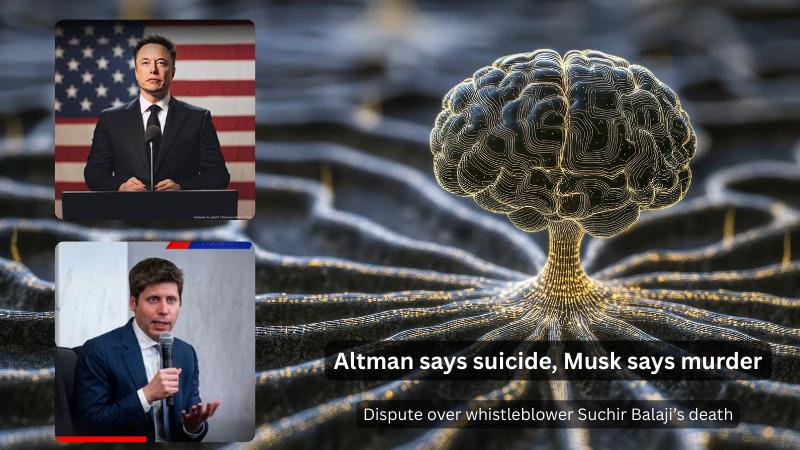
The debate around the tragic death of Indian-origin whistleblower Suchir Balaji has intensified following an interview in which OpenAI CEO Sam Altman spoke publicly on the matter for the first time. Altman described the death of the 32-year-old AI researcher as a suicide, but former Fox host Tucker Carlson openly challenged this claim, repeatedly suggesting that it was murder. The controversy grew further when Tesla and SpaceX chief Elon Musk added his voice, saying Balaji was murdered, escalating tensions around the already sensitive case.
Suchir Balaji had been a researcher at OpenAI for four years and was regarded as a rising figure in artificial intelligence. In late 2024, he made headlines after accusing OpenAI of copyright violations, alleging that the company had used protected material without permission to train its models. Weeks after making these accusations, Balaji was found dead in his apartment in November 2024. His sudden death shocked the tech community, and speculation has surrounded the circumstances ever since.
During the interview, Tucker Carlson pressed Sam Altman on the case. Carlson referred to Balaji’s accusations and directly questioned the circumstances of his death, claiming that he had been murdered. In response, Altman emphasized that the death appeared to him to be suicide, saying that he had spent considerable time reviewing the situation. He added that Balaji had been like a friend to him and that, after carefully considering the available information, he believed it was indeed suicide. Carlson, however, did not accept this conclusion and kept pressing the murder angle.
The situation became more controversial when Elon Musk commented soon after the interview. Musk has long been a vocal critic of OpenAI and its leadership, and he used the moment to argue that Balaji’s death was not suicide but murder. His direct statements contradicted Altman’s remarks, adding fuel to the debate and drawing widespread attention. Musk’s involvement also ensured that the matter quickly spread across social media, with many echoing his claims and demanding greater transparency.
Balaji’s story continues to resonate because it highlights multiple issues. First, there is the unresolved tension between corporate interests and individual researchers who raise ethical or legal concerns. Whistleblowers often face professional and personal risks, and Balaji’s accusations about copyright violations had already put him in the spotlight. Second, his death, occurring so soon after the complaints, has inevitably fueled speculation about whether it was linked to his work or a personal struggle. The conflicting public statements from figures as influential as Sam Altman and Elon Musk have only deepened the confusion.
For Altman, calling it a suicide was also a personal statement. He said Balaji had been close to him and expressed sorrow over the tragedy. His comments reflected both a professional defense of OpenAI and a personal attempt to address the loss of someone he considered a friend. For Carlson and Musk, however, the framing of the death as murder raises questions about whether the official narrative can be trusted. Their insistence on foul play has led to a renewed wave of discussions online, with calls for further investigations into the circumstances of Balaji’s death.
The case also underlines the increasing scrutiny on the artificial intelligence industry. With AI systems becoming central to global business and politics, concerns about how these systems are developed, what data they use, and who controls them have grown sharper. Whistleblowers like Balaji represent the voices that challenge corporate secrecy, and their treatment becomes symbolic of the industry’s larger accountability issues. His death, whether by suicide as Altman believes or by something darker as Musk insists, has therefore become a flashpoint in broader debates about ethics, transparency, and corporate responsibility in technology.
As of now, there is no official confirmation that contradicts the suicide ruling, but the claims made by prominent figures have ensured that public doubt remains strong. For many, the unresolved questions about Suchir Balaji’s death will continue to linger until further details emerge. What is certain is that the tragedy has cast a long shadow over OpenAI, drawn public attention to whistleblower protection in the tech industry, and sparked one of the most heated debates involving some of the most influential voices in technology today.