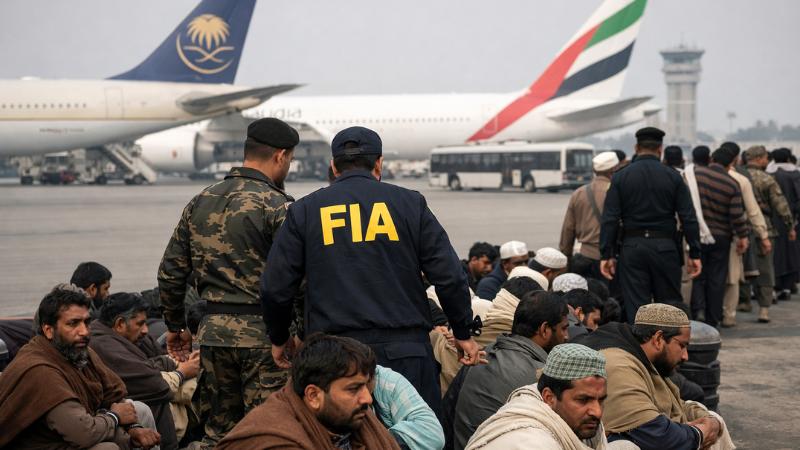
Despite stricter visa regimes, no-fly lists, and repeated warnings from both domestic and foreign authorities, thousands of Pakistani citizens continue to travel abroad or attempt to do so for the purpose of begging, particularly in Gulf nations. Recent disclosures to Pakistan’s National Assembly reveal the scale of the challenge, underscoring concerns about organised networks exploiting pilgrimage and tourist visas to reach foreign destinations.
Saudi Arabia has deported approximately 56,000 Pakistani nationals over allegations of organised begging, according to figures presented by a parliamentary panel. The issue has persisted even as Pakistani authorities intensified their own preventive measures. In 2025 alone, the Federal Investigation Agency offloaded 66,154 passengers at airports across the country after identifying them as suspected members of begging rings or individuals likely to engage in illegal activities overseas. These actions followed multiple complaints from host countries and diplomatic engagements urging Islamabad to take stronger steps.
The problem has become particularly sensitive in Saudi Arabia, home to Islam’s holiest sites. Riyadh had earlier asked Pakistan to prevent the misuse of Umrah visas after reports that individuals were travelling to Mecca and Medina under the guise of pilgrimage but were instead involved in begging. Officials have warned that such practices not only violate visa conditions but also strain bilateral relations and tarnish Pakistan’s international image.
Concerns are not limited to Saudi Arabia. Last month, the United Arab Emirates sharply curtailed visa issuance to most Pakistani citizens, citing worries over criminal activity and organised begging by some arrivals. Pakistani beggars have also been reported in other countries, including Kuwait, Bahrain, and Azerbaijan, prompting broader scrutiny of travel patterns from Pakistan to West Asia and beyond.
Addressing a parliamentary committee, Federal Investigation Agency Director General Riffat Mukhtar stated that organised begging and illegal migration networks had caused significant reputational damage to Pakistan. He noted that these groups often exploit vulnerable individuals and bypass safeguards by repeatedly attempting to travel, even after deportations or placement on the Exit Control List. According to the FIA, thousands of names have been added to the ECL as part of an effort to dismantle these networks and prevent repeat offenders from leaving the country.
Public frustration has also surfaced on social media, with some Pakistani pilgrims expressing embarrassment over encountering fellow nationals begging in religious and commercial spaces abroad. Such accounts have added urgency to calls for stronger enforcement, rehabilitation measures, and economic interventions at home to address the root causes driving people into organised begging.
Officials acknowledge that enforcement alone may not be sufficient. While offloading passengers and coordinating with foreign governments have reduced some outbound travel, the continued attempts highlight deeper socioeconomic pressures. Lawmakers have urged a combination of stricter border controls, tougher penalties for traffickers, and expanded social welfare programmes to deter vulnerable citizens from falling prey to organised begging rings.
As Gulf nations tighten visa policies and deportations continue, Pakistan faces increasing pressure to demonstrate that it can effectively curb the exploitation of its citizens abroad. The issue remains a test of the country’s ability to balance migration control, international credibility, and domestic economic challenges in an increasingly interconnected region.