GLP-1 Drugs Drive Pharma Growth
GLP-1 weight loss drugs are powering a sharp rebound in pharma R&D returns, but analysts warn the boom may be creating a risky “bubble effect” across the sector.
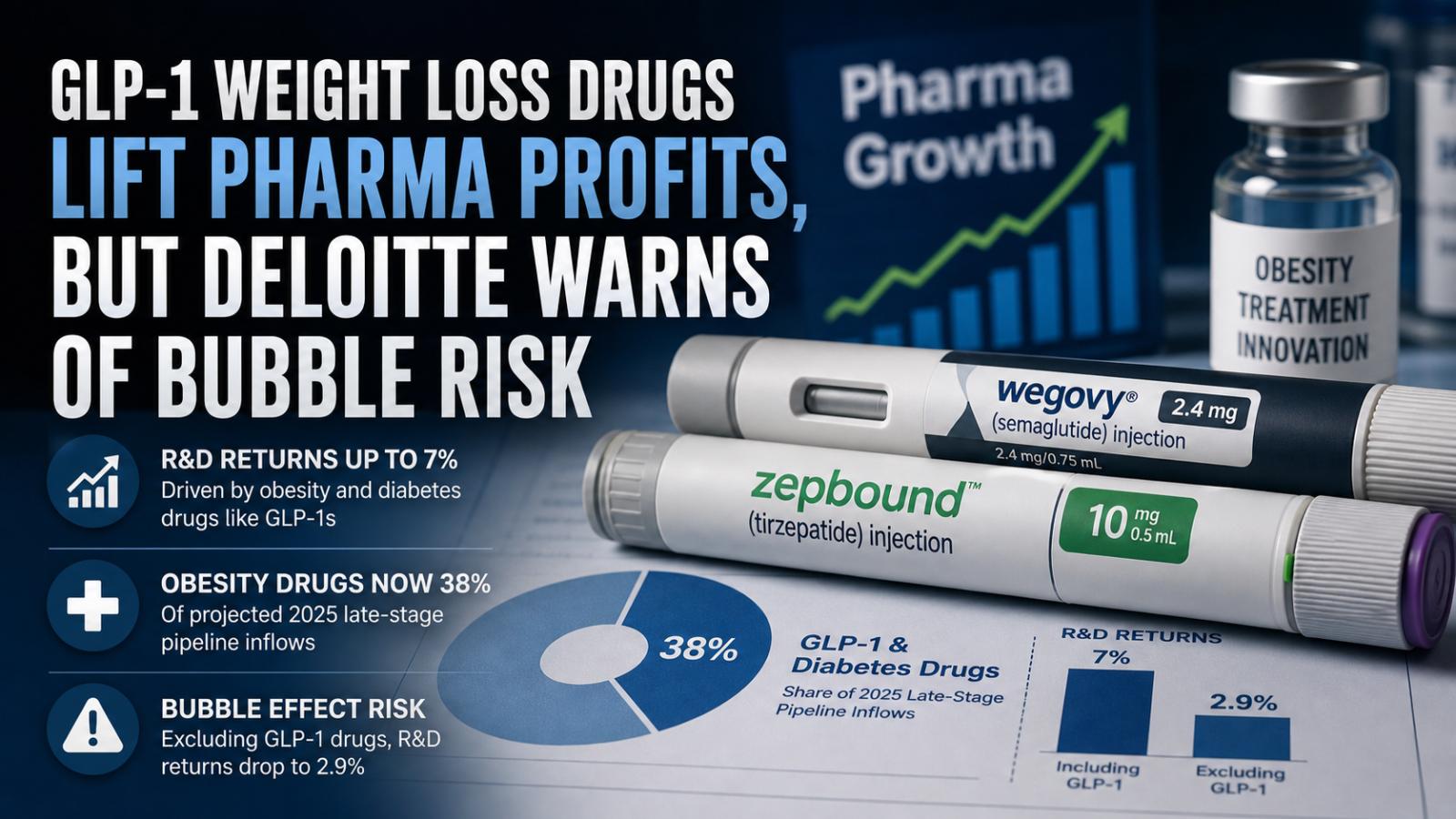
According to Deloitte’s latest pharma innovation analysis, R&D returns among the world’s top 20 drugmakers have climbed to 7%, driven largely by obesity and diabetes treatments such as GLP-1 drugs.
Obesity Drugs Overtake Oncology
For the first time in 16 years, obesity drugs have overtaken oncology as the biggest contributor to late-stage pipeline value. GLP-1 and related diabetes drugs now account for about 38% of projected commercial inflows from the 2025 pipeline.
Obesity treatments alone represent nearly a quarter of expected late-stage sales, showing how fast demand for weight loss drugs such as Wegovy and Zepbound has reshaped Big Pharma strategy.
Why Analysts See Market Risk
The concern is concentration. Deloitte’s analysis shows that without GLP-1 assets, industry R&D returns would fall to 2.9%, exposing weaker productivity across other therapy areas.
That means pharma profits look strong, but much of the momentum depends on a narrow group of blockbuster drugs. Officials and analysts say companies may need broader pipelines to protect against pricing pressure, regulation, safety concerns, or demand shifts.
For patients, the GLP-1 boom signals faster innovation in obesity treatment and diabetes care. For investors, it raises a sharper question: is this sustainable growth, or is pharma leaning too heavily on one breakthrough category?