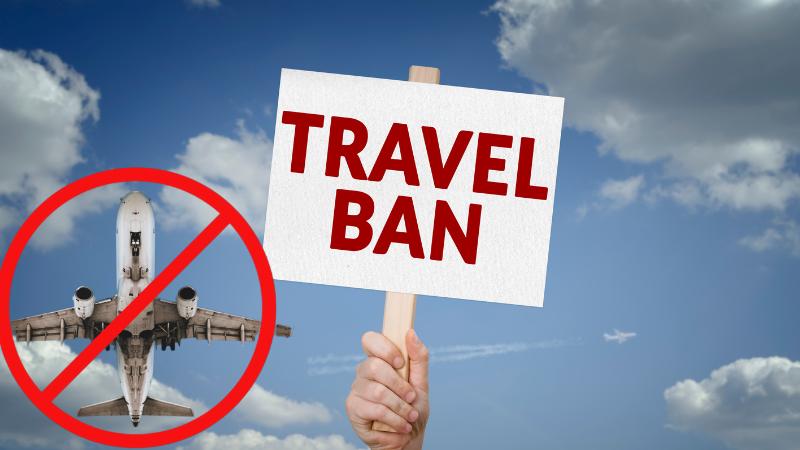
Washington: In a major policy move reminiscent of his earlier presidency, US President Donald Trump has signed a sweeping new executive order placing fresh travel restrictions on citizens of 12 countries and partial limitations on seven others. The directive, which the White House confirmed will go into effect on Monday, targets nationals of Afghanistan, Iran, Yemen, Myanmar, Chad, the Republic of the Congo, Equatorial Guinea, Eritrea, Haiti, Libya, Somalia, and Sudan. A separate but related order imposes partial entry bans on individuals from Burundi, Cuba, Laos, Sierra Leone, Togo, Turkmenistan, and Venezuela.
The announcement came shortly after a violent incident in Colorado, where a man identified as Mohammed Sabry Soliman allegedly carried out a firebomb-style attack during a Jewish solidarity protest. Authorities reported that Soliman had entered the United States on a tourist visa and later applied for asylum, but had overstayed his visa and was living in the country illegally. President Trump, referencing the attack, framed the new travel ban as a necessary measure to prevent similar incidents and to safeguard American citizens from what he described as dangerous foreign actors.
In a video message from the Oval Office posted on his official social media channels, Trump drew direct parallels between this latest travel ban and the one implemented during his first term, which had also sparked global controversy. He stated that the prior ban had protected the United States from the types of terrorist attacks that occurred in Europe and reaffirmed his stance against permitting entry from nations that the US government cannot safely and reliably vet. According to Trump, the newly listed countries either lack functioning central governments or fail to cooperate on critical identity verification and intelligence-sharing matters.
The presidential proclamation emphasized that countries like Afghanistan, Somalia, Libya, Sudan, and Yemen do not have competent authorities for proper passport verification or vetting procedures. Yemen, the proclamation noted, is also an active site for US military operations against Iran-backed Houthi rebels. Iran was included in the ban due to its classification as a state sponsor of terrorism, despite ongoing diplomatic efforts surrounding a potential nuclear agreement. For several other nations, the order cited issues such as high visa overstay rates and failure to meet information-sharing requirements as justification for the restrictions.
Unusually, the announcement of this major policy shift was not accompanied by a press conference or formal Oval Office signing ceremony. Instead, the White House released details shortly after Trump spoke to thousands of political appointees at a celebratory event dubbed the “summer soiree.” The lack of a traditional media unveiling contrasts with Trump's typical pattern of promoting executive orders during high-profile press events.
The administration defended the decision by citing a comprehensive evaluation of national security threats and immigration patterns. Homeland Security officials maintained that the countries listed in the executive order pose challenges related to identity verification, fraud prevention, and border control. They pointed to systemic failures in issuing and authenticating official documents, lack of cooperation with international law enforcement, and high incidents of asylum fraud or visa overstays.
White House Deputy Press Secretary Abigail Jackson underscored that the restrictions are country-specific and based on objective criteria, adding that the administration is committed to protecting the homeland from unvetted foreign nationals who could pose potential threats. According to her statement, these measures are “commonsense restrictions” aimed at ensuring national security and public safety.
The executive order is already attracting significant attention and is expected to face legal challenges similar to those that surrounded the original travel ban enacted during Trump’s first term. Critics argue that such measures disproportionately target vulnerable populations and asylum seekers, while supporters claim they are necessary for maintaining domestic security.
In a parallel move, President Trump also announced a separate restriction that would bar visas for new international students planning to attend Harvard University. The decision is seen by some observers as a direct swipe at institutions perceived by Trump to be ideologically opposed to his administration.
As legal experts and advocacy groups prepare to contest the new orders in court, the broader implications for international travel, diplomatic relations, and immigration policy remain uncertain. However, with Trump doubling down on his commitment to a strict immigration agenda, the return of sweeping travel bans signals a hardline stance that is likely to define his current tenure in office.