A student from India, who had secured admission into the Applied Data Science graduate program at Indiana University Bloomington, faced a sudden and disappointing turn of events during his F-1 visa interview at the US Consulate in Hyderabad on May 30, 2025. Despite having all necessary documentation and having passed the initial rounds of questioning smoothly, his visa was denied following a series of unexpected technical questions that marked a clear departure from the usual visa interview approach. This incident has raised concerns among prospective international students, especially those applying for STEM (Science, Technology, Engineering, Mathematics) programs, about the shifting patterns in US visa interview protocols.
The interview began in a routine manner, with the consular officer asking the student about his current academic status, the universities he had applied to, and specific details related to his undergraduate project. After this, the discussion moved toward his motivation for choosing Indiana University Bloomington and why he opted for the Applied Data Science track. These responses were met with brief acknowledgments, but the atmosphere in the interview room quickly shifted when the visa officer unexpectedly began to quiz the student on subject-specific technical content. The student, though academically prepared, had not anticipated such detailed questioning in a visa interview context, where the focus is generally on financial stability, academic intent, and ties to the home country.
Despite the student’s efforts to answer the questions, the interview ended with a denial, leaving him both shocked and disheartened. This development points toward a larger trend wherein US consular officials are now placing increased emphasis on verifying the technical competency and seriousness of graduate-level STEM applicants. It appears that the goal is to ensure that incoming students are genuinely aligned with their proposed academic fields and not using educational pathways as backdoor entry into the US job market. Such measures, however, may inadvertently penalize legitimate students who are well-qualified but unprepared for an oral technical defense during a short visa interview.
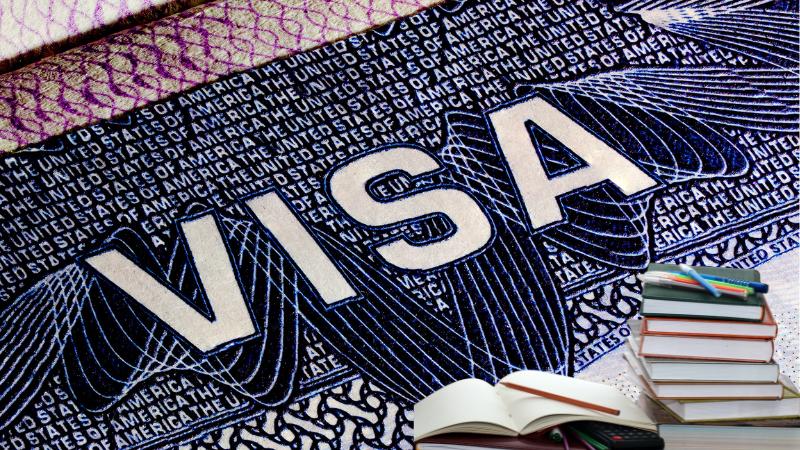
The F-1 visa remains the most widely used visa for international students wishing to pursue full-time academic programs in the United States. It grants entry into the US up to 30 days before the program start date and mandates full-time enrollment throughout the academic year. Students are permitted to work on campus for up to 20 hours per week while classes are in session. Moreover, F-1 visa holders in STEM fields can benefit from Optional Practical Training (OPT) and Curricular Practical Training (CPT), which allow them to gain work experience relevant to their studies. OPT provides up to 12 months of work authorization after graduation, with the possibility of a 24-month extension for qualified STEM degree holders.
In recent months, several proposed reforms have emerged, including extending the duration of STEM OPT, expanding the list of eligible degree programs, and modifying the H-1B visa selection process. These changes aim to attract more skilled international talent, especially in high-demand fields like data science, artificial intelligence, and cybersecurity. However, the increase in technical scrutiny during visa interviews signals a parallel push for tighter vetting standards. This includes ensuring that students have not only the right intent but also the academic depth to pursue their chosen fields effectively in the United States.
While the exact reasoning behind this specific visa refusal was not formally disclosed, the nature of the questions and the student’s feedback suggest that technical evaluation played a significant role. Cases like this underline the importance of being thoroughly prepared—not just with documents and statements of purpose—but also with subject knowledge that might be unexpectedly tested. Prospective students, particularly those in STEM fields, may need to approach visa interviews with the same seriousness as an academic oral exam, ensuring that they can speak competently about their chosen discipline, previous projects, and future academic goals.
This incident is one among several anecdotal cases indicating that consular officers across US embassies and consulates in India may be adopting a stricter and more subject-oriented approach during interviews. As the US continues to refine its immigration and student visa policies, such trends are likely to become more pronounced, prompting students and counselors to rethink preparation strategies. While the intention might be to uphold academic integrity and national interest, the unpredictability of such rejections could affect the confidence of genuine students looking to study in the United States.
The student in question now faces the challenge of reapplying, potentially rebooking standardized exams, and reconsidering his educational plans for the Fall 2025 intake. His experience serves as a cautionary tale for thousands of Indian students aspiring to study abroad this year. The F-1 visa process, though fundamentally meant to facilitate academic exchange, is evolving into a more rigorous checkpoint—one that now demands both procedural correctness and academic clarity from applicants.