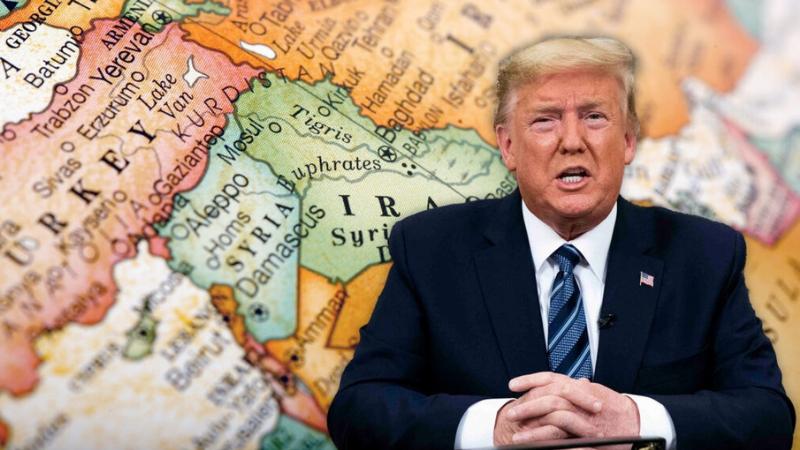
President Donald Trump has announced a major trade deal with Indonesia, declaring that the United States will now enjoy full market access to the Southeast Asian country. According to the President, Indonesia will impose a reduced 19% tariff on its exports to the United States, while American exports to Indonesia will be completely exempt from both tariffs and non-tariff barriers. In his statement, Trump also claimed that India is working along the same lines as Indonesia in its ongoing trade talks with Washington.
Speaking at a press briefing, President Trump emphasized the significance of the agreement, stating that this marks a historic breakthrough for American exporters. He explained that in the past, the US had limited to no access to Indonesia’s markets, but under this new deal, American companies would now enjoy unrestricted trade in energy, agriculture, aviation, and other sectors. The agreement includes Indonesia’s commitment to purchasing $15 billion worth of US energy products, $4.5 billion in agricultural goods, and 50 Boeing aircraft, many of which are the long-range 777 model.
Trump stated, “We made a deal with Indonesia. I spoke to their really great president, and we made the deal. We have full access to Indonesia — everything. As you know, Indonesia is very strong on copper, but we now have full access to everything. They are going to pay 19%, and we will pay no tariffs. That’s probably the biggest part of the deal.”
He further added, “India is basically working along that same line. We’re going to have access into India. You have to understand, we had no access to any of these countries. Our people couldn’t go in, and now we’re getting access because of what we’re doing with the tariffs.”
His remarks come at a time when India and the United States are engaged in high-level trade negotiations. Indian officials have publicly stated that any agreement will be pursued in accordance with India’s national interest. India maintains that it negotiates trade deals without external pressure or arbitrary deadlines, and that long-term strategic priorities guide its approach.
Providing additional details about the Indonesia deal, Trump said that a prior 32% tariff had been imposed on Indonesian goods after the two sides failed to reach an agreement during a 90-day negotiation window. With this new deal in place, the tariff has now been reduced to 19%. Trump also warned that if any goods are rerouted through Indonesia from countries with higher tariffs, those original tariff rates would still apply to prevent backdoor transshipments.
“This landmark deal opens up Indonesia’s entire market to the United States for the first time in history,” the President said. “For the first time ever, our ranchers, farmers, and fishermen will have complete and total access to the Indonesian market of over 280 million people.”
The deal is being described as part of a broader US strategy to recalibrate trade ties across the Indo-Pacific, especially with economies that have previously had limited engagement with American industries. Trump’s negotiation strategy, which relies on tariff leverage to open up foreign markets, continues to define the current administration’s approach to trade diplomacy.
The mention of India signals that Washington is eager to reach a similar understanding with New Delhi, particularly in areas such as defense, technology, agriculture, and energy. Although no formal deal has been signed between India and the US, discussions have reportedly intensified over the past several months.
India, for its part, has emphasized its commitment to balanced and fair trade relationships that also protect domestic sectors. Observers note that while India is unlikely to fully replicate the Indonesia model, it may adopt a similar framework in specific sectors where both countries have aligned interests.
The Indonesia deal reflects the administration's push toward bilateral trade partnerships that deliver immediate economic benefits and remove trade imbalances. It also underscores the shift away from older multilateral frameworks, as individual agreements allow the US to exert greater control over the terms and outcomes.
As negotiations with India continue, it remains to be seen how closely the two sides align. However, the President's comments make it clear that he views full market access and tariff elimination as central goals in any future agreement with India. The coming weeks are expected to provide more clarity as both countries work toward finalizing trade frameworks that serve their respective economic goals. Until then, the US-Indonesia deal stands as a major statement of intent in the administration’s global trade agenda.
Speaking at a press briefing, President Trump emphasized the significance of the agreement, stating that this marks a historic breakthrough for American exporters. He explained that in the past, the US had limited to no access to Indonesia’s markets, but under this new deal, American companies would now enjoy unrestricted trade in energy, agriculture, aviation, and other sectors. The agreement includes Indonesia’s commitment to purchasing $15 billion worth of US energy products, $4.5 billion in agricultural goods, and 50 Boeing aircraft, many of which are the long-range 777 model.
Trump stated, “We made a deal with Indonesia. I spoke to their really great president, and we made the deal. We have full access to Indonesia — everything. As you know, Indonesia is very strong on copper, but we now have full access to everything. They are going to pay 19%, and we will pay no tariffs. That’s probably the biggest part of the deal.”
He further added, “India is basically working along that same line. We’re going to have access into India. You have to understand, we had no access to any of these countries. Our people couldn’t go in, and now we’re getting access because of what we’re doing with the tariffs.”
His remarks come at a time when India and the United States are engaged in high-level trade negotiations. Indian officials have publicly stated that any agreement will be pursued in accordance with India’s national interest. India maintains that it negotiates trade deals without external pressure or arbitrary deadlines, and that long-term strategic priorities guide its approach.
Providing additional details about the Indonesia deal, Trump said that a prior 32% tariff had been imposed on Indonesian goods after the two sides failed to reach an agreement during a 90-day negotiation window. With this new deal in place, the tariff has now been reduced to 19%. Trump also warned that if any goods are rerouted through Indonesia from countries with higher tariffs, those original tariff rates would still apply to prevent backdoor transshipments.
“This landmark deal opens up Indonesia’s entire market to the United States for the first time in history,” the President said. “For the first time ever, our ranchers, farmers, and fishermen will have complete and total access to the Indonesian market of over 280 million people.”
The deal is being described as part of a broader US strategy to recalibrate trade ties across the Indo-Pacific, especially with economies that have previously had limited engagement with American industries. Trump’s negotiation strategy, which relies on tariff leverage to open up foreign markets, continues to define the current administration’s approach to trade diplomacy.
The mention of India signals that Washington is eager to reach a similar understanding with New Delhi, particularly in areas such as defense, technology, agriculture, and energy. Although no formal deal has been signed between India and the US, discussions have reportedly intensified over the past several months.
India, for its part, has emphasized its commitment to balanced and fair trade relationships that also protect domestic sectors. Observers note that while India is unlikely to fully replicate the Indonesia model, it may adopt a similar framework in specific sectors where both countries have aligned interests.
The Indonesia deal reflects the administration's push toward bilateral trade partnerships that deliver immediate economic benefits and remove trade imbalances. It also underscores the shift away from older multilateral frameworks, as individual agreements allow the US to exert greater control over the terms and outcomes.
As negotiations with India continue, it remains to be seen how closely the two sides align. However, the President's comments make it clear that he views full market access and tariff elimination as central goals in any future agreement with India. The coming weeks are expected to provide more clarity as both countries work toward finalizing trade frameworks that serve their respective economic goals. Until then, the US-Indonesia deal stands as a major statement of intent in the administration’s global trade agenda.