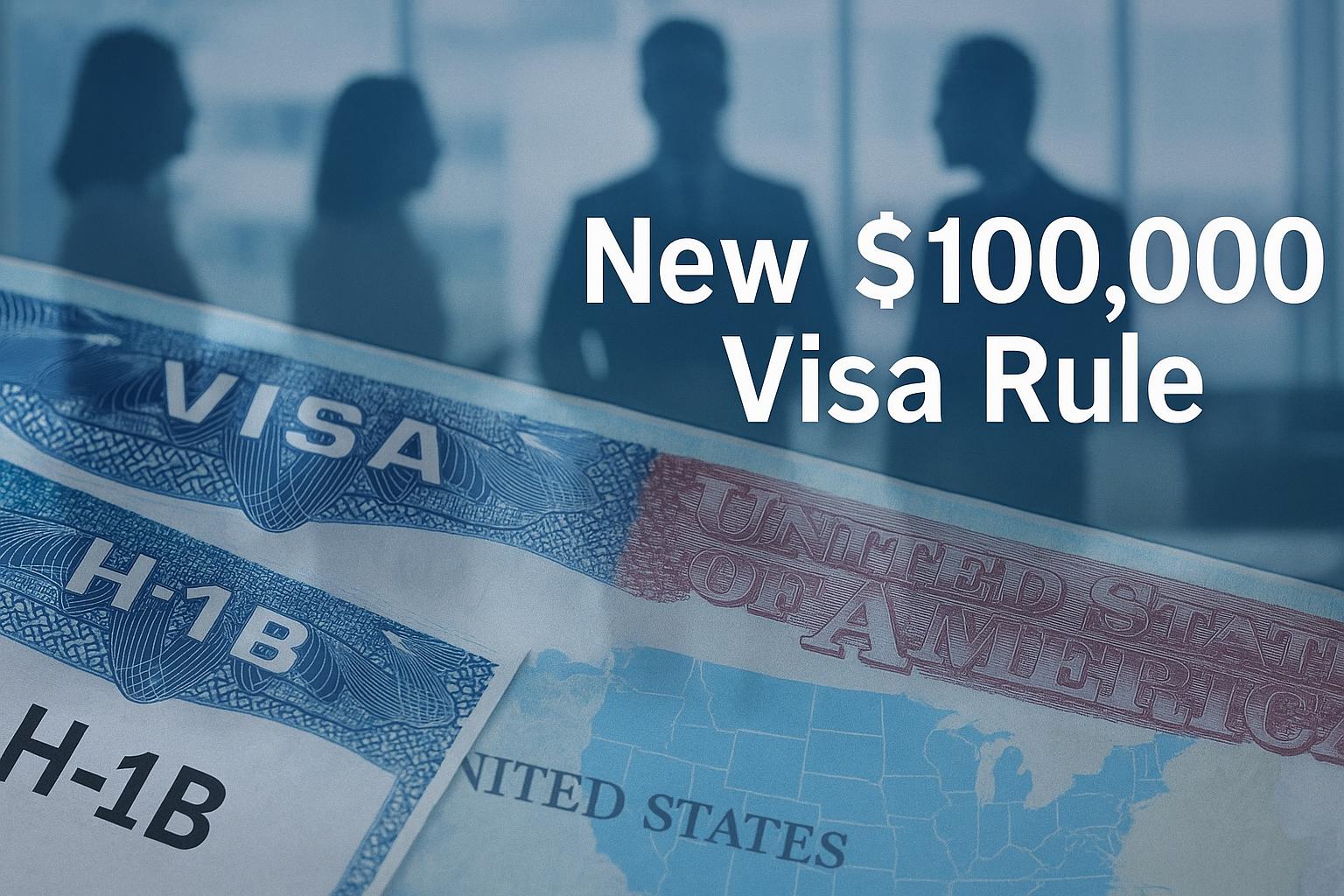
A new visa policy introduced under the Trump administration has sent shockwaves through the United States job market, particularly affecting international professionals and technology firms. The government now mandates that employers pay a $100,000 fee for each new H-1B visa application, a move officials claim will curb abuse of the visa system and encourage hiring of American citizens. However, the measure has been met with widespread criticism from business leaders and immigration advocates who argue that it could hinder innovation and make it harder for US firms to attract top global talent.
The H-1B visa program allows US companies to temporarily employ highly skilled foreign professionals in specialized fields such as technology, engineering, and healthcare. It has long been a cornerstone of the American tech industry, enabling firms to fill crucial skill gaps. Critics of the new policy warn that the exorbitant fee could deter companies—particularly startups and mid-sized firms—from hiring qualified candidates from abroad. The US Chamber of Commerce has described the policy as economically burdensome and has filed a legal challenge against it.
Among the first to respond to the rule change is Cognizant, one of the largest employers of Indian IT professionals in the US. The company has begun revising its job listings to specify that only candidates already authorized to work in the United States can apply, effectively limiting opportunities for foreign professionals who rely on visa sponsorship. A Cognizant spokesperson stated that the adjustment would have a “limited near-term impact” on business operations, pointing to the company’s broad global presence and adaptability.
Tata Consultancy Services (TCS), one of the world’s top H-1B visa sponsors, announced a more sweeping response. The Indian IT major has decided to stop hiring through the program altogether. TCS CEO K. Krithivasan explained that the company has “significantly localized its US workforce” in recent years and remains committed to hiring locally in line with changing immigration policies. Chief Human Resources Officer Sudeep Kunnumal added that localization efforts are strengthening the company’s client relationships and ensuring compliance with evolving US regulations.
In the medical technology sector, California-based Intuitive Surgical has temporarily halted all H-1B sponsorships. The company cited uncertainty surrounding the new executive directive as the reason for the pause. More than a hundred job listings on its website now carry a disclaimer informing candidates that visa sponsorships are on hold until further notice. The suspension affects a range of roles across engineering, research, and operations.
Retail giant Walmart, which employs over 2,400 H-1B visa holders, has also joined the growing list of companies reassessing their sponsorship policies. A company spokesperson emphasized that Walmart remains “committed to hiring and investing in the best talent,” but is adopting a cautious approach to ensure compliance with the government’s directive.
Supporters of the policy argue that the $100,000 fee is necessary to protect American workers and discourage overreliance on foreign labor. They contend that it will motivate firms to invest in local training and skill development. However, economists and legal experts warn that the policy could have unintended consequences for the US economy. Many fear that such restrictions will discourage innovation and make the United States less attractive to global talent, especially in sectors already facing significant skill shortages.
The implications for Indian professionals are particularly serious. Thousands of engineers, IT specialists, and STEM graduates who look to the H-1B visa as a gateway to US employment now face limited opportunities. For many, this policy shift represents a tightening of an already competitive process.
As the debate continues, industry leaders and legal analysts are closely watching whether the courts will uphold or challenge the administration’s authority to impose the new fee. For now, the policy has created uncertainty across the technology and corporate landscape—signaling a major turning point in how the United States approaches skilled immigration and global workforce integration.