







#uspolicy

New GPT 5.6 series rollout tied to US government AI security framework
OpenAI begins restricted rollout of new AI model series OpenAI has launched a limited preview of its latest artificial intelligence model series in the United States, restricting access to a small group of trusted partners following coordination with government authorities. The rollout marks one of the most controlled releases in the company’s history, reflecting growing regulatory attention around advanced AI systems and their potential national security implications. Government oversight shapes early deployment strategy The preview follows increased scrutiny from US policymakers, including a recent executive order establishing a voluntary federal review framework for high-capability AI models prior to public release. Under the arrangement, OpenAI briefed government officials on the capabilities of its new models before deployment. Access has been limited to selected US-based organisations, although employees working outside the United States within those organisations may still interact with the system under controlled conditions. The company stated that the decision to restrict access was made in coordination with authorities overseeing AI risk management. GPT 5.6 series introduces tiered model architecture The newly introduced GPT 5.6 series includes three distinct models designed for different use cases. The flagship model, Sol, is positioned for high-performance tasks requiring advanced reasoning capabilities. Terra is optimized for general-purpose applications and everyday workloads, while Luna is designed as a faster and lower-cost alternative for scalable deployment. OpenAI also indicated that once the models are broadly released, Terra will be priced significantly lower than its predecessor, reflecting competitive pressure in the AI sector. Broader US policy shifts impact AI ecosystem The controlled rollout comes amid broader regulatory changes affecting the artificial intelligence industry. In a parallel development, US authorities recently adjusted restrictions on competing AI systems, allowing wider institutional access to previously constrained models following earlier national security concerns. These policy shifts highlight an evolving approach in Washington, balancing innovation in AI development with safeguards intended to reduce misuse risks. The developments also underscore intensifying competition among major AI firms as governments increasingly play a direct role in shaping deployment boundaries.
New GPT 5.6 series rollout tied to US government AI security framework
OpenAI begins restricted rollout of new AI model series OpenAI has launched a limited preview of its latest artificial intelligence model series in the United States, restricting access to a small group of trusted partners following coordination with government authorities. The rollout marks one of the most controlled releases in the company’s history, reflecting growing regulatory attention around advanced AI systems and their potential national security implications. Government oversight shapes early deployment strategy The preview follows increased scrutiny from US policymakers, including a recent executive order establishing a voluntary federal review framework for high-capability AI models prior to public release. Under the arrangement, OpenAI briefed government officials on the capabilities of its new models before deployment. Access has been limited to selected US-based organisations, although employees working outside the United States within those organisations may still interact with the system under controlled conditions. The company stated that the decision to restrict access was made in coordination with authorities overseeing AI risk management. GPT 5.6 series introduces tiered model architecture The newly introduced GPT 5.6 series includes three distinct models designed for different use cases. The flagship model, Sol, is positioned for high-performance tasks requiring advanced reasoning capabilities. Terra is optimized for general-purpose applications and everyday workloads, while Luna is designed as a faster and lower-cost alternative for scalable deployment. OpenAI also indicated that once the models are broadly released, Terra will be priced significantly lower than its predecessor, reflecting competitive pressure in the AI sector. Broader US policy shifts impact AI ecosystem The controlled rollout comes amid broader regulatory changes affecting the artificial intelligence industry. In a parallel development, US authorities recently adjusted restrictions on competing AI systems, allowing wider institutional access to previously constrained models following earlier national security concerns. These policy shifts highlight an evolving approach in Washington, balancing innovation in AI development with safeguards intended to reduce misuse risks. The developments also underscore intensifying competition among major AI firms as governments increasingly play a direct role in shaping deployment boundaries.
Iran proposal on shipping charges draws US criticism
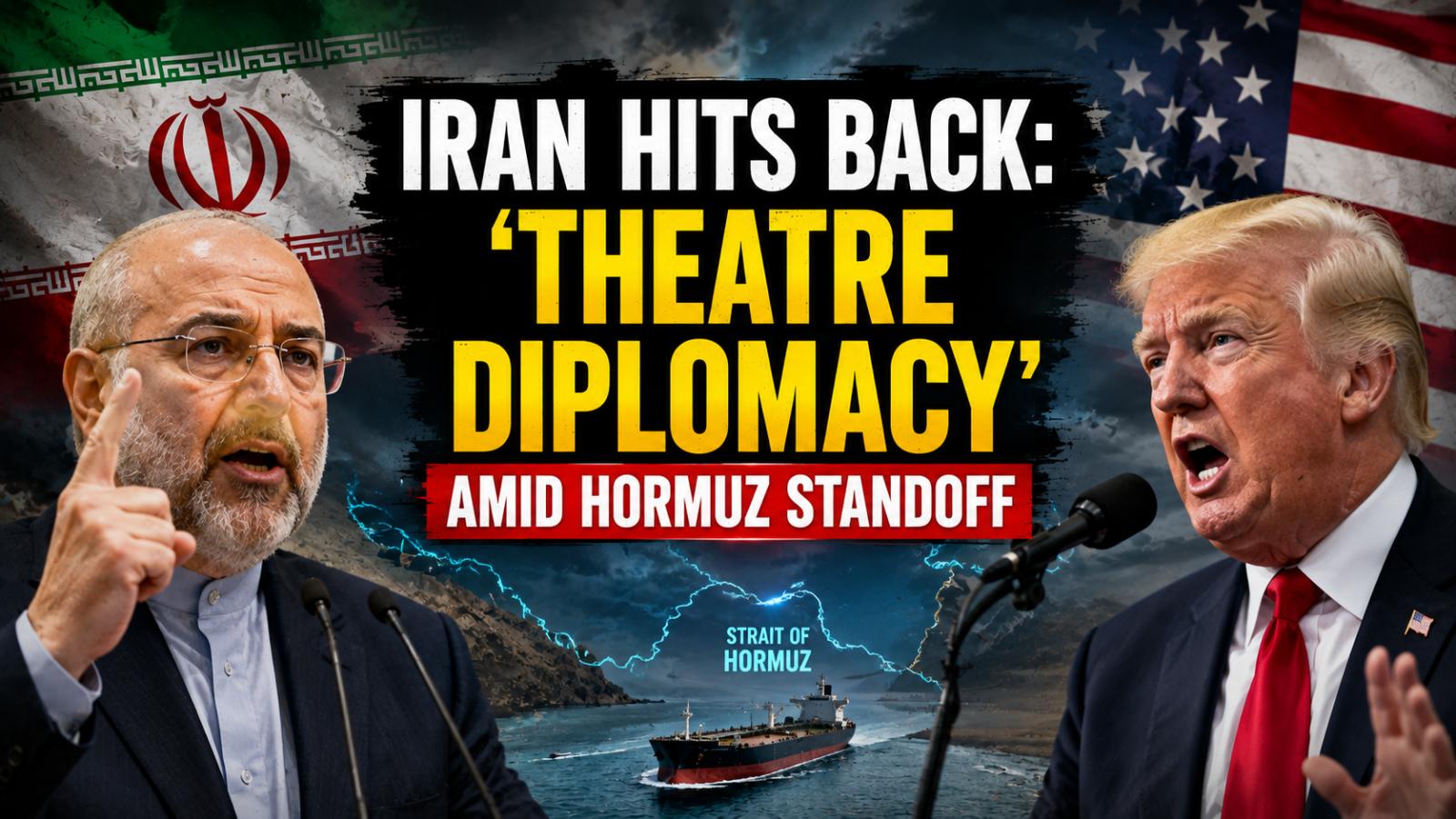
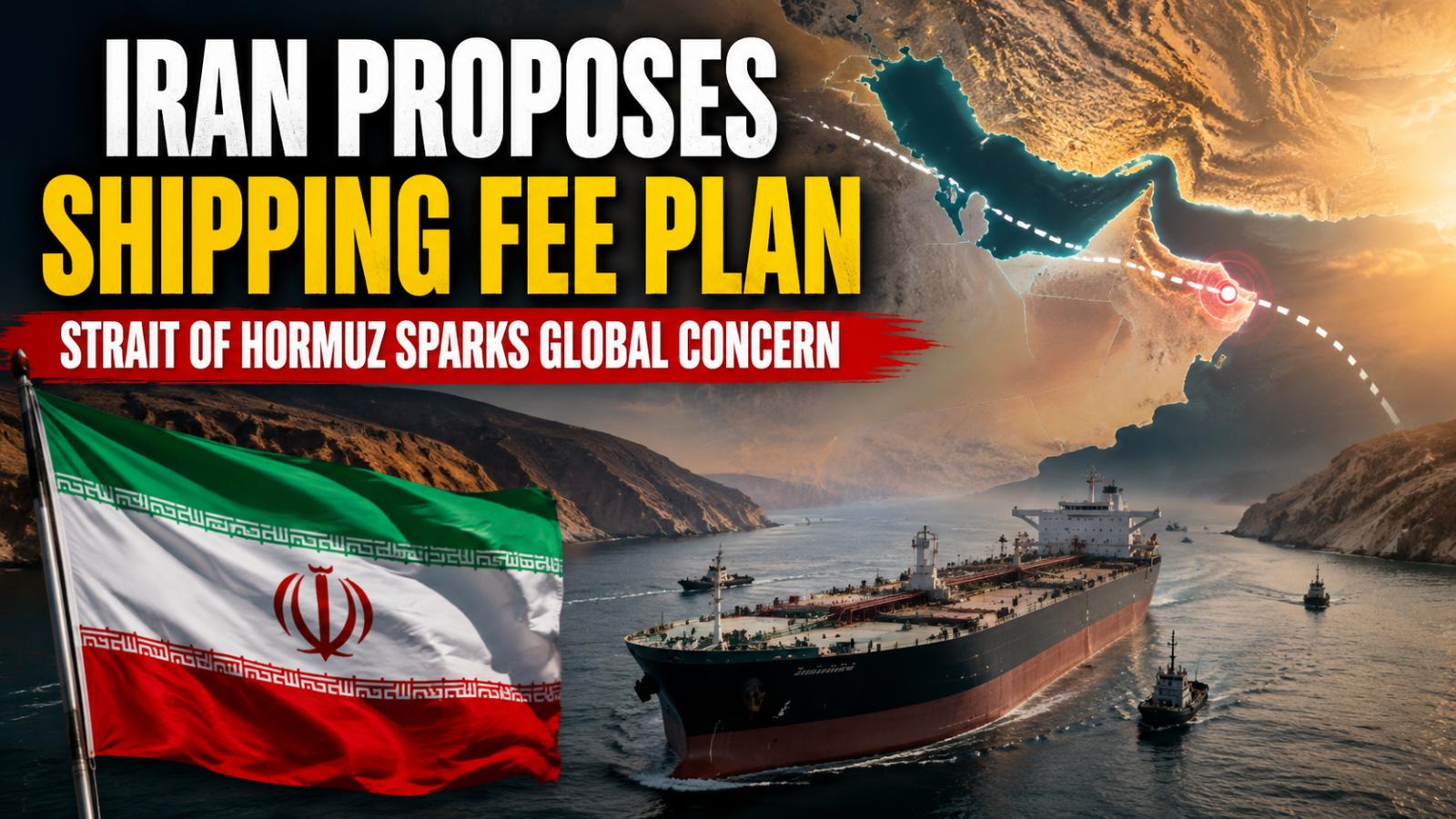
A proposal linked to Iran suggesting charges on vessels passing through the Strait of Hormuz has triggered renewed international attention on one of the world’s most sensitive maritime corridors. The passage connects the Persian Gulf to open oceans and handles a major share of global crude oil shipments, making even minor policy changes capable of influencing energy markets. Proposed fee structure and stated objectives The idea under discussion involves introducing a structured fee system for ships using the route. The proposal frames the charges as payments for services such as navigation safety, maritime monitoring, and environmental management. Early estimates circulating in policy discussions suggest the mechanism could generate substantial annual revenue if implemented at scale. However, the concept also raises immediate legal and operational questions, particularly regarding jurisdiction over international waters and the practicality of enforcing such a system on heavily trafficked global shipping lanes. Regional outreach and diplomatic positioning Reports indicate that discussions around the proposal have included outreach to several regional and global stakeholders, including major energy-importing nations. The objective appears to be building support for a shared governance or cost-sharing model for maritime traffic management in the region. Some interpretations suggest the plan is part of a broader effort to increase regional leverage over strategic trade routes. Others view it as an attempt to formalize compensation mechanisms for security responsibilities in a highly militarized shipping corridor. International reaction and US opposition The proposal has drawn clear resistance from the United States, which maintains that key international waterways must remain free for unrestricted commercial passage. US officials argue that introducing toll-like systems could disrupt global supply chains and increase volatility in energy pricing. Concerns have also been raised by other maritime stakeholders who rely heavily on stable passage through the Strait of Hormuz for crude oil and liquefied natural gas transport. Any change in cost structure or transit policy is seen as having a direct impact on insurance premiums and shipping routes. Wider implications for global energy markets The debate comes at a time when global energy markets remain highly sensitive to geopolitical developments in the Gulf region. Even the perception of restricted access or added transit costs can influence oil price expectations and shipping risk assessments. Analysts note that the discussion highlights ongoing tensions between strategic control of critical chokepoints and the principle of open international navigation. The outcome of such proposals could shape future frameworks governing global energy transport corridors.
Iran proposal on shipping charges draws US criticism
A proposal linked to Iran suggesting charges on vessels passing through the Strait of Hormuz has triggered renewed international attention on one of the world’s most sensitive maritime corridors. The passage connects the Persian Gulf to open oceans and handles a major share of global crude oil shipments, making even minor policy changes capable of influencing energy markets. Proposed fee structure and stated objectives The idea under discussion involves introducing a structured fee system for ships using the route. The proposal frames the charges as payments for services such as navigation safety, maritime monitoring, and environmental management. Early estimates circulating in policy discussions suggest the mechanism could generate substantial annual revenue if implemented at scale. However, the concept also raises immediate legal and operational questions, particularly regarding jurisdiction over international waters and the practicality of enforcing such a system on heavily trafficked global shipping lanes. Regional outreach and diplomatic positioning Reports indicate that discussions around the proposal have included outreach to several regional and global stakeholders, including major energy-importing nations. The objective appears to be building support for a shared governance or cost-sharing model for maritime traffic management in the region. Some interpretations suggest the plan is part of a broader effort to increase regional leverage over strategic trade routes. Others view it as an attempt to formalize compensation mechanisms for security responsibilities in a highly militarized shipping corridor. International reaction and US opposition The proposal has drawn clear resistance from the United States, which maintains that key international waterways must remain free for unrestricted commercial passage. US officials argue that introducing toll-like systems could disrupt global supply chains and increase volatility in energy pricing. Concerns have also been raised by other maritime stakeholders who rely heavily on stable passage through the Strait of Hormuz for crude oil and liquefied natural gas transport. Any change in cost structure or transit policy is seen as having a direct impact on insurance premiums and shipping routes. Wider implications for global energy markets The debate comes at a time when global energy markets remain highly sensitive to geopolitical developments in the Gulf region. Even the perception of restricted access or added transit costs can influence oil price expectations and shipping risk assessments. Analysts note that the discussion highlights ongoing tensions between strategic control of critical chokepoints and the principle of open international navigation. The outcome of such proposals could shape future frameworks governing global energy transport corridors.

US pushes NATO 3.0 shift toward stronger defence model
The debate around NATO’s future direction has intensified after renewed US pressure on allies to strengthen their military commitments. The discussion, often referred to as a “NATO 3.0” shift, centers on moving the alliance toward a more force-driven structure focused on deterrence and rapid response rather than political coordination alone. The push reflects growing concerns in Washington over uneven defence contributions across member states.
US pushes NATO 3.0 shift toward stronger defence model
The debate around NATO’s future direction has intensified after renewed US pressure on allies to strengthen their military commitments. The discussion, often referred to as a “NATO 3.0” shift, centers on moving the alliance toward a more force-driven structure focused on deterrence and rapid response rather than political coordination alone. The push reflects growing concerns in Washington over uneven defence contributions across member states.
Will Trump raise EU auto tariffs to 25%? Yes, escalation risks trade tensions
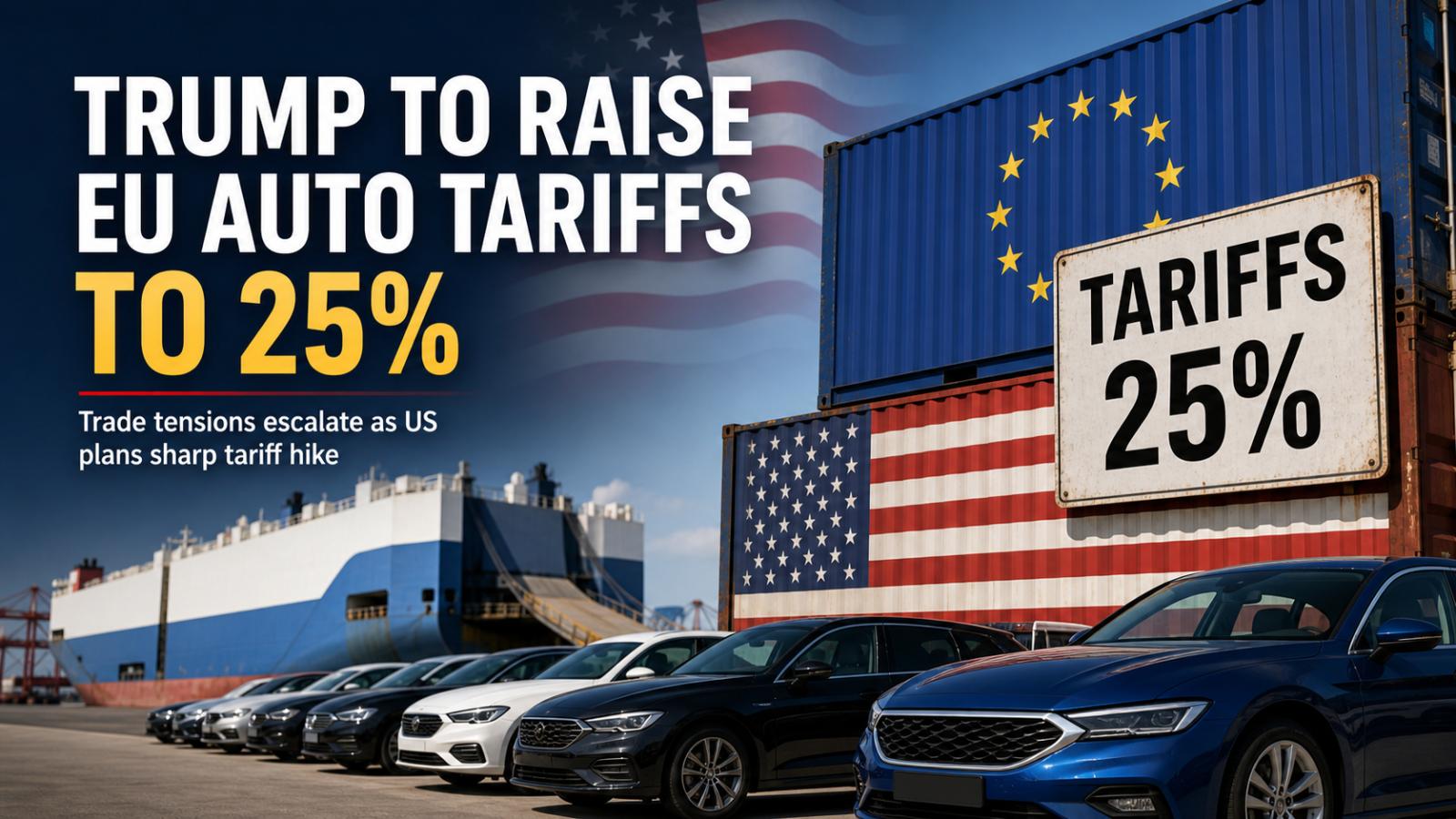
Trump signals sharp increase in tariffs on EU vehicles WASHINGTON — On Friday, May 1, 2026, U.S. President Donald Trump announced plans to raise tariffs on cars and trucks imported from the European Union to 25%, signaling a significant shift in U.S.-EU trade policy. The move, shared publicly in a statement, comes at a time when global markets remain sensitive to policy changes and could trigger broader economic repercussions. Trump stated that the European Union was “not complying” with the previously agreed trade deal, though he did not provide specific details regarding the alleged violations. The announcement marks a departure from the earlier tariff framework negotiated between both sides. Background of the US-EU Turnberry trade framework The current dispute traces back to a bilateral agreement reached in July 2025 between Trump and Ursula von der Leyen, which set a 15% tariff ceiling on most traded goods. Known as the Turnberry Agreement, the arrangement aimed to stabilize trade relations and reduce uncertainty for industries on both sides of the Atlantic. Both the United States and the European Union had reaffirmed their commitment to maintaining this framework even after legal and policy challenges emerged earlier in 2026. Legal challenges reshape tariff authority The agreement’s stability was called into question after a ruling by the U.S. Supreme Court, which determined that the president lacked authority to impose tariffs under an economic emergency declaration. Following the ruling, tariff limits were effectively reduced, prompting the administration to explore alternative legal pathways to implement new import taxes. Ongoing investigations into trade imbalances and national security concerns have since been cited by the administration as justification for a revised tariff strategy, potentially putting the original agreement at risk. Economic stakes for EU and global markets The European Union has consistently emphasized the importance of maintaining agreed tariff limits, noting that the deal was expected to save its automotive sector between €500 million and €600 million monthly. Trade between the U.S. and EU reached approximately €1.7 trillion ($2 trillion) in 2024, highlighting the scale of economic interdependence. European officials have reiterated that commitments under the agreement should be upheld, stressing that EU exports must continue to benefit from competitive tariff treatment without unexpected increases. Rising tensions threaten trade stability The proposed tariff increase introduces fresh uncertainty into one of the world’s largest trading relationships. Analysts warn that such measures could disrupt supply chains, increase costs for manufacturers and consumers, and strain diplomatic ties. As the administration moves forward with its trade investigations, the future of the U.S.-EU trade framework remains uncertain, with potential implications extending beyond the automotive sector into the broader global economy.
Will Trump raise EU auto tariffs to 25%? Yes, escalation risks trade tensions
Trump signals sharp increase in tariffs on EU vehicles WASHINGTON — On Friday, May 1, 2026, U.S. President Donald Trump announced plans to raise tariffs on cars and trucks imported from the European Union to 25%, signaling a significant shift in U.S.-EU trade policy. The move, shared publicly in a statement, comes at a time when global markets remain sensitive to policy changes and could trigger broader economic repercussions. Trump stated that the European Union was “not complying” with the previously agreed trade deal, though he did not provide specific details regarding the alleged violations. The announcement marks a departure from the earlier tariff framework negotiated between both sides. Background of the US-EU Turnberry trade framework The current dispute traces back to a bilateral agreement reached in July 2025 between Trump and Ursula von der Leyen, which set a 15% tariff ceiling on most traded goods. Known as the Turnberry Agreement, the arrangement aimed to stabilize trade relations and reduce uncertainty for industries on both sides of the Atlantic. Both the United States and the European Union had reaffirmed their commitment to maintaining this framework even after legal and policy challenges emerged earlier in 2026. Legal challenges reshape tariff authority The agreement’s stability was called into question after a ruling by the U.S. Supreme Court, which determined that the president lacked authority to impose tariffs under an economic emergency declaration. Following the ruling, tariff limits were effectively reduced, prompting the administration to explore alternative legal pathways to implement new import taxes. Ongoing investigations into trade imbalances and national security concerns have since been cited by the administration as justification for a revised tariff strategy, potentially putting the original agreement at risk. Economic stakes for EU and global markets The European Union has consistently emphasized the importance of maintaining agreed tariff limits, noting that the deal was expected to save its automotive sector between €500 million and €600 million monthly. Trade between the U.S. and EU reached approximately €1.7 trillion ($2 trillion) in 2024, highlighting the scale of economic interdependence. European officials have reiterated that commitments under the agreement should be upheld, stressing that EU exports must continue to benefit from competitive tariff treatment without unexpected increases. Rising tensions threaten trade stability The proposed tariff increase introduces fresh uncertainty into one of the world’s largest trading relationships. Analysts warn that such measures could disrupt supply chains, increase costs for manufacturers and consumers, and strain diplomatic ties. As the administration moves forward with its trade investigations, the future of the U.S.-EU trade framework remains uncertain, with potential implications extending beyond the automotive sector into the broader global economy.
Austin weighs new restrictions on e-cigarette sales near schools
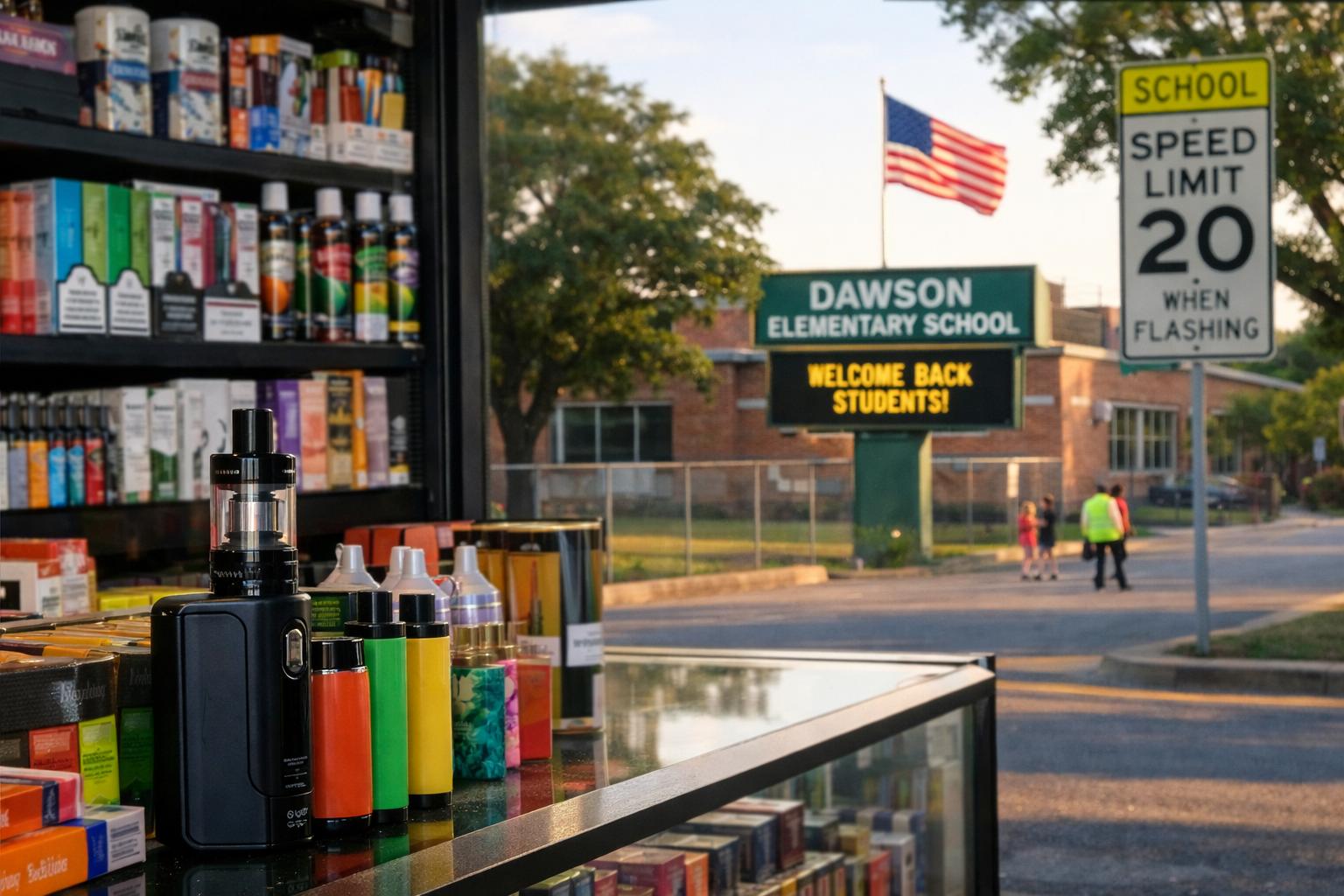
AUSTIN, Texas — City officials in Austin are evaluating new regulations that could limit the sale of e-cigarettes and synthetic nicotine products near schools and daycare centers, as part of an effort to reduce youth exposure to tobacco-related products. The proposal follows a 2025 City Council resolution directing city staff to explore policy options aimed at protecting minors. During a Public Health Committee meeting held in early 2026, Austin Public Health (APH) reported that approximately 600 retailers currently operate within 1,000 feet of schools or daycare facilities. The agency recommended a zoning ordinance change that would apply only to new businesses, allowing existing retailers to continue operating under a “grandfather” provision. City officials noted that state law requires compensation if an existing business loses its land-use rights, which influenced the recommendation to limit the policy’s scope to future establishments. The proposal would also exempt large food retailers exceeding 12,000 square feet to avoid creating gaps in access to essential goods in certain neighborhoods. APH further suggested expanding the ordinance to include all nicotine and tobacco products, rather than focusing solely on e-cigarettes or synthetic alternatives. Officials say this broader approach would help address emerging products and reduce regulatory loopholes over time. Local business owners have expressed concern about the potential impact on retail operations and expansion opportunities. Some argue that strict age verification practices are already in place and that specialty vape shops are not the primary source of underage access. Others point to challenges in finding commercial spaces that meet distance requirements from schools or childcare centers. City Council has not yet scheduled a final vote on the proposal. Additional public hearings and discussions are expected to take place in the fall of 2026 as officials gather input from stakeholders and evaluate the broader implications of the policy.
Austin weighs new restrictions on e-cigarette sales near schools
AUSTIN, Texas — City officials in Austin are evaluating new regulations that could limit the sale of e-cigarettes and synthetic nicotine products near schools and daycare centers, as part of an effort to reduce youth exposure to tobacco-related products. The proposal follows a 2025 City Council resolution directing city staff to explore policy options aimed at protecting minors. During a Public Health Committee meeting held in early 2026, Austin Public Health (APH) reported that approximately 600 retailers currently operate within 1,000 feet of schools or daycare facilities. The agency recommended a zoning ordinance change that would apply only to new businesses, allowing existing retailers to continue operating under a “grandfather” provision. City officials noted that state law requires compensation if an existing business loses its land-use rights, which influenced the recommendation to limit the policy’s scope to future establishments. The proposal would also exempt large food retailers exceeding 12,000 square feet to avoid creating gaps in access to essential goods in certain neighborhoods. APH further suggested expanding the ordinance to include all nicotine and tobacco products, rather than focusing solely on e-cigarettes or synthetic alternatives. Officials say this broader approach would help address emerging products and reduce regulatory loopholes over time. Local business owners have expressed concern about the potential impact on retail operations and expansion opportunities. Some argue that strict age verification practices are already in place and that specialty vape shops are not the primary source of underage access. Others point to challenges in finding commercial spaces that meet distance requirements from schools or childcare centers. City Council has not yet scheduled a final vote on the proposal. Additional public hearings and discussions are expected to take place in the fall of 2026 as officials gather input from stakeholders and evaluate the broader implications of the policy.

Millions must switch repayment plans after SAVE program shutdown
The U.S. Department of Education announced on Friday, March 27, 2026, that millions of federal student loan borrowers will be removed from the Saving on a Valuable Education (SAVE) repayment plan, following a federal appeals court decision earlier in March that blocked the program after nearly two years of legal challenges. The SAVE plan, introduced in 2023 under the Biden administration, aimed to reduce monthly payments and expand loan forgiveness. However, several Republican-led
Millions must switch repayment plans after SAVE program shutdown
The U.S. Department of Education announced on Friday, March 27, 2026, that millions of federal student loan borrowers will be removed from the Saving on a Valuable Education (SAVE) repayment plan, following a federal appeals court decision earlier in March that blocked the program after nearly two years of legal challenges. The SAVE plan, introduced in 2023 under the Biden administration, aimed to reduce monthly payments and expand loan forgiveness. However, several Republican-led

Auto loan interest tax deduction offers limited savings for most drivers in 2025
Eligible U.S. taxpayers will be able to deduct up to $10,000 in auto loan interest for the 2025 tax year under a temporary tax provision created through President Donald Trump’s One Big Beautiful Bill Act, but financial analysts say the actual benefit for most car buyers will be far smaller than the headline figure suggests. While the deduction may appear generous at first glance, typical loan structures and interest payments mean that most borrowers are unlikely to approach the maximum all
Auto loan interest tax deduction offers limited savings for most drivers in 2025
Eligible U.S. taxpayers will be able to deduct up to $10,000 in auto loan interest for the 2025 tax year under a temporary tax provision created through President Donald Trump’s One Big Beautiful Bill Act, but financial analysts say the actual benefit for most car buyers will be far smaller than the headline figure suggests. While the deduction may appear generous at first glance, typical loan structures and interest payments mean that most borrowers are unlikely to approach the maximum all

Russia dismisses US tariff threats while exploring oil support for Cuba
Russia has dismissed recent U.S. threats of tariffs on countries supplying oil to Cuba, while stating it is exploring ways to assist the Caribbean nation amid a deepening fuel shortage. Kremlin spokesperson Dmitry Peskov said the government seeks “constructive dialogue” with the United States regarding Cuba’s critical energy needs but stressed that public disputes over the matter are being avoided. He highlighted that Russia’s current trade with Cuba is limited, reducing the likelihood o
Russia dismisses US tariff threats while exploring oil support for Cuba
Russia has dismissed recent U.S. threats of tariffs on countries supplying oil to Cuba, while stating it is exploring ways to assist the Caribbean nation amid a deepening fuel shortage. Kremlin spokesperson Dmitry Peskov said the government seeks “constructive dialogue” with the United States regarding Cuba’s critical energy needs but stressed that public disputes over the matter are being avoided. He highlighted that Russia’s current trade with Cuba is limited, reducing the likelihood o

Green card holders barred from SBA small business loans under new US rules
Green card holders will no longer be eligible for government-backed small business loans in the United States beginning March 1, 2026, following a policy change by the US Small Business Administration that tightens citizenship and residency requirements for borrowers. The revised rules limit access to key SBA lending programs exclusively to US citizens and nationals who maintain their principal residence within the country or its territories, effectively barring lawful permanent residents from participation. According to an official policy notice issued in early February, the agency updated its Standard Operating Procedure 50 10 8, the framework that governs lender and development company loan programs. The revision rescinds earlier procedural guidance that permitted limited ownership by foreign nationals or certain residents living outside the United States. Under the new language, every direct and indirect owner of a small business applicant must meet the citizenship criteria. The SBA said the updated rules require 100 percent of ownership interests in any applicant or borrowing entity to be held by eligible US citizens or nationals. As a result, even minority ownership by a legal permanent resident will disqualify a company from receiving SBA-backed financing. The policy applies broadly to applicants, operating companies, and entities tied to the loan structure, leaving little flexibility for mixed-ownership businesses. The change is expected to affect a wide range of small and early-stage firms that rely on SBA loans for working capital, equipment purchases, and expansion. Many startups and family-owned enterprises depend on these lending programs because they offer lower interest rates and government guarantees that make financing more accessible. With the new restrictions in place, businesses that include green card holders among their owners may need to reconsider ownership arrangements or seek alternative sources of credit from private lenders. Agency officials indicated that the revisions align loan eligibility standards with existing federal regulations and a recent executive directive emphasizing stricter residency compliance. The policy will take effect for all new applications submitted on or after the effective date. Existing and prospective borrowers are being advised to review their ownership structures carefully to ensure continued eligibility under the updated requirements. The move marks a significant shift in how federal small business lending programs define qualification, narrowing access to public funds and reshaping the financing landscape for immigrant entrepreneurs. As the implementation date approaches, legal and financial advisers expect increased demand for guidance from affected business owners who must evaluate their options within the new framework.
Green card holders barred from SBA small business loans under new US rules
Green card holders will no longer be eligible for government-backed small business loans in the United States beginning March 1, 2026, following a policy change by the US Small Business Administration that tightens citizenship and residency requirements for borrowers. The revised rules limit access to key SBA lending programs exclusively to US citizens and nationals who maintain their principal residence within the country or its territories, effectively barring lawful permanent residents from participation. According to an official policy notice issued in early February, the agency updated its Standard Operating Procedure 50 10 8, the framework that governs lender and development company loan programs. The revision rescinds earlier procedural guidance that permitted limited ownership by foreign nationals or certain residents living outside the United States. Under the new language, every direct and indirect owner of a small business applicant must meet the citizenship criteria. The SBA said the updated rules require 100 percent of ownership interests in any applicant or borrowing entity to be held by eligible US citizens or nationals. As a result, even minority ownership by a legal permanent resident will disqualify a company from receiving SBA-backed financing. The policy applies broadly to applicants, operating companies, and entities tied to the loan structure, leaving little flexibility for mixed-ownership businesses. The change is expected to affect a wide range of small and early-stage firms that rely on SBA loans for working capital, equipment purchases, and expansion. Many startups and family-owned enterprises depend on these lending programs because they offer lower interest rates and government guarantees that make financing more accessible. With the new restrictions in place, businesses that include green card holders among their owners may need to reconsider ownership arrangements or seek alternative sources of credit from private lenders. Agency officials indicated that the revisions align loan eligibility standards with existing federal regulations and a recent executive directive emphasizing stricter residency compliance. The policy will take effect for all new applications submitted on or after the effective date. Existing and prospective borrowers are being advised to review their ownership structures carefully to ensure continued eligibility under the updated requirements. The move marks a significant shift in how federal small business lending programs define qualification, narrowing access to public funds and reshaping the financing landscape for immigrant entrepreneurs. As the implementation date approaches, legal and financial advisers expect increased demand for guidance from affected business owners who must evaluate their options within the new framework.
US May Permanently Pause Migration From Third World Countries: Trump’s Thanksgiving Statement
In a strong and widely discussed Thanksgiving announcement, Donald Trump stated that the United States may “permanently pause migration from all Third World countries” under his proposed immigration plan. The statement immediately sparked national and global conversations, amplifying the ongoing debate around the future of U.S. immigration policies. A Strong Position on Migration During his Thanksgiving message, Trum
US May Permanently Pause Migration From Third World Countries: Trump’s Thanksgiving Statement
In a strong and widely discussed Thanksgiving announcement, Donald Trump stated that the United States may “permanently pause migration from all Third World countries” under his proposed immigration plan. The statement immediately sparked national and global conversations, amplifying the ongoing debate around the future of U.S. immigration policies. A Strong Position on Migration During his Thanksgiving message, Trum

Green card interviews in San Diego lead to detentions of foreign-born spouses
Several foreign-born spouses of United States citizens have been detained during routine green card interviews at the San Diego immigration office, according to recent reports. The detentions, which began on November 12, have affected dozens of couples who arrived for scheduled appointments intended to advance the process of obtaining lawful permanent residency. Instead, the interviews ended with federal agents escorting the foreign spouse away, often in handcuffs, on allegations of violating
Green card interviews in San Diego lead to detentions of foreign-born spouses
Several foreign-born spouses of United States citizens have been detained during routine green card interviews at the San Diego immigration office, according to recent reports. The detentions, which began on November 12, have affected dozens of couples who arrived for scheduled appointments intended to advance the process of obtaining lawful permanent residency. Instead, the interviews ended with federal agents escorting the foreign spouse away, often in handcuffs, on allegations of violating

U.S. army secretary meets Russian officials in Abu Dhabi for Ukraine peace talks
U.S. Army Secretary Dan Driscoll held discussions with Russian officials in Abu Dhabi on Monday, according to a U.S. official familiar with the matter, marking the latest attempt by the Trump administration to revive momentum toward a negotiated settlement in the ongoing Russia-Ukraine war. The meetings were described as part of a broader diplomatic effort aimed at narrowing longstanding divisions between Moscow and Kyiv, which have intensified despite repeated international appeals for de-es
U.S. army secretary meets Russian officials in Abu Dhabi for Ukraine peace talks
U.S. Army Secretary Dan Driscoll held discussions with Russian officials in Abu Dhabi on Monday, according to a U.S. official familiar with the matter, marking the latest attempt by the Trump administration to revive momentum toward a negotiated settlement in the ongoing Russia-Ukraine war. The meetings were described as part of a broader diplomatic effort aimed at narrowing longstanding divisions between Moscow and Kyiv, which have intensified despite repeated international appeals for de-es

US plan for Gaza outlines divided security zones under new proposal
The United States is developing a proposal that would divide Gaza into separate security and reconstruction areas as part of a broader plan connected to an upcoming vote at the United Nations Security Council. The plan, described in military documents referenced by officials familiar with the discussions, outlines a division of the territory into a green zone that would fall under Israeli and international military oversight and a red zone that would remain heavily damaged following months of
US plan for Gaza outlines divided security zones under new proposal
The United States is developing a proposal that would divide Gaza into separate security and reconstruction areas as part of a broader plan connected to an upcoming vote at the United Nations Security Council. The plan, described in military documents referenced by officials familiar with the discussions, outlines a division of the territory into a green zone that would fall under Israeli and international military oversight and a red zone that would remain heavily damaged following months of

US imposes $100,000 H-1B visa fee, sparking backlash from tech industry
A new visa policy introduced under the Trump administration has sent shockwaves through the United States job market, particularly affecting international professionals and technology firms. The government now mandates that employers pay a $100,000 fee for each new H-1B visa application, a move officials claim will curb abuse of the visa system and encourage hiring of American citizens. However, the measure has been met with widespread criticism from business leaders and immigration advocates
US imposes $100,000 H-1B visa fee, sparking backlash from tech industry
A new visa policy introduced under the Trump administration has sent shockwaves through the United States job market, particularly affecting international professionals and technology firms. The government now mandates that employers pay a $100,000 fee for each new H-1B visa application, a move officials claim will curb abuse of the visa system and encourage hiring of American citizens. However, the measure has been met with widespread criticism from business leaders and immigration advocates

Trump sanctions Russian oil giants Rosneft and Lukoil amid Ukraine war escalation
In a significant policy reversal, U.S. President Donald Trump has imposed sweeping sanctions on Russia’s two largest oil producers, Rosneft and Lukoil, marking one of the most consequential economic measures against Moscow since the escalation of the war in Ukraine. The decision immediately triggered a 5% surge in global oil prices and prompted India, one of Russia’s biggest energy buyers, to reconsider its import strategy. The sanctions, announced on Wednesday, target companies
Trump sanctions Russian oil giants Rosneft and Lukoil amid Ukraine war escalation
In a significant policy reversal, U.S. President Donald Trump has imposed sweeping sanctions on Russia’s two largest oil producers, Rosneft and Lukoil, marking one of the most consequential economic measures against Moscow since the escalation of the war in Ukraine. The decision immediately triggered a 5% surge in global oil prices and prompted India, one of Russia’s biggest energy buyers, to reconsider its import strategy. The sanctions, announced on Wednesday, target companies
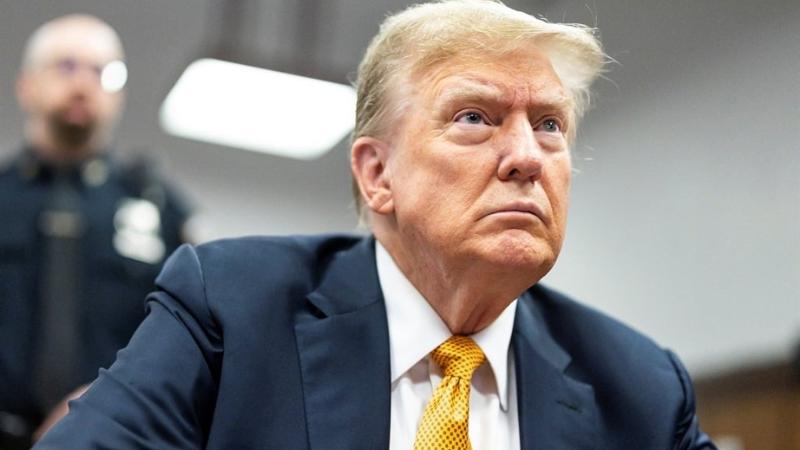
President Trump Urges Tech Giants to Stop Hiring in India, Focus on American Jobs
US President Donald Trump has sent a strong message to tech giants like Google and Microsoft, demanding they stop hiring workers overseas, particularly in countries like India. During an AI summit in Washington, Trump emphasized that American companies should focus on creating jobs at home instead of outsourcing to countries like China and India. The president criticized the tech industry's "globalist mindset," which he believes has ignored the i
President Trump Urges Tech Giants to Stop Hiring in India, Focus on American Jobs
US President Donald Trump has sent a strong message to tech giants like Google and Microsoft, demanding they stop hiring workers overseas, particularly in countries like India. During an AI summit in Washington, Trump emphasized that American companies should focus on creating jobs at home instead of outsourcing to countries like China and India. The president criticized the tech industry's "globalist mindset," which he believes has ignored the i










