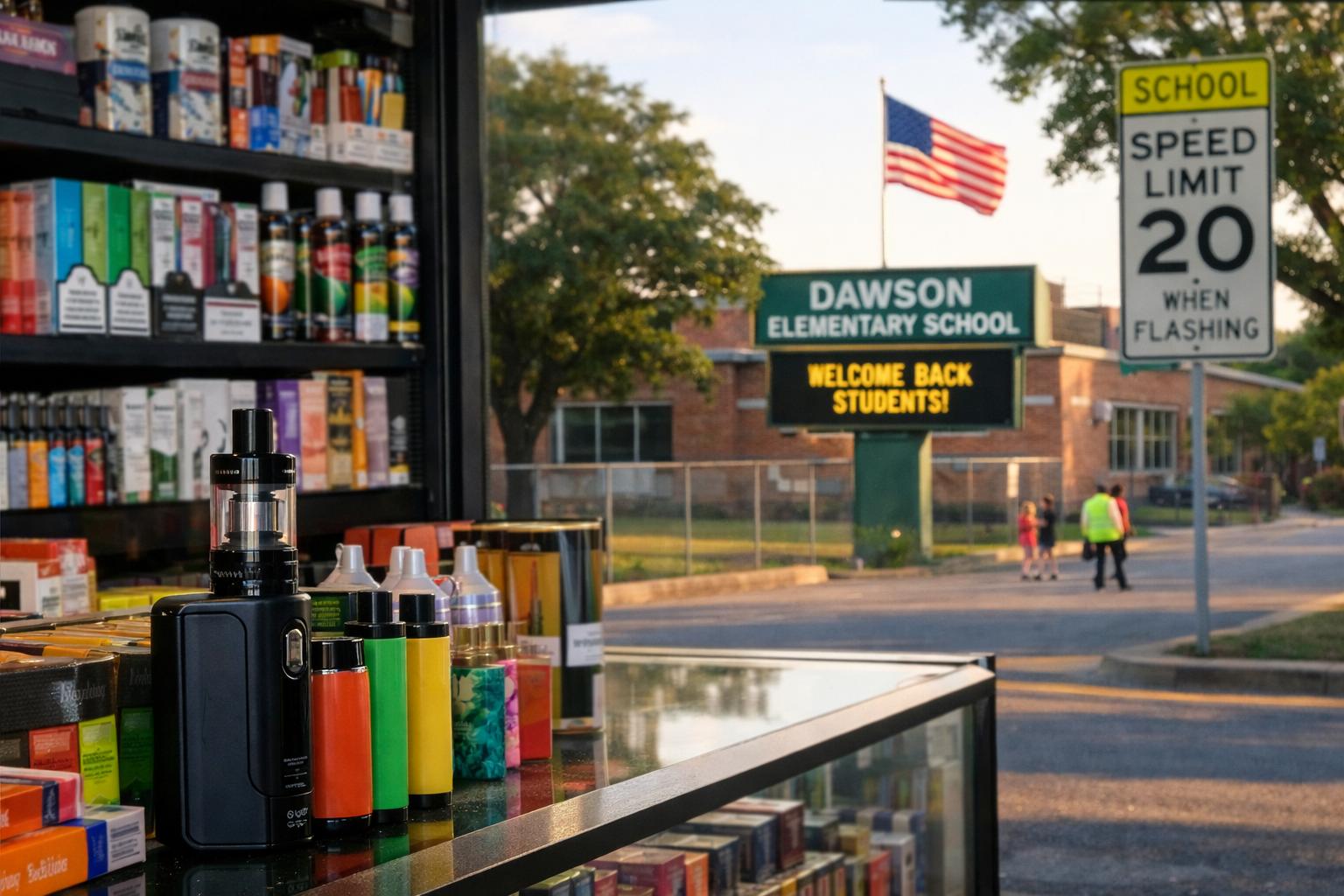
AUSTIN, Texas — City officials in Austin are evaluating new regulations that could limit the sale of e-cigarettes and synthetic nicotine products near schools and daycare centers, as part of an effort to reduce youth exposure to tobacco-related products. The proposal follows a 2025 City Council resolution directing city staff to explore policy options aimed at protecting minors.
During a Public Health Committee meeting held in early 2026, Austin Public Health (APH) reported that approximately 600 retailers currently operate within 1,000 feet of schools or daycare facilities. The agency recommended a zoning ordinance change that would apply only to new businesses, allowing existing retailers to continue operating under a “grandfather” provision.
City officials noted that state law requires compensation if an existing business loses its land-use rights, which influenced the recommendation to limit the policy’s scope to future establishments. The proposal would also exempt large food retailers exceeding 12,000 square feet to avoid creating gaps in access to essential goods in certain neighborhoods.
APH further suggested expanding the ordinance to include all nicotine and tobacco products, rather than focusing solely on e-cigarettes or synthetic alternatives. Officials say this broader approach would help address emerging products and reduce regulatory loopholes over time.
Local business owners have expressed concern about the potential impact on retail operations and expansion opportunities. Some argue that strict age verification practices are already in place and that specialty vape shops are not the primary source of underage access. Others point to challenges in finding commercial spaces that meet distance requirements from schools or childcare centers.
City Council has not yet scheduled a final vote on the proposal. Additional public hearings and discussions are expected to take place in the fall of 2026 as officials gather input from stakeholders and evaluate the broader implications of the policy.