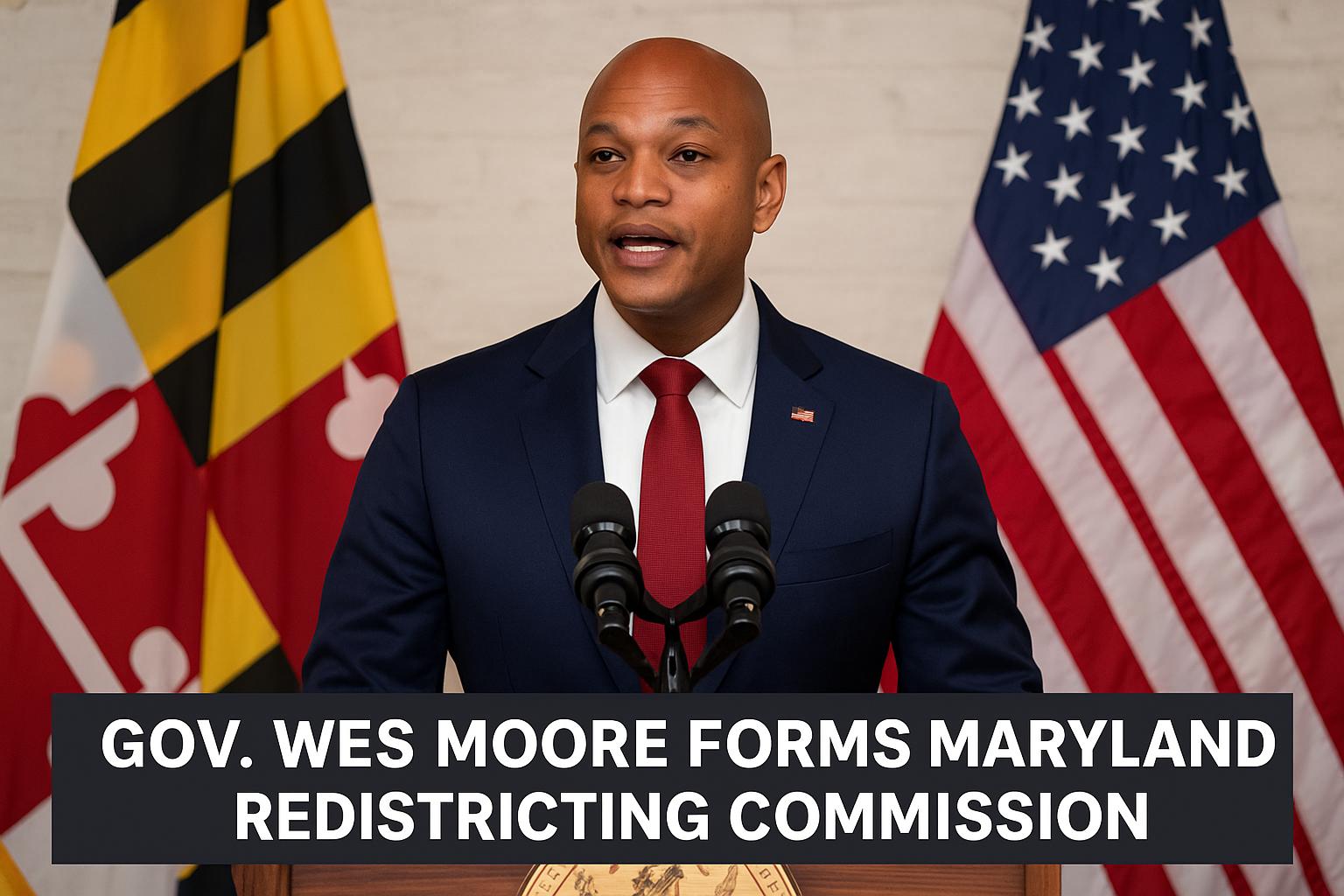
Maryland Governor Wes Moore has announced the formation of a new redistricting advisory commission to recommend fair and balanced congressional maps for the state. The move comes at a time when several states are reexamining their district boundaries to ensure equal representation and compliance with democratic principles. The commission’s primary goal will be to enhance public trust in the redistricting process and guarantee that every Maryland resident’s voice is fairly represented in Congress.
Senator Angela Alsobrooks will serve as the chair of the new advisory commission, which will also include former Attorney General Brian Frosh and Cumberland Mayor Ray Morriss among its members. Together, they will lead efforts to engage with citizens, hold public hearings, and create recommendations for the governor and the Maryland General Assembly. The commission will consist of five members in total, with three appointed by the governor and two selected by legislative leaders or their representatives.
The commission will officially begin work in November, focusing on gathering public input from across the state. Public hearings will be held in multiple regions to allow residents from different communities to express their views on congressional boundaries and fair representation. In addition to in-person events, an online feedback platform will be launched to collect written submissions, ensuring that Marylanders from every district have an opportunity to contribute to the process.
Governor Wes Moore emphasized his commitment to ensuring that the redistricting process reflects transparency, fairness, and accountability. He stated that Maryland’s future depends on fair representation that empowers communities rather than divides them. “My commitment has been clear from day one — we will explore every avenue possible to make sure Maryland has fair and representative maps,” Moore said. “This commission will ensure that the people are heard. I thank those who have raised their hands to lead this process, and I am confident in their ability to gather the views and perspectives of a broad range of voices throughout the state.”
Senator Alsobrooks expressed strong support for the initiative, calling it a crucial effort to protect democracy and prevent partisan manipulation of electoral boundaries. “Maryland deserves a fair map that represents the will of the people,” she said. “That’s why I’m proud to chair this commission. Our democracy depends on all of us standing up in this moment.” Her leadership is expected to bring both experience and a balanced perspective to the commission’s work, emphasizing collaboration and public engagement.
Former Attorney General Brian Frosh brings decades of experience in legal and policy matters and is expected to provide insight into ensuring the commission’s recommendations comply with constitutional requirements. Mayor Ray Morriss, representing western Maryland, will ensure that rural areas and smaller municipalities are equally considered in the redistricting process, promoting inclusivity across all parts of the state.
The commission’s responsibilities will include reviewing Maryland’s existing congressional maps, evaluating population data, and recommending new boundaries that reflect demographic changes while maintaining community integrity. Officials have stated that the process will be open and transparent, with all proceedings and proposed maps made publicly accessible for review and comment before final recommendations are submitted.
Once the advisory commission completes its hearings and analysis, it will present a comprehensive report with proposed map drafts and reform suggestions to Governor Moore and the Maryland General Assembly. Lawmakers will then review the recommendations before deciding on the final version of Maryland’s congressional map. The ultimate goal, according to state leaders, is to create a redistricting process that strengthens trust in democratic institutions and ensures equal representation for all Maryland residents.
The announcement of the redistricting advisory commission highlights Maryland’s proactive approach to governance and fair representation. In an era of growing political polarization, the establishment of this body underscores a commitment to accountability and inclusion in decision-making. Residents from across the state are encouraged to participate in hearings and share their input as part of the public consultation phase.
By prioritizing transparency and fairness, Maryland’s new redistricting advisory commission is expected to serve as a model for other states working to eliminate partisanship from the redistricting process. The effort marks a significant step toward reaffirming the principles of democracy, equality, and representation — ensuring that every Marylander’s voice carries equal weight in shaping the state’s future.
Senator Angela Alsobrooks will serve as the chair of the new advisory commission, which will also include former Attorney General Brian Frosh and Cumberland Mayor Ray Morriss among its members. Together, they will lead efforts to engage with citizens, hold public hearings, and create recommendations for the governor and the Maryland General Assembly. The commission will consist of five members in total, with three appointed by the governor and two selected by legislative leaders or their representatives.
The commission will officially begin work in November, focusing on gathering public input from across the state. Public hearings will be held in multiple regions to allow residents from different communities to express their views on congressional boundaries and fair representation. In addition to in-person events, an online feedback platform will be launched to collect written submissions, ensuring that Marylanders from every district have an opportunity to contribute to the process.
Governor Wes Moore emphasized his commitment to ensuring that the redistricting process reflects transparency, fairness, and accountability. He stated that Maryland’s future depends on fair representation that empowers communities rather than divides them. “My commitment has been clear from day one — we will explore every avenue possible to make sure Maryland has fair and representative maps,” Moore said. “This commission will ensure that the people are heard. I thank those who have raised their hands to lead this process, and I am confident in their ability to gather the views and perspectives of a broad range of voices throughout the state.”
Senator Alsobrooks expressed strong support for the initiative, calling it a crucial effort to protect democracy and prevent partisan manipulation of electoral boundaries. “Maryland deserves a fair map that represents the will of the people,” she said. “That’s why I’m proud to chair this commission. Our democracy depends on all of us standing up in this moment.” Her leadership is expected to bring both experience and a balanced perspective to the commission’s work, emphasizing collaboration and public engagement.
Former Attorney General Brian Frosh brings decades of experience in legal and policy matters and is expected to provide insight into ensuring the commission’s recommendations comply with constitutional requirements. Mayor Ray Morriss, representing western Maryland, will ensure that rural areas and smaller municipalities are equally considered in the redistricting process, promoting inclusivity across all parts of the state.
The commission’s responsibilities will include reviewing Maryland’s existing congressional maps, evaluating population data, and recommending new boundaries that reflect demographic changes while maintaining community integrity. Officials have stated that the process will be open and transparent, with all proceedings and proposed maps made publicly accessible for review and comment before final recommendations are submitted.
Once the advisory commission completes its hearings and analysis, it will present a comprehensive report with proposed map drafts and reform suggestions to Governor Moore and the Maryland General Assembly. Lawmakers will then review the recommendations before deciding on the final version of Maryland’s congressional map. The ultimate goal, according to state leaders, is to create a redistricting process that strengthens trust in democratic institutions and ensures equal representation for all Maryland residents.
The announcement of the redistricting advisory commission highlights Maryland’s proactive approach to governance and fair representation. In an era of growing political polarization, the establishment of this body underscores a commitment to accountability and inclusion in decision-making. Residents from across the state are encouraged to participate in hearings and share their input as part of the public consultation phase.
By prioritizing transparency and fairness, Maryland’s new redistricting advisory commission is expected to serve as a model for other states working to eliminate partisanship from the redistricting process. The effort marks a significant step toward reaffirming the principles of democracy, equality, and representation — ensuring that every Marylander’s voice carries equal weight in shaping the state’s future.