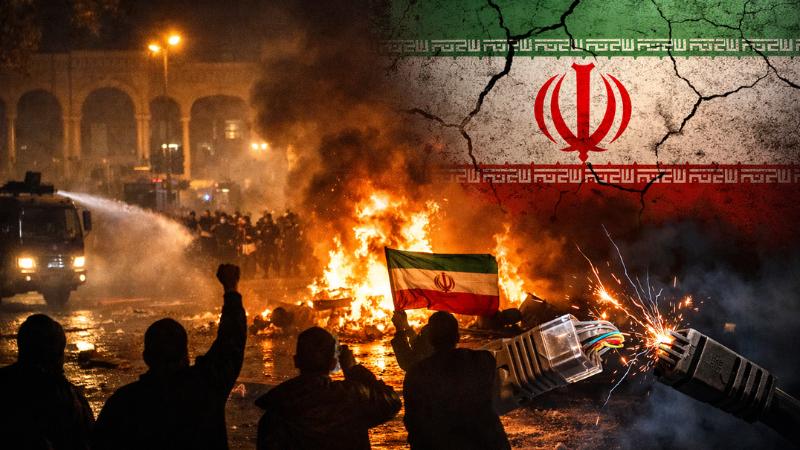
Iran remained largely cut off from the global internet on Friday as authorities enforced a nationwide digital blackout while protests continued to spread across the country, intensifying an already volatile political and economic crisis. Internet monitoring data showed that connectivity across Iran had dropped to almost zero for more than 12 hours, severely limiting access to online communication platforms as demonstrators gathered in cities nationwide.
According to internet tracking services, national connectivity stood at roughly one percent of normal levels by early morning, indicating one of the most extensive shutdowns imposed in recent years. The blackout came as protests expanded despite a widening security crackdown, with authorities seeking to restrict the flow of information and limit coordination among demonstrators.
The unrest began on December 28 with a strike at Tehran’s historic bazaar after Iran’s currency, the rial, plunged to record lows. What initially emerged as an economic protest over rising prices and financial instability has since developed into a broader nationwide movement, spreading beyond the capital into multiple provinces. Demonstrations have been fueled by long-standing public frustration over inflation, unemployment, sanctions-related pressures, and political grievances.
The growing scale of the protests has heightened concerns within Iran’s leadership, which is already facing severe economic strain following years of international sanctions and lingering fallout from regional tensions earlier this year. Security forces have responded with increasing force as demonstrations persisted, prompting renewed scrutiny from human rights organizations.
Rights groups report that the state response has grown steadily more violent. According to independent monitors, at least 45 protesters have been killed since the demonstrations began, including eight minors. The groups said that Wednesday marked the deadliest day so far, with 13 reported deaths in a single day. Hundreds of people have also been injured, and more than 2,000 individuals have been arrested amid mass detentions across protest hotspots.
Human rights advocates warn that the scope and intensity of the crackdown continue to expand, with live ammunition, beatings, and widespread arrests reported in several cities. They argue that the internet blackout is being used to conceal abuses and prevent documentation of events on the ground, further isolating the population during a critical moment.
Iranian authorities, however, have acknowledged significantly lower casualty figures. State media reports have cited at least 21 deaths, including members of the security forces. Officials have stated that several officers were killed while attempting to restore order, framing the protests as violent unrest rather than peaceful demonstrations.
International attention has increased as the situation deteriorates. The United States has issued warnings to Tehran over the use of lethal force against protesters, urging restraint while signaling potential consequences if violence escalates further. Despite mounting pressure, Iranian authorities have shown no indication of lifting the internet restrictions or easing security measures.
As Iran enters another day under near-total digital isolation, uncertainty remains over how long the blackout will last and whether the protests will subside or intensify. With communication channels restricted and tensions rising, the country faces a deepening crisis that shows little sign of immediate resolution.