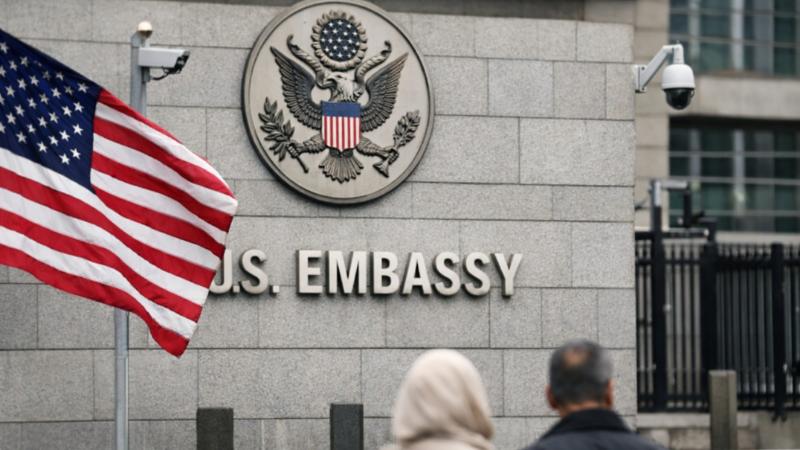
The United States State Department is preparing to pause visa processing for applicants from approximately 75 countries beginning January 21, according to an internal departmental directive. The measure instructs consular officers to deny visa applications under existing immigration law while the department conducts a broad reassessment of screening and vetting standards. The pause is described as indefinite, with only very limited exceptions expected during the review period.
The countries affected span multiple regions and include nations in Africa, the Middle East, Europe, Asia, and Latin America. Among those named in internal discussions are Somalia, Russia, Afghanistan, Brazil, Iran, Iraq, Egypt, Nigeria, Thailand, and Yemen. As of now, the State Department has not issued a formal public announcement or released an official list of countries subject to the pause, leaving applicants and immigration attorneys awaiting further clarification.
Central to the policy shift is a renewed and more aggressive application of the “public charge” provision of US immigration law. This long-standing rule allows visa officers to deny entry to individuals considered likely to rely on government assistance after arriving in the United States. Under the new guidance, consular officers are directed to apply this standard more strictly when evaluating visa applications.
In assessing whether an applicant may become a public charge, officers are instructed to weigh a range of personal and economic factors. These include the applicant’s age, overall health, financial resources, employment prospects, English-language proficiency, and the potential need for long-term medical care. Previous use of government cash assistance or long-term institutional care may also be considered grounds for denial, depending on individual circumstances.
Officials involved in the review have emphasized that the department intends to use its existing legal authority to prevent individuals from entering the country if they are deemed likely to depend heavily on public benefits. During the reassessment period, immigration from the affected countries is expected to remain largely on hold, with exceptions granted only after applicants satisfy public charge considerations and other security checks.
Somalia has received particular attention in the policy discussion following a high-profile fraud investigation in Minnesota involving misuse of taxpayer-funded assistance programs. Federal prosecutors have stated that many of those charged in the case were Somali nationals or Somali-Americans. While officials stress that the visa pause is not targeted at any single nationality, the case has been cited as part of a broader context prompting tighter scrutiny of benefit-related risks.
The move comes against a backdrop of shifting interpretations of the public charge rule over recent years. Although the provision has existed in US law for decades, its enforcement has varied depending on administrative priorities. In 2019, the definition was expanded to include a wider array of public benefits, significantly increasing the grounds on which visas could be denied. Portions of that expansion faced legal challenges and were later rolled back.
In 2022, the scope of the rule was narrowed, focusing primarily on cash assistance and long-term institutional care. Under this approach, benefits such as food assistance, nutrition programs for women and children, Medicaid, and housing support were excluded from consideration. The current pause signals a possible recalibration of how these standards are applied, though officials have not indicated whether formal regulatory changes will follow.
For prospective travelers, students, workers, and family-based applicants from the affected countries, the pause introduces new uncertainty into an already complex immigration process. Until the State Department completes its review and issues updated guidance, visa processing is expected to remain limited, with outcomes determined case by case under existing law.