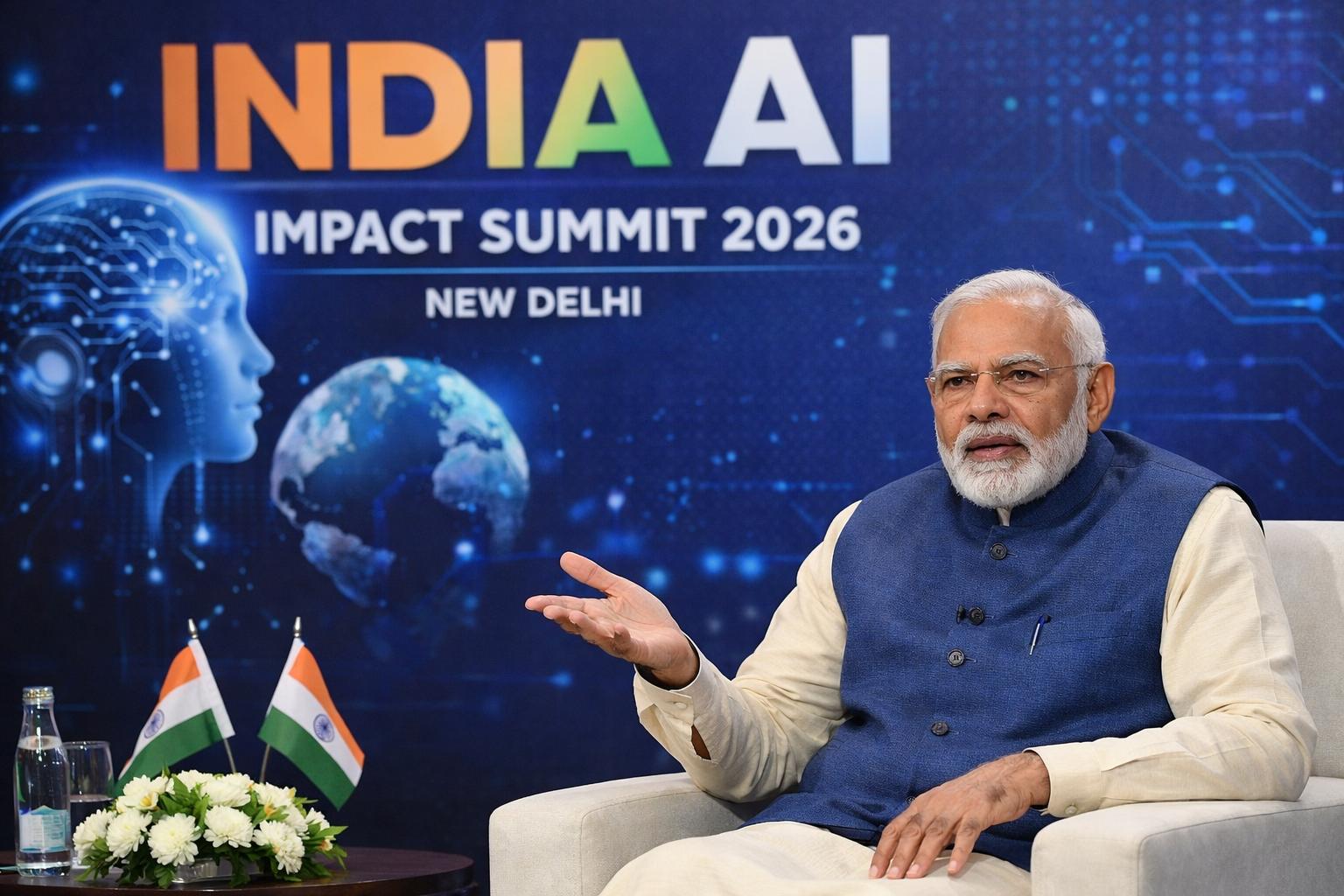
In an interview with ANI, the Prime Minister outlined an ambitious roadmap for India to emerge among the world’s top three AI powers. He said the country’s approach would be guided by the pillars of innovation, technological sovereignty, and inclusivity. According to Modi, the vision of Aatmanirbhar Bharat requires India to develop its own cutting-edge digital capabilities rather than rely heavily on external technologies.
Modi highlighted India’s vast pool of skilled youth and entrepreneurial energy as key strengths that can drive AI innovation. He said the country’s startup ecosystem, academic institutions, and technology companies are well positioned to build artificial intelligence solutions tailored to local and global needs. Such advancements, he noted, could enhance manufacturing efficiency, strengthen governance systems, and generate new employment opportunities.
The Prime Minister also stressed the importance of developing AI applications that directly address grassroots challenges. He said young innovators should focus on building tools that benefit farmers, micro, small and medium enterprises, women entrepreneurs, and rural communities. The India AI Impact Summit, he added, reflects the broader philosophy of “Sarvajan Hitay, Sarvajan Sukhaye,” bringing together global leaders, policymakers, and industry stakeholders to promote inclusive and responsible AI growth.
Pointing to real-world use cases, Modi cited the example of Amul, which is deploying AI-driven systems to support more than 3.6 million women dairy farmers. Through real-time guidance delivered in Gujarati, the platform helps improve cattle health management and productivity. He also referred to the Bharat Vistaar initiative, which integrates artificial intelligence into crop advisory services, soil analysis, and weather intelligence to enable more informed decision-making at the farm level.
While expressing optimism about India’s AI future, the Prime Minister cautioned against potential risks associated with the technology. He warned that AI systems trained predominantly on English-language or urban datasets may fail to adequately serve rural populations and regional language users. Addressing such gaps, he said, will require sustained global cooperation, ethical frameworks, and continuous dialogue among nations.
The India AI Impact Summit 2026 continues to focus on these challenges and opportunities, positioning India as an emerging voice in shaping the global artificial intelligence landscape.