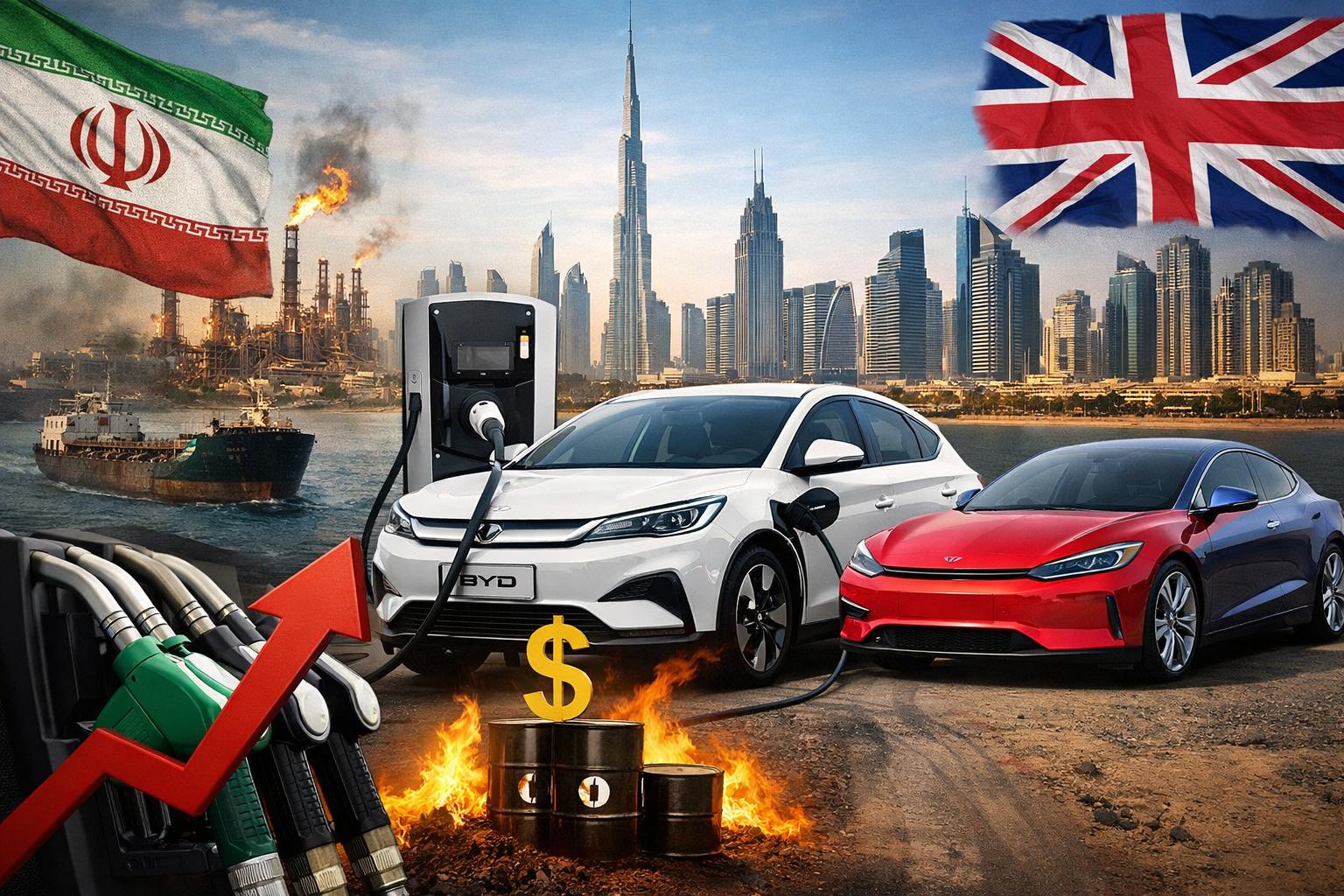
Tensions involving Iran and disruptions in the Strait of Hormuz, a critical shipping route connecting the Persian Gulf to the Gulf of Oman, have placed significant strain on the global economy. The obstruction of oil tanker traffic has led to a sharp rise in oil prices worldwide, increasing transportation costs and placing added financial pressure on both businesses and private vehicle owners reliant on fuel.
While the broader economic impact has been negative, the situation has created a notable shift in consumer behavior, particularly in the United Arab Emirates. In Dubai, rising fuel costs have accelerated interest in electric vehicles, with Chinese manufacturers emerging as key beneficiaries. Local dealers report that inquiries for Chinese EV models have increased by more than 30 percent over the past month, reflecting a growing preference for alternatives to traditional gasoline-powered cars.
A two-week ceasefire between Iran and the United States has provided temporary relief to global markets. However, analysts caution that oil prices are unlikely to return to pre-conflict levels in the near term due to ongoing uncertainty surrounding the truce and regional stability.
The shift toward electric vehicles is not limited to the Middle East. The United Kingdom has also recorded a rise in EV adoption. According to data released on Thursday, March 7, 2026, by the Society of Motor Manufacturers and Traders, 86,120 new electric vehicles were registered in March, marking the highest monthly total on record. Despite this growth, EVs accounted for 22.6 percent of total vehicle registrations, still below the government’s annual target of 28 percent.
Among manufacturers, BYD led sales in the UK with 15,162 units, outperforming several established brands and even surpassing Tesla in the market. The data underscores a broader global trend in which rising fuel costs and geopolitical instability are accelerating the transition toward electric mobility, with Chinese automakers gaining increasing traction in key international markets.
While the broader economic impact has been negative, the situation has created a notable shift in consumer behavior, particularly in the United Arab Emirates. In Dubai, rising fuel costs have accelerated interest in electric vehicles, with Chinese manufacturers emerging as key beneficiaries. Local dealers report that inquiries for Chinese EV models have increased by more than 30 percent over the past month, reflecting a growing preference for alternatives to traditional gasoline-powered cars.
A two-week ceasefire between Iran and the United States has provided temporary relief to global markets. However, analysts caution that oil prices are unlikely to return to pre-conflict levels in the near term due to ongoing uncertainty surrounding the truce and regional stability.
The shift toward electric vehicles is not limited to the Middle East. The United Kingdom has also recorded a rise in EV adoption. According to data released on Thursday, March 7, 2026, by the Society of Motor Manufacturers and Traders, 86,120 new electric vehicles were registered in March, marking the highest monthly total on record. Despite this growth, EVs accounted for 22.6 percent of total vehicle registrations, still below the government’s annual target of 28 percent.
Among manufacturers, BYD led sales in the UK with 15,162 units, outperforming several established brands and even surpassing Tesla in the market. The data underscores a broader global trend in which rising fuel costs and geopolitical instability are accelerating the transition toward electric mobility, with Chinese automakers gaining increasing traction in key international markets.