Karl Marx’s Influence on Workers’ Rights and Labor Movements
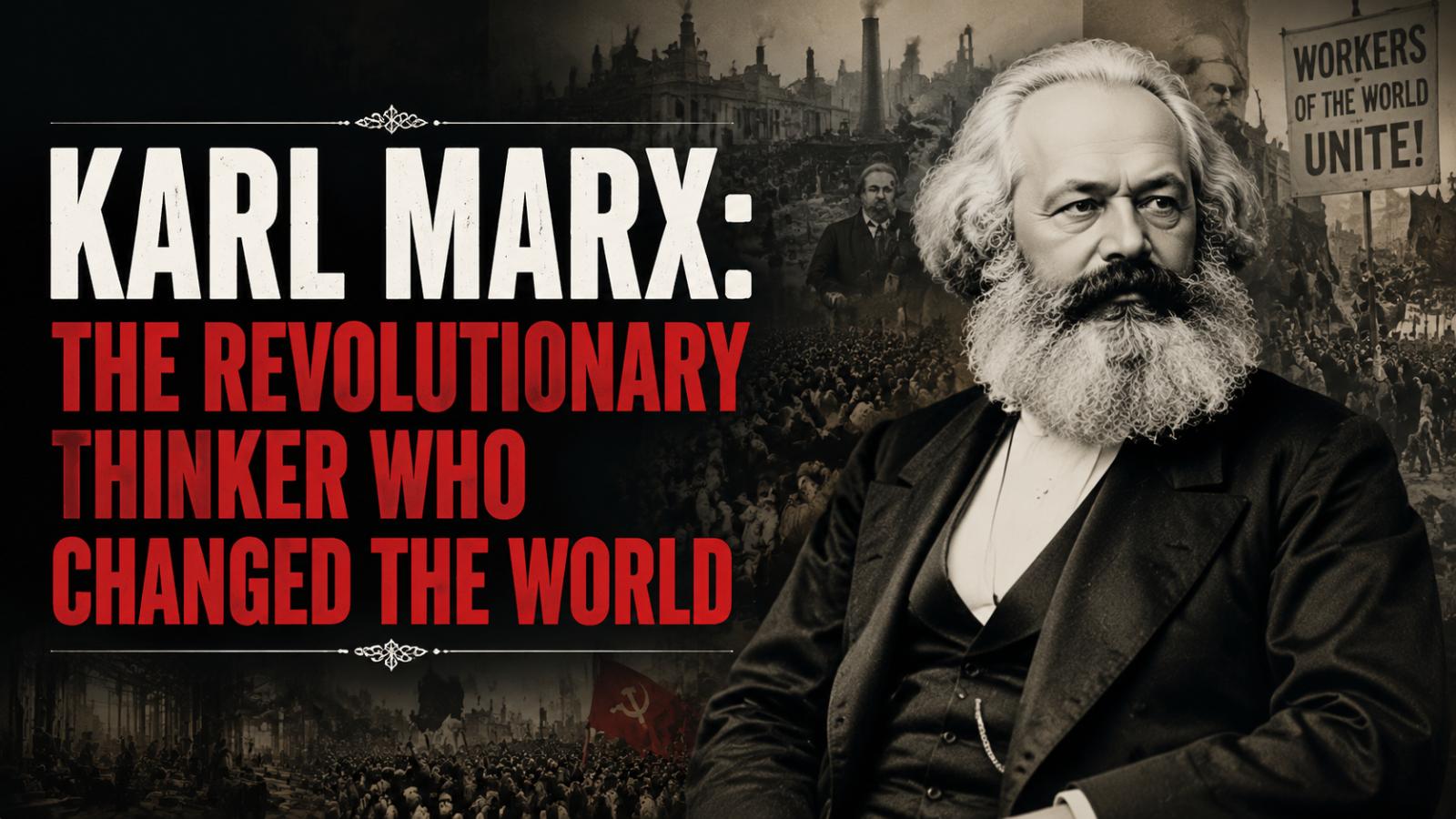
Karl Marx continues to influence modern society through his revolutionary ideas about capitalism, workers’ rights, labor movements, and economic inequality. His theories on social justice and worker exploitation remain highly relevant in today’s world, especially in discussions about wealth distribution, labor laws, corporate power, and economic fairness. Karl Marx’s influence on workers’ rights and global labor movements has shaped political systems, welfare policies, labor reforms, and economic justice movements across multiple countries. Karl Marx’s ideas still influence debates about workers’ rights and capitalism, making his theories important in understanding modern labor laws and global labor movement history. Many experts believe Karl Marx’s critique of capitalism remains relevant because economic inequality and worker exploitation continue to exist in modern capitalist societies.
Karl Marx’s Critique of Capitalism and Economic Inequality
In the 19th century, Karl Marx criticized capitalism for creating inequality between the bourgeoisie, the wealthy capitalist class, and the proletariat, the working class. Through influential books like The Communist Manifesto and Das Kapital, Karl Marx explained how capitalism often allowed factory owners and corporations to profit from the labor of workers while providing low wages and poor working conditions. Karl Marx believed capitalism created economic inequality by concentrating wealth and power among industrialists and corporations while ordinary workers struggled with low income and labor exploitation. His capitalism critique became one of the strongest foundations for global labor movement history, Marxist theory, social justice ideas, and modern discussions about economic inequality and capitalism. Today, many economists and political scholars continue studying Karl Marx’s theories in the modern world because his analysis of capitalism and wealth distribution still applies to discussions about corporate monopolies, worker exploitation, and social inequality.
History of Labor Unions and Marxism
Karl Marx predicted that the struggle between workers and capitalist systems would eventually lead to labor reforms and stronger workers’ rights. Over time, labor unions became more powerful and organized protests demanding fair wages, safer workplaces, reduced working hours, and better labor laws inspired by Marxism.
The history of labor unions and Marxism became closely connected as workers across Europe, Russia, and other industrial societies fought for economic justice and equality. Labor unions influenced governments to introduce worker-friendly policies such as:
- Minimum wage laws
- Workplace safety regulations
- Child labor restrictions
- Paid leave policies
- Shorter working hours
- Employee protection laws
These reforms improved workers’ rights globally and reduced labor exploitation in industrial economies. Karl Marx’s influence on labor laws and workers’ rights remains one of the most important contributions to modern labor protection systems.
Karl Marx’s Influence on Global Revolutions
The influence of Karl Marx extended into major global political events and revolutionary movements. Marxist theories inspired revolutionary leaders such as Vladimir Lenin during the Russian Revolution and Mao Zedong during the Chinese Communist Revolution. These revolutions transformed global politics and spread socialist ideas focused on workers’ rights, labor equality, economic justice, and wealth redistribution. Karl Marx’s impact on capitalism and socialist political systems changed the direction of world history during the 20th century. The global workers’ rights movement and socialist reforms in several countries were heavily influenced by Marxism and economic justice theories developed by Karl Marx.
Welfare State Influence of Marxism in the Modern World
In today’s modern world, Karl Marx’s influence remains visible through welfare state policies, minimum wage laws, unemployment benefits, pensions, healthcare systems, labor rights protections, and workplace safety regulations. Many governments regulate capitalism to reduce worker exploitation and economic inequality. The welfare state influence of Marxism can be seen in modern social policies that support workers and lower-income communities. Discussions about fair wealth distribution, economic justice movements, labor rights, and corporate power continue to reflect Karl Marx’s theories in the modern world. Many labor laws inspired by Marxism now protect workers from unfair treatment and dangerous working environments. Governments also introduced welfare systems to reduce poverty and provide social security for citizens.
Social Justice and Labor Rights in Modern Society
Social justice and labor rights movements today continue focusing on economic inequality and capitalism, demanding fair wages, equal opportunities, stronger labor protections, and ethical corporate practices. Karl Marx’s social justice ideas remain highly influential in sociology, economics, political science, and global policy discussions. Modern discussions about wealth concentration, billionaires, worker exploitation, and corporate monopolies continue to reflect Karl Marx’s critique of capitalism. Many activists and scholars use Marxist theory explained through modern economics and social analysis to understand inequality in contemporary societies. The global workers’ rights movement continues drawing inspiration from Karl Marx’s ideas about fairness, equality, labor reforms, and economic justice.
Karl Marx’s Contribution to Society and Lasting Legacy
Karl Marx’s contribution to society remains one of the most significant influences on labor laws, social justice movements, workers’ rights reforms, and economic equality discussions. Whether admired or criticized, Karl Marx’s ideas continue shaping modern debates about capitalism, labor exploitation, economic justice, and social inequality across the globe. Karl Marx’s influence today remains powerful because his theories continue to explain issues related to wealth distribution, labor movements, workers’ rights, and corporate power in modern capitalist societies. His revolutionary ideas about labor equality and economic fairness continue inspiring political discussions, labor reforms, and social justice movements worldwide.