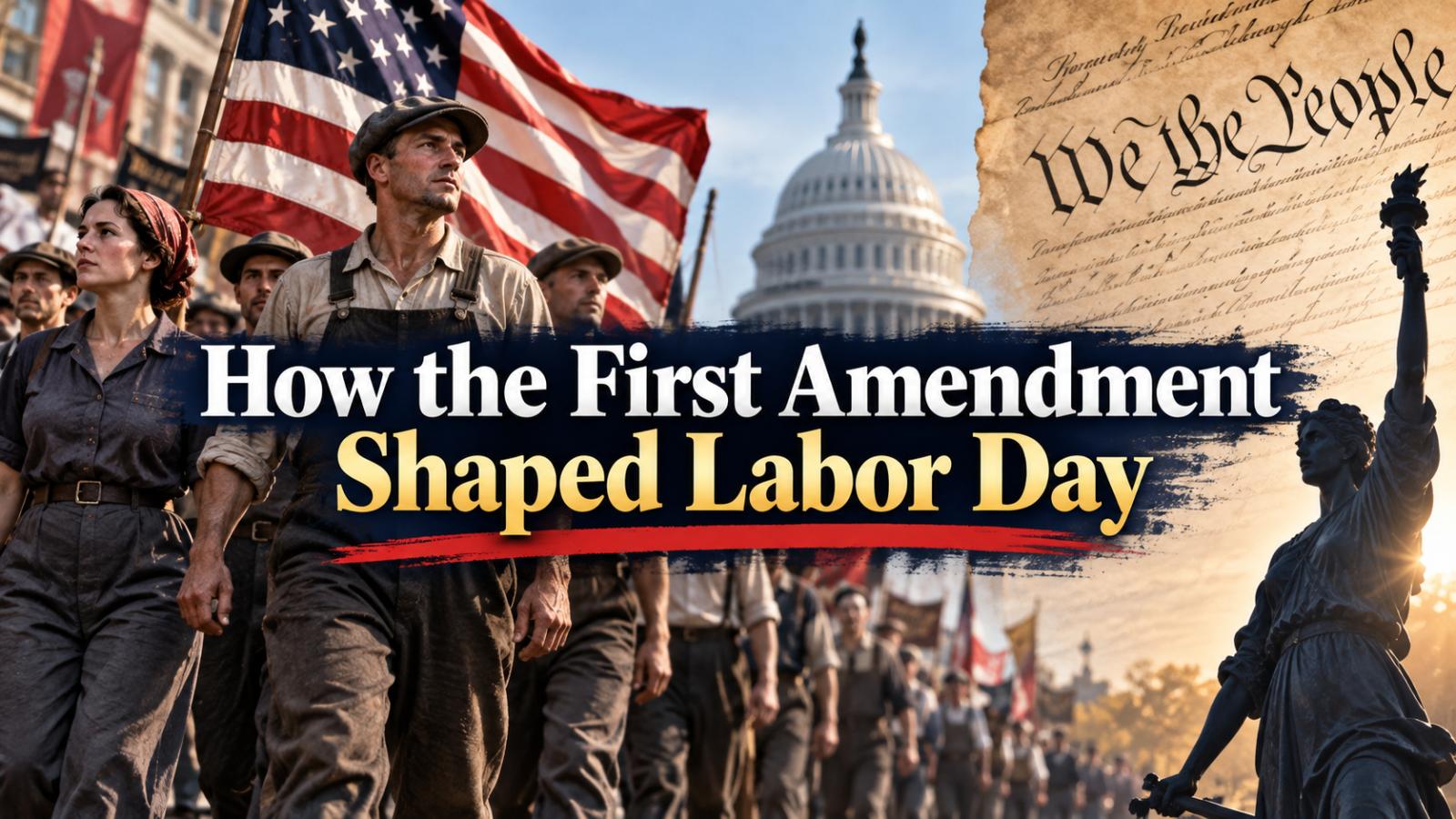
Labor Day is more than a long weekend marking the end of summer. The history of First Amendment Labor Day connections shows how worker speech, peaceful assembly, labor organizing and petition rights helped Americans demand better conditions and greater recognition.
How Labor Day Began in America
Labor Day is observed on the first Monday of September and honors the social and economic contributi
Labor Day is more than a long weekend marking the end of summer. The history of First Amendment Labor Day connections shows how worker speech, peaceful assembly, labor organizing and petition rights helped Americans demand better conditions and greater recognition.
How Labor Day Began in America
Labor Day is observed on the first Monday of September and honors the social and economic contributi
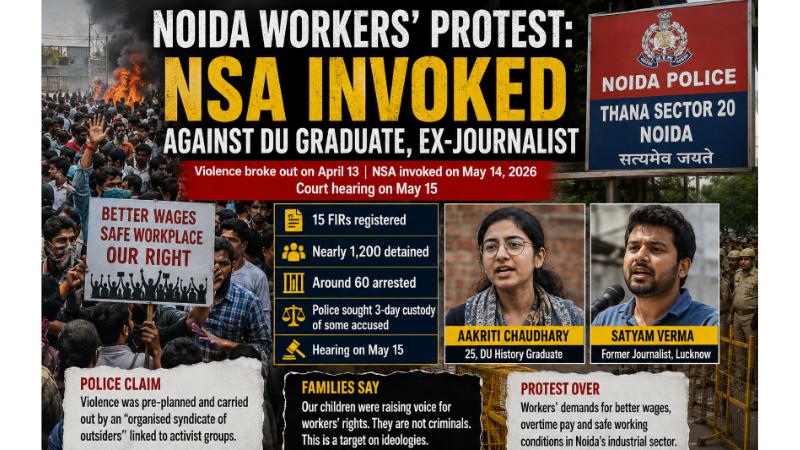
The Noida workers’ protest case intensified on May 14, 2026, exactly one month after violence broke out during labour demonstrations in the industrial hub on April 13. Uttar Pradesh Police invoked the stringent National Security Act (NSA) against Delhi University history graduate Aakriti Chaudhary, 25, and former journalist Satyam Verma, alleging their involvement in organising unrest, arson, and public disorder during the protests. Police claimed the violence was not spontaneous but part of a pre-planned operation carried out by an “organised syndicate of outsiders” linked to labour activist groups, an allegation strongly denied by the families of those arrested.
The protests initially began over workers’ demands for better wages, overtime payments, and safer working conditions in Noida’s industrial sector before escalating into clashes and police action. Authorities registered 15 FIRs, detained nearly 1,200 people, and jailed around 60 accused under charges ranging from rioting to attempted murder. Police also sought a three-day custody of several accused, while the court scheduled the hearing for May 15. Along with Chaudhary and Verma, several students, labour activists, and workers from different states were arrested, including NIT graduates, research aspirants, and daily wage earners accused of supporting the demonstrations.
Families of the accused alleged that many were targeted for supporting workers’ rights and labour movements. Chaudhary’s father defended her activism and questioned how she could be blamed for violence that allegedly occurred after she was detained. Friends and supporters of Verma highlighted his background in journalism, translation work, and social activism. Human rights groups, labour unions, and opposition leaders have meanwhile criticized the use of NSA in a labour protest case, raising concerns over freedom of expression, preventive detention laws, and the treatment of labour activists in India.
The controversy has triggered nationwide political and legal debate over balancing public order with democratic rights during industrial unrest. Security has been tightened across sensitive industrial zones in Noida as investigations continue. Analysts believe the case could have long-term implications for labour movements, workers’ rights campaigns, and the future use of stringent security laws during protests across India.
The Noida workers’ protest case intensified on May 14, 2026, exactly one month after violence broke out during labour demonstrations in the industrial hub on April 13. Uttar Pradesh Police invoked the stringent National Security Act (NSA) against Delhi University history graduate Aakriti Chaudhary, 25, and former journalist Satyam Verma, alleging their involvement in organising unrest, arson, and public disorder during the protests. Police claimed the violence was not spontaneous but part of a pre-planned operation carried out by an “organised syndicate of outsiders” linked to labour activist groups, an allegation strongly denied by the families of those arrested.
The protests initially began over workers’ demands for better wages, overtime payments, and safer working conditions in Noida’s industrial sector before escalating into clashes and police action. Authorities registered 15 FIRs, detained nearly 1,200 people, and jailed around 60 accused under charges ranging from rioting to attempted murder. Police also sought a three-day custody of several accused, while the court scheduled the hearing for May 15. Along with Chaudhary and Verma, several students, labour activists, and workers from different states were arrested, including NIT graduates, research aspirants, and daily wage earners accused of supporting the demonstrations.
Families of the accused alleged that many were targeted for supporting workers’ rights and labour movements. Chaudhary’s father defended her activism and questioned how she could be blamed for violence that allegedly occurred after she was detained. Friends and supporters of Verma highlighted his background in journalism, translation work, and social activism. Human rights groups, labour unions, and opposition leaders have meanwhile criticized the use of NSA in a labour protest case, raising concerns over freedom of expression, preventive detention laws, and the treatment of labour activists in India.
The controversy has triggered nationwide political and legal debate over balancing public order with democratic rights during industrial unrest. Security has been tightened across sensitive industrial zones in Noida as investigations continue. Analysts believe the case could have long-term implications for labour movements, workers’ rights campaigns, and the future use of stringent security laws during protests across India.
Karl Marx’s Influence on Workers’ Rights and Labor Movements
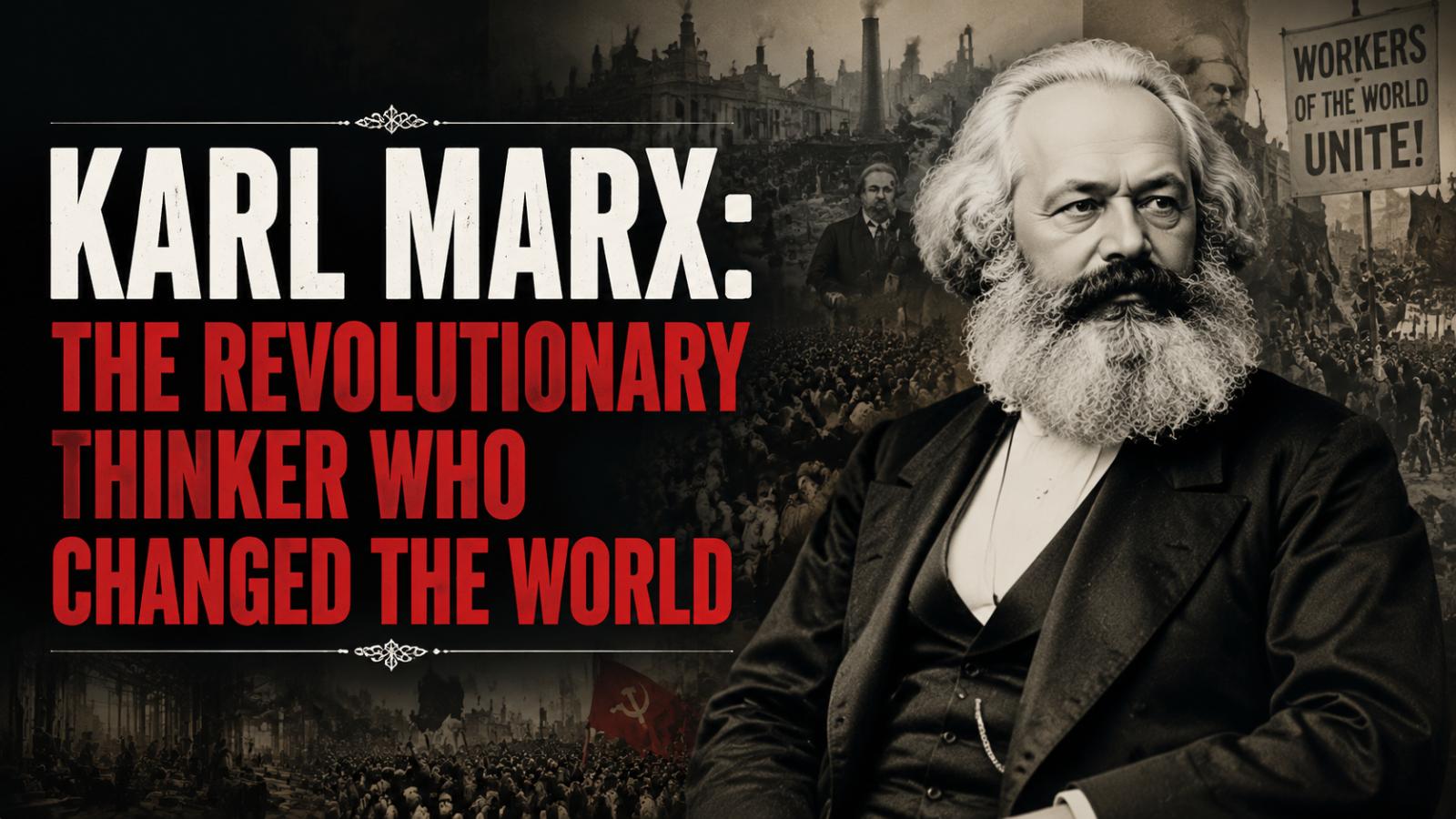
Karl Marx continues to influence modern society through his revolutionary ideas about capitalism, workers’ rights, labor movements, and economic inequality. His theories on social justice and worker exploitation remain highly relevant in today’s world, especially in discussions about wealth distribution, labor laws, cor
Karl Marx’s Influence on Workers’ Rights and Labor Movements
Karl Marx continues to influence modern society through his revolutionary ideas about capitalism, workers’ rights, labor movements, and economic inequality. His theories on social justice and worker exploitation remain highly relevant in today’s world, especially in discussions about wealth distribution, labor laws, cor
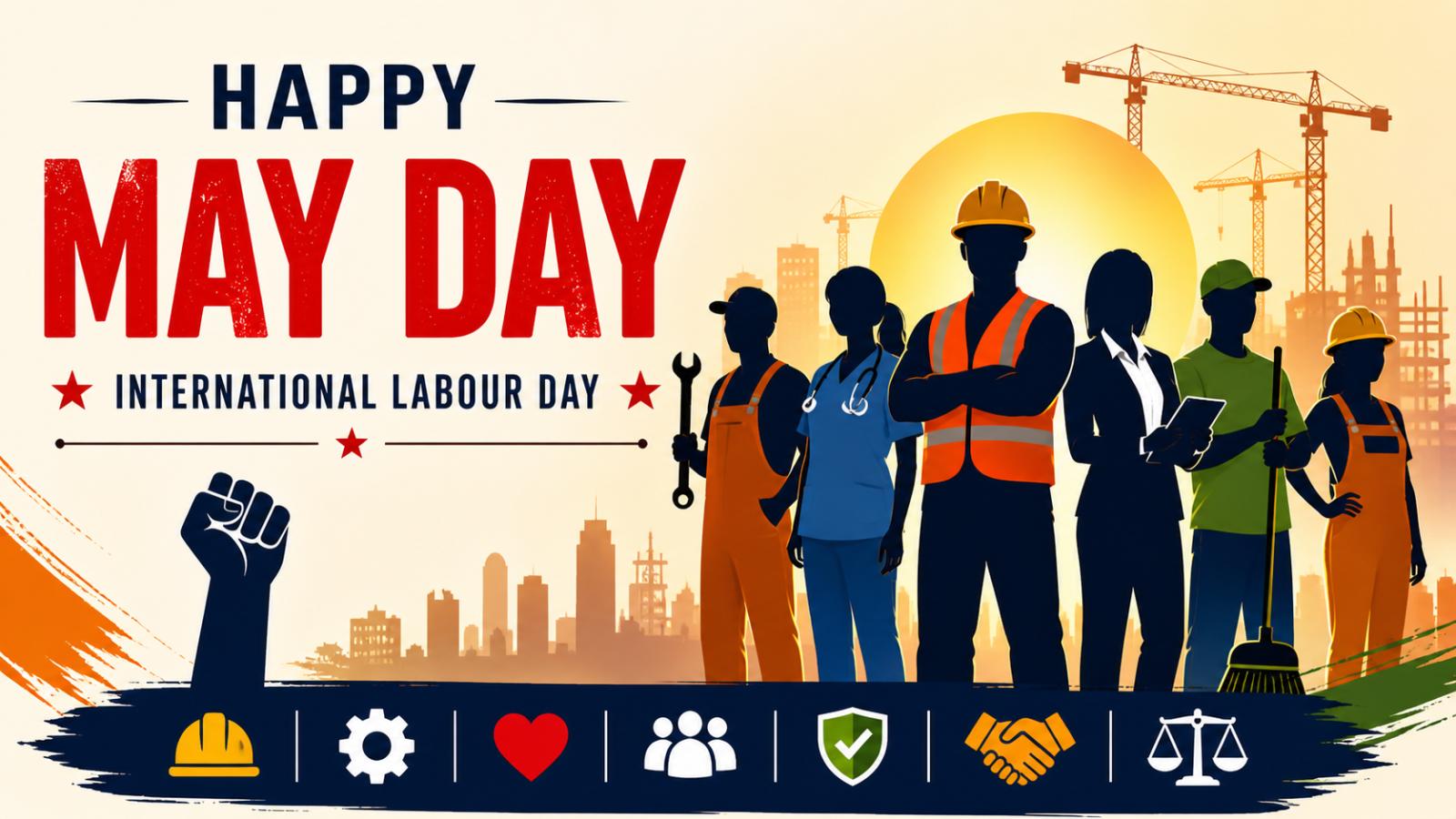
May Day 2026, also known as International Labour Day, is observed globally on May 1 to recognize the contribution of workers in building economies and societies. It is not just a symbolic celebration but a reminder of the struggles, sacrifices, and ongoing demands of the working class. In India, the day is marked by rallies, union meetings, and public discussions focusing on fair wages, safe working conditions, and social justice. While many treat it as a holiday, the deeper purpose lies in evaluating whether workers today are truly benefiting from the progress they helped create.
Historical Background and Global Relevance
The roots of May Day go back to the Haymarket Affair in Chicago, where workers protested for an eight-hour workday. That movement reshaped labor laws worldwide and laid the foundation for modern worker rights. Over time, May Day evolved into a global platform for workers to demand dignity, equality, and legal protection. Despite these historical gains, many of the original issues—long hours, unsafe conditions, and unfair pay—still persist in different forms across countries, especially in developing economies.
May Day 2026 Theme and Its Meaning
The International Labour Organization has declared the 2026 theme as “Ensuring a Healthy Psychosocial Working Environment.” This reflects a major shift in focus from physical safety alone to mental well-being in workplaces.
Emphasis on reducing stress, burnout, and workplace anxiety
Need for policies addressing harassment and discrimination
Encouragement of work-life balance and flexible work structures
Recognition that productivity should not come at the cost of mental health
This theme exposes a critical gap—while companies talk about employee wellness, many still operate in ways that increase pressure and reduce job satisfaction.
Importance of May Day in India
In India, May Day carries unique significance due to the size of its informal workforce. Millions of workers in sectors like construction, agriculture, and domestic work lack job security and legal protection.
Informal workers often do not receive minimum wages or benefits
Migrant workers face unstable employment and poor living conditions
Social security systems are limited or inaccessible for many
Awareness exists, but enforcement of labour laws remains weak
This highlights a hard truth: progress in labour rights is uneven, and large sections of the workforce are still left behind.
How May Day is Celebrated
May Day celebrations in India and across the world are a mix of awareness and activism.
Trade unions organize marches and protests
Public speeches highlight labour issues and policy gaps
Campaigns are run to support worker welfare and rights
Governments announce reforms or initiatives, though impact varies
These activities create visibility, but without consistent follow-through, they risk becoming routine rather than impactful.
Key Challenges Workers Still Face
Despite decades of labour reforms, several critical issues remain unresolved:
Wage inequality across sectors and regions
Lack of mental health support in workplaces
Job insecurity due to contract and gig-based employment
Poor enforcement of safety regulations
Exploitation in unorganized sectors
These challenges suggest that while the nature of work has evolved, worker struggles have simply taken new forms.
Why May Day Still Matters Today
May Day is no longer just about celebrating workers—it is about questioning systems. It forces governments, businesses, and society to examine whether economic growth is inclusive or exploitative. The 2026 theme makes it clear that worker well-being is not limited to physical safety but includes emotional and psychological health.
The uncomfortable reality is this: awareness alone does not change conditions. Unless policies are enforced and accountability is maintained, May Day risks becoming symbolic rather than transformative. The real value of this day lies in pushing for measurable change, not just repeating familiar slogans.
May Day 2026, also known as International Labour Day, is observed globally on May 1 to recognize the contribution of workers in building economies and societies. It is not just a symbolic celebration but a reminder of the struggles, sacrifices, and ongoing demands of the working class. In India, the day is marked by rallies, union meetings, and public discussions focusing on fair wages, safe working conditions, and social justice. While many treat it as a holiday, the deeper purpose lies in evaluating whether workers today are truly benefiting from the progress they helped create.
Historical Background and Global Relevance
The roots of May Day go back to the Haymarket Affair in Chicago, where workers protested for an eight-hour workday. That movement reshaped labor laws worldwide and laid the foundation for modern worker rights. Over time, May Day evolved into a global platform for workers to demand dignity, equality, and legal protection. Despite these historical gains, many of the original issues—long hours, unsafe conditions, and unfair pay—still persist in different forms across countries, especially in developing economies.
May Day 2026 Theme and Its Meaning
The International Labour Organization has declared the 2026 theme as “Ensuring a Healthy Psychosocial Working Environment.” This reflects a major shift in focus from physical safety alone to mental well-being in workplaces.
Emphasis on reducing stress, burnout, and workplace anxiety
Need for policies addressing harassment and discrimination
Encouragement of work-life balance and flexible work structures
Recognition that productivity should not come at the cost of mental health
This theme exposes a critical gap—while companies talk about employee wellness, many still operate in ways that increase pressure and reduce job satisfaction.
Importance of May Day in India
In India, May Day carries unique significance due to the size of its informal workforce. Millions of workers in sectors like construction, agriculture, and domestic work lack job security and legal protection.
Informal workers often do not receive minimum wages or benefits
Migrant workers face unstable employment and poor living conditions
Social security systems are limited or inaccessible for many
Awareness exists, but enforcement of labour laws remains weak
This highlights a hard truth: progress in labour rights is uneven, and large sections of the workforce are still left behind.
How May Day is Celebrated
May Day celebrations in India and across the world are a mix of awareness and activism.
Trade unions organize marches and protests
Public speeches highlight labour issues and policy gaps
Campaigns are run to support worker welfare and rights
Governments announce reforms or initiatives, though impact varies
These activities create visibility, but without consistent follow-through, they risk becoming routine rather than impactful.
Key Challenges Workers Still Face
Despite decades of labour reforms, several critical issues remain unresolved:
Wage inequality across sectors and regions
Lack of mental health support in workplaces
Job insecurity due to contract and gig-based employment
Poor enforcement of safety regulations
Exploitation in unorganized sectors
These challenges suggest that while the nature of work has evolved, worker struggles have simply taken new forms.
Why May Day Still Matters Today
May Day is no longer just about celebrating workers—it is about questioning systems. It forces governments, businesses, and society to examine whether economic growth is inclusive or exploitative. The 2026 theme makes it clear that worker well-being is not limited to physical safety but includes emotional and psychological health.
The uncomfortable reality is this: awareness alone does not change conditions. Unless policies are enforced and accountability is maintained, May Day risks becoming symbolic rather than transformative. The real value of this day lies in pushing for measurable change, not just repeating familiar slogans.
WASHINGTON, D.C. — The U.S. Department of Labor has recovered more than $85,000 in back wages for employees at a Texas coffee business following an investigation into violations of federal wage laws. Officials said the case involved improper handling of employee tips and misuse of a tip credit system under the Fair Labor Standards Act (FLSA).
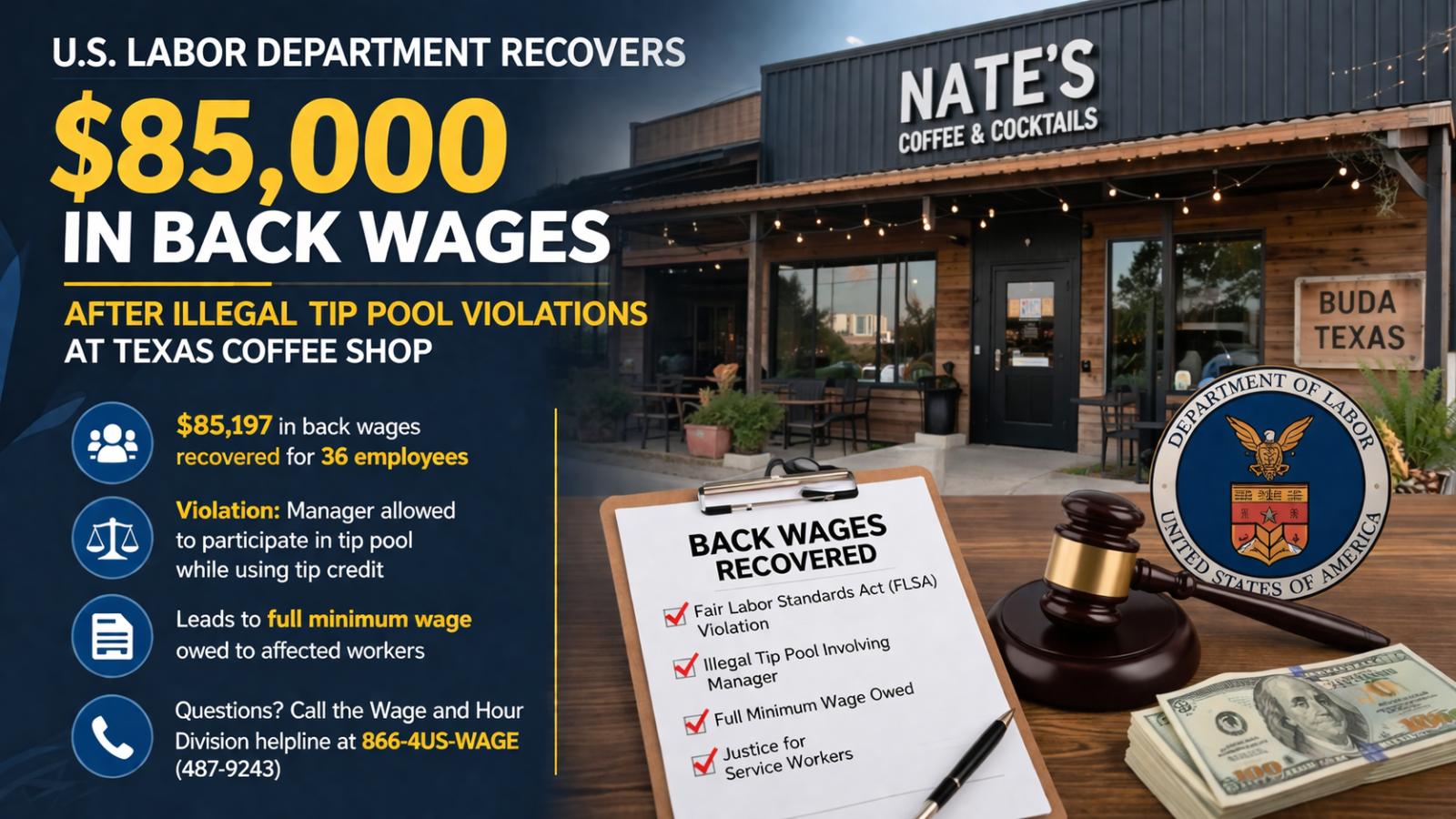
The department’s Wage and Hour Division investigated Nate’s At the Buda Mill & Grain Inc, operating as Nate’s Coffee & Cocktails in Buda, Texas. The investigation found that the company allowed its general manager to participate in an employee tip pool while also claiming a tip credit, a practice prohibited under federal law. As a result, the employer is required to pay $85,197 in back wages to 36 affected workers.
Federal regulations clearly state that managers and supervisors are not permitted to retain any portion of employee tips or share in tip pools when a tip credit is applied. Tips are considered the property of service workers who earn them directly from customers. Violations of these provisions can result in employers losing the ability to claim tip credits and being required to compensate workers at the full federal minimum wage.
The FLSA allows employers to pay tipped employees a base wage as low as $2.13 per hour, provided that tips received bring total earnings up to at least the federal minimum wage of $7.25 per hour. Employers may claim a tip credit of up to $5.12 per hour to meet this requirement. However, strict compliance rules govern how tips are distributed and who may participate in tip pools.
Labor officials emphasized that employers must ensure tipped workers receive all earnings owed and comply fully with wage and hour laws. The department encourages both workers and employers to seek guidance to better understand their rights and responsibilities under federal regulations.
WASHINGTON, D.C. — The U.S. Department of Labor has recovered more than $85,000 in back wages for employees at a Texas coffee business following an investigation into violations of federal wage laws. Officials said the case involved improper handling of employee tips and misuse of a tip credit system under the Fair Labor Standards Act (FLSA).
The department’s Wage and Hour Division investigated Nate’s At the Buda Mill & Grain Inc, operating as Nate’s Coffee & Cocktails in Buda, Texas. The investigation found that the company allowed its general manager to participate in an employee tip pool while also claiming a tip credit, a practice prohibited under federal law. As a result, the employer is required to pay $85,197 in back wages to 36 affected workers.
Federal regulations clearly state that managers and supervisors are not permitted to retain any portion of employee tips or share in tip pools when a tip credit is applied. Tips are considered the property of service workers who earn them directly from customers. Violations of these provisions can result in employers losing the ability to claim tip credits and being required to compensate workers at the full federal minimum wage.
The FLSA allows employers to pay tipped employees a base wage as low as $2.13 per hour, provided that tips received bring total earnings up to at least the federal minimum wage of $7.25 per hour. Employers may claim a tip credit of up to $5.12 per hour to meet this requirement. However, strict compliance rules govern how tips are distributed and who may participate in tip pools.
Labor officials emphasized that employers must ensure tipped workers receive all earnings owed and comply fully with wage and hour laws. The department encourages both workers and employers to seek guidance to better understand their rights and responsibilities under federal regulations.
Labor Day Weekend in 2025 falls from Saturday, August 30, through Monday, September 1, marking the unofficial end of summer in the United States. The holiday is celebrated annually on the first Monday in September, offering a three-day weekend that provides a break before the regular routines of work and school resume. This weekend is not only a time for relaxation but also an opportunity to reflect on the importance of American workers and their contributions to
Labor Day Weekend in 2025 falls from Saturday, August 30, through Monday, September 1, marking the unofficial end of summer in the United States. The holiday is celebrated annually on the first Monday in September, offering a three-day weekend that provides a break before the regular routines of work and school resume. This weekend is not only a time for relaxation but also an opportunity to reflect on the importance of American workers and their contributions to