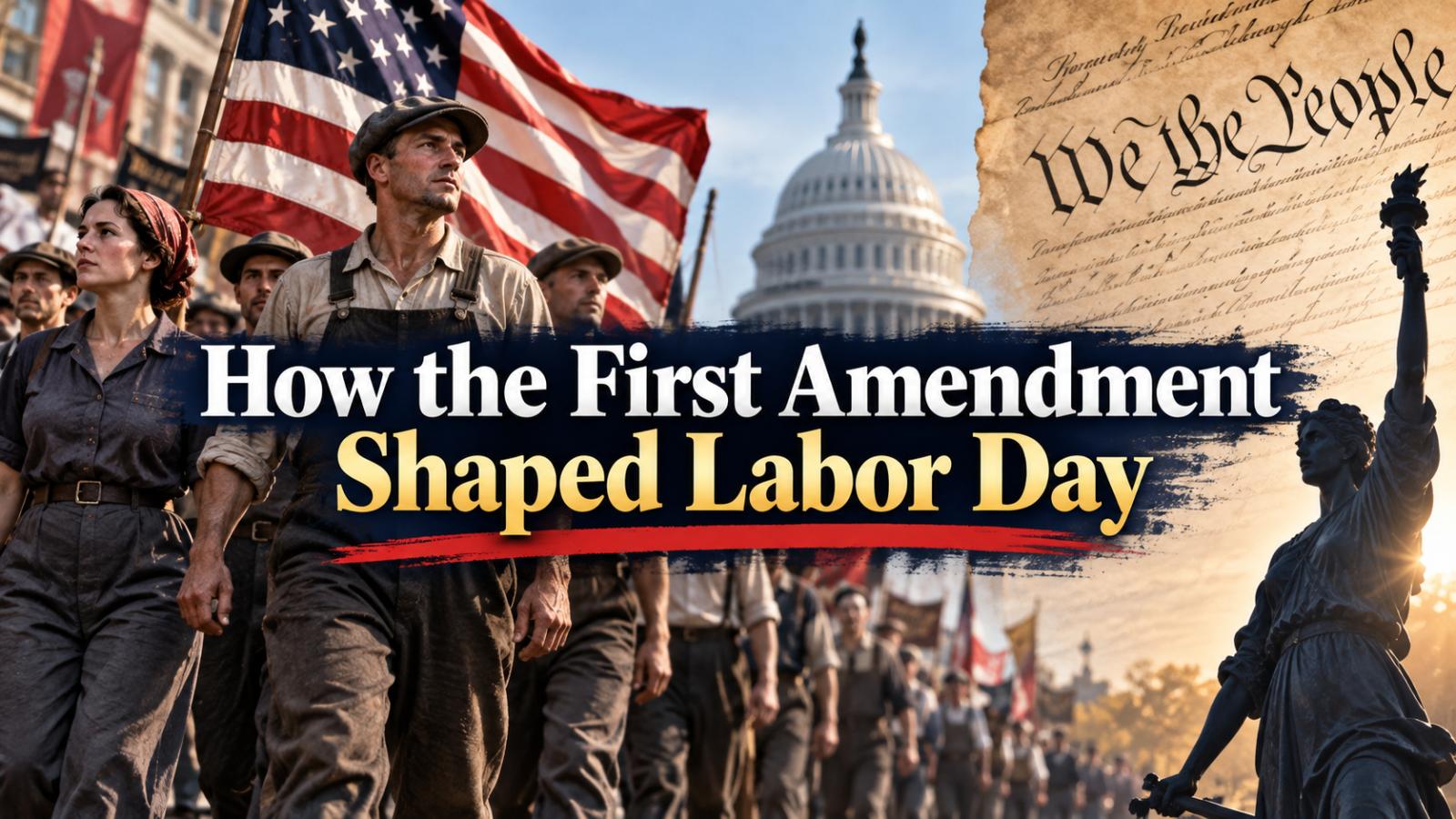
Labor Day is more than a long weekend marking the end of summer. The history of First Amendment Labor Day connections shows how worker speech, peaceful assembly, labor organizing and petition rights helped Americans demand better conditions and greater recognition.
How Labor Day Began in America
Labor Day is observed on the first Monday of September and honors the social and economic contributions of American workers. Its roots reach back to the rapid industrial expansion of the late 19th century, when factory employees often faced long hours, low wages and unsafe conditions.
Workers increasingly organized to demand change. According to the U.S. Department of Labor, the first Labor Day celebration took place in New York City on September 5, 1882. Thousands of workers joined the movement that would eventually turn the observance into a national tradition.
Both Peter J. McGuire, a leader in the carpenters' union, and Matthew Maguire, who worked with New York's Central Labor Union, have been linked to the original proposal for a workers' holiday. The Department of Labor notes that historical evidence leaves some uncertainty over which man deserves primary credit.
First Amendment Freedoms and Worker Speech
The labor movement depended heavily on activities now closely associated with First Amendment freedoms. Workers spoke publicly about wages and conditions, gathered for demonstrations, organized associations and petitioned government officials for reforms.
Modern constitutional protections developed gradually, however. During the late 1800s, First Amendment law did not provide workers with the same established protections recognized today. Labor disputes and government responses to protests became part of the broader legal history surrounding speech, assembly and association.
These freedoms remain particularly important when government action is involved. Private workplaces operate differently because the First Amendment generally restricts government rather than private employers.
Union Rights and Federal Labor Law
For many private-sector employees, workplace organizing rights are primarily protected by federal labor law. The National Labor Relations Board says covered employees may act together to improve wages, benefits and working conditions, whether or not they belong to a union.
Protected activity can include discussing pay with coworkers, circulating petitions, raising workplace concerns collectively and organizing union activity. Employers covered by the National Labor Relations Act generally cannot punish employees simply for engaging in protected concerted activity.
This distinction is important: workplace rights may involve both constitutional principles and specific labor statutes, depending on whether the employer is public or private.
Labor Activism Led to a National Holiday
Oregon became the first state to officially recognize Labor Day in 1887. Other states soon followed as workers continued organizing and advocating for national recognition.
By 1894, Labor Day had gained widespread support. Congress passed legislation establishing the first Monday in September as a legal holiday, and President Grover Cleveland signed it on June 28, 1894.
Today, Labor Day reflects more than the history of American employment. It also represents generations of workers using speech, organizing, assembly and petition to influence public policy and workplace standards.
Relevant internal links could connect this article to U.S. news, American history, community events, employment resources and Labor Day event pages.