How Japan Keeps Election Campaigns Short and Quiet
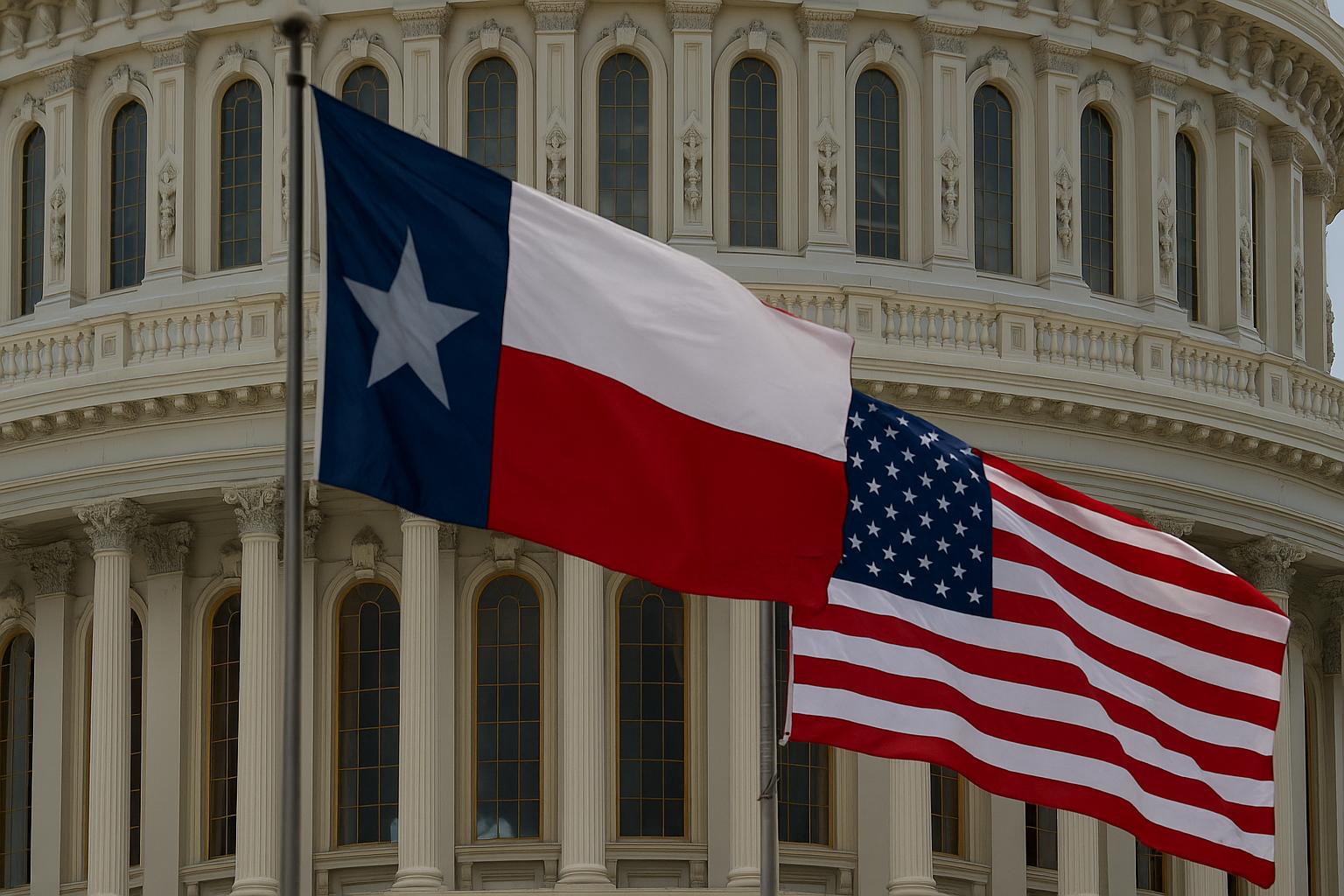
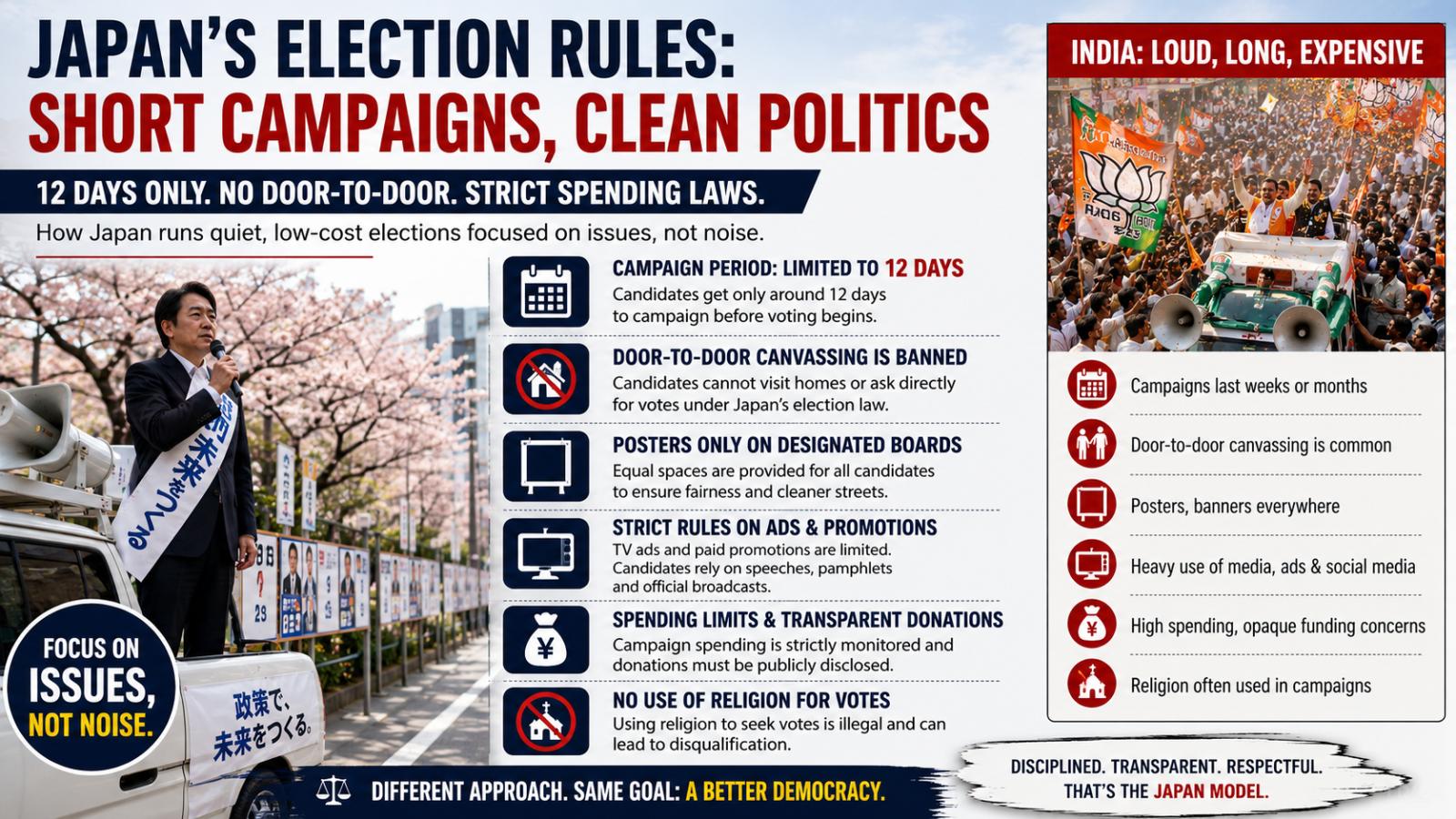
Japan’s election system is drawing global attention for its unusually strict campaign rules that limit election periods to just 12 days and ban door-to-door canvassing entirely. The model stands in sharp contrast to the high-decibel political culture seen in countries like India and the United States.
Under Japan’s Public Offices Election Law, candidates are not allowed to personally visit homes asking for votes. Instead, campaigns rely on tightly controlled speeches, official pamphlets, and limited public outreach. Officials say the rules are designed to reduce voter pressure, campaign noise, and excessive political spending.
Why Are Campaigns Limited to 12 Days?
Japanese national election campaigns typically last around 12 days before voting begins. The short campaign window forces candidates to focus on direct policy messaging instead of months-long rallies and aggressive political marketing.
The country also places heavy restrictions on campaign advertising. Political posters can only appear on officially approved boards with equal space allotted to every candidate. Large-scale television advertising and expensive promotional campaigns are also limited.
Japan’s Low-Spending Democracy Model
Campaign financing in Japan is closely monitored, and political donations must be publicly disclosed. Religious appeals for votes are restricted, and violations can lead to legal penalties or disqualification.
Rather than massive rallies, many candidates travel through neighborhoods in small vans using loudspeakers to deliver brief speeches. Supporters argue the approach keeps elections cleaner, cheaper, and more policy-focused.
A Different Style of Democracy
Japan still faces concerns over voter turnout and political participation, but its tightly regulated election system offers a very different democratic model — one centered on discipline, limited campaigning, and controlled political visibility instead of spectacle-driven politics.