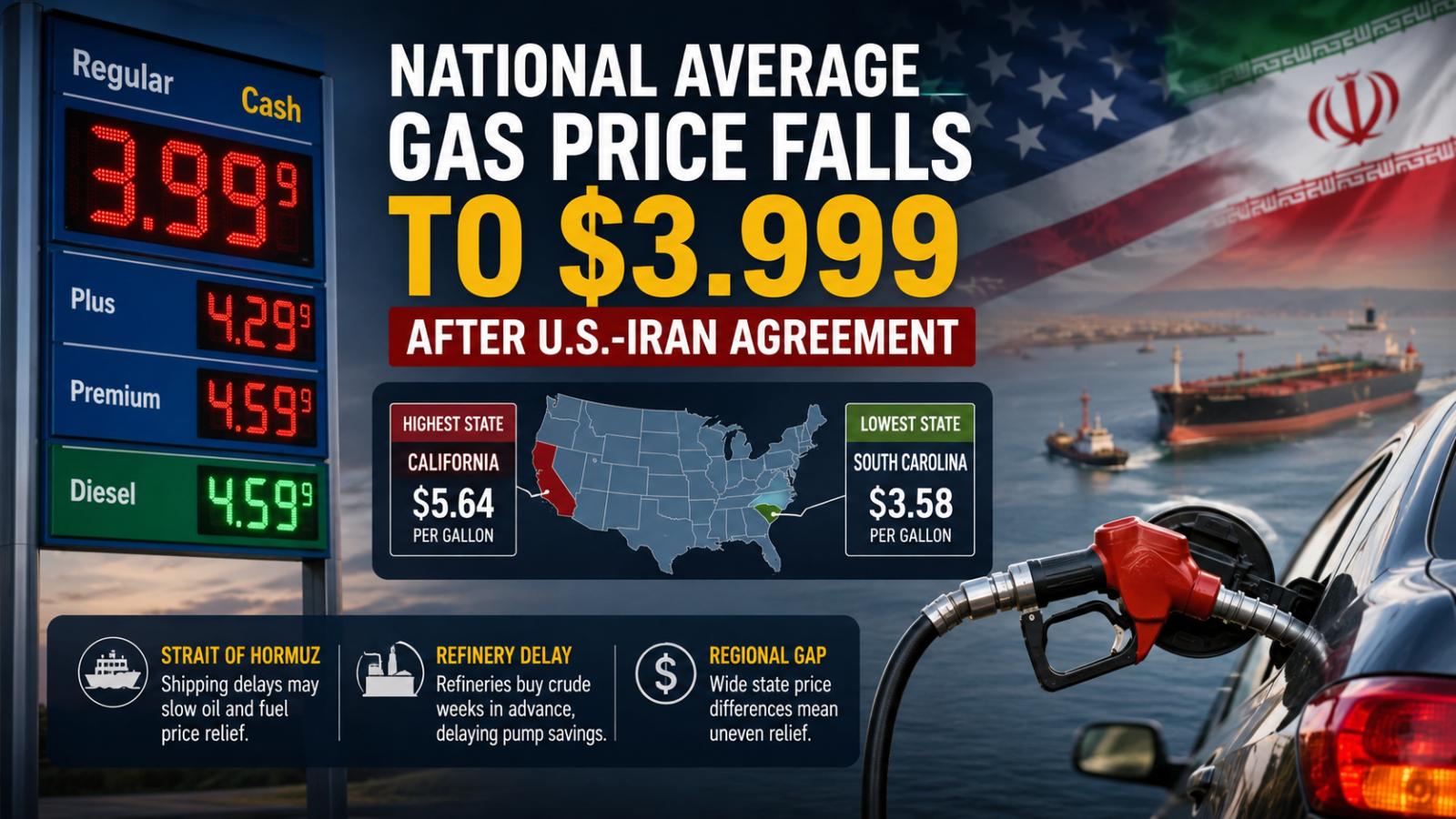
The national average gas price fell to $3.999 per gallon on Thursday, June 18, 2026, according to AAA, dropping below $4 for the first time since March. The decline followed President Donald Trump’s signing of an agreement with Iran on Wednesday, June 17, 2026.
National average gas price reaches $3.999
The agreement calls for Iran to dilute its stockpile of highly enriched uranium while U.S.-backed sanctions are waived. It also begins a 60-day negotiating period focused on the future of Iran’s nuclear program and seeks a permanent end to hostilities.
Trump, however, left open the possibility that attacks could resume.
The lower U.S. gasoline average does not mean drivers will receive equal relief nationwide. California’s average remains $5.64 per gallon, compared with $3.58 in South Carolina—a difference of $2.06 per gallon.
Strait of Hormuz delays may slow gas-price relief
Before the conflict, the Strait of Hormuz carried about one-fifth of the world’s crude oil. Restoring normal shipping traffic may take weeks or months as hundreds of vessels move through the Persian Gulf and regional producers gradually restart curtailed output.
Ship captains may also wait for clearer evidence that passage through the waterway is safe.
Refinery purchasing creates a price delay
Refineries typically purchase crude oil at least a month before processing it. As a result, easing oil prices do not immediately produce lower gasoline prices at U.S. pumps.
Disruptions around the Strait of Hormuz have also affected supply chains for refined fuel, fertilizer, food and footwear. Businesses could therefore continue facing higher transportation and supply costs even as the national gasoline average declines.
The $3.999 national average is a notable threshold for U.S. drivers, but the practical benefit will depend on where consumers live and how quickly oil shipping, refinery purchasing and regional fuel supplies return to normal.