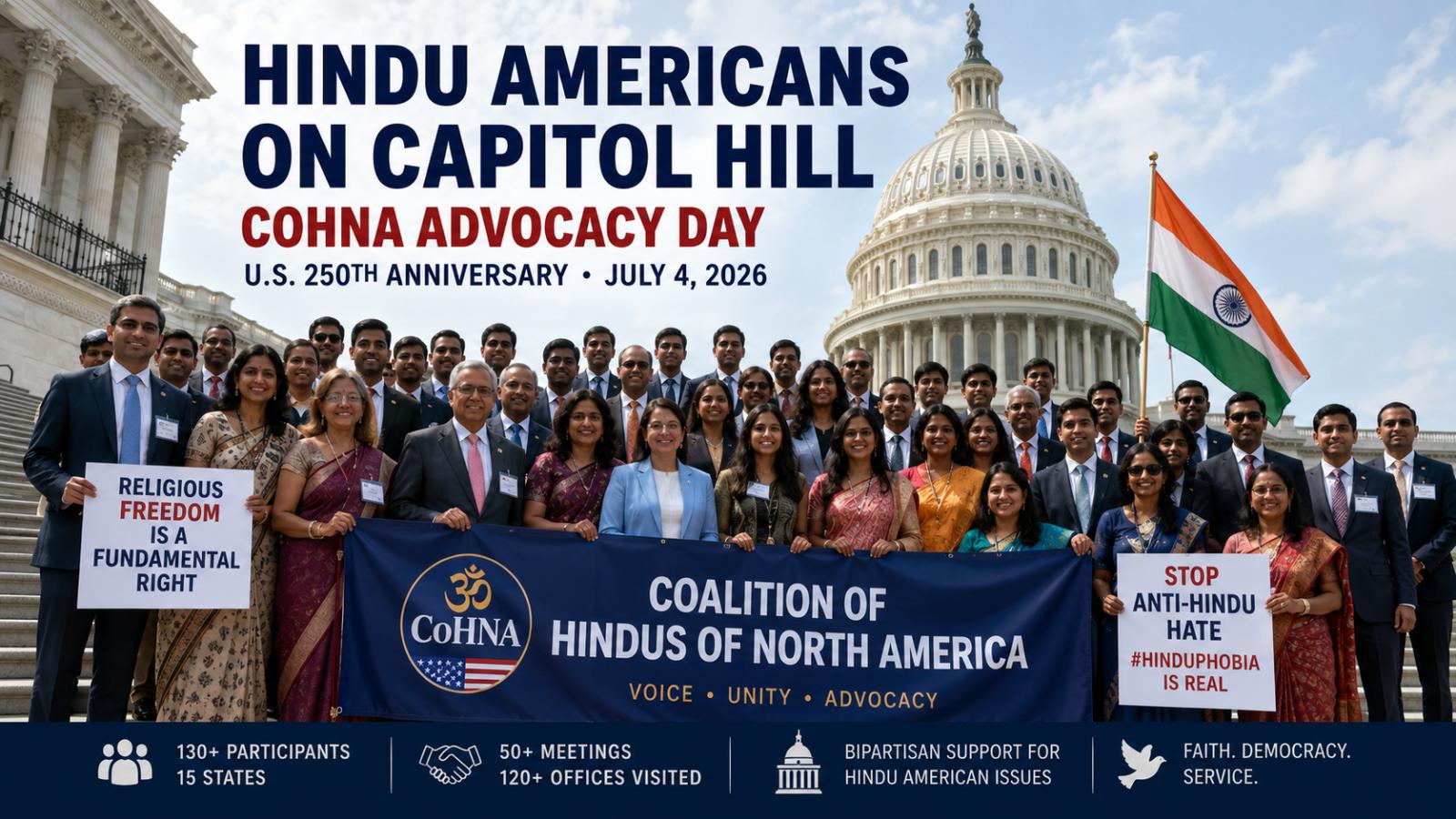
More than 130 Hindu Americans gathered on Capitol Hill for CoHNA Advocacy Day on Saturday, July 4, 2026, using the U.S. 250th anniversary to highlight civic participation, religious freedom and concerns over anti-Hindu hate.
The fifth annual advocacy day, organized by the Coalition of Hindus of North America, brought participants from 15 states to Washington, D.C. Delegates included students, veterans, entrepreneurs, researchers and community leaders.
CoHNA Advocacy Day Draws Hindu Americans to Congress
According to the event summary, seven members of Congress and about a dozen congressional staffers from both parties participated. Delegates held more than 50 meetings with staff and visited more than 120 congressional offices to discuss issues affecting Hindu Americans.
CoHNA President Nikunj Trivedi said participants shared personal stories, built relationships and sang the national anthem as part of the program. The event framed Hindu American advocacy as part of the country’s democratic tradition during the semiquincentennial year.
Anti-Hindu Hate, Temple Attacks and Campus Bias Discussed
Speakers and participants raised concerns about Hinduphobia, temple attacks, immigrant contributions and caste-related policy debates. Youth Action Network members described efforts to counter anti-Hindu bias on college campuses.
Hindu veteran Ruchir Bakshi said the Bhagavad Gita helped guide his public service after combat duty in Afghanistan and Iraq.
Lawmakers from both parties also addressed community concerns. Rep. Sanford Bishop said “Hinduphobia is un-American,” while Rep. Zoe Lofgren cautioned that caste-based legislation could deepen discrimination.
Researchers Discuss Online Hostility and Citation Integrity
Researchers Joel Finkelstein and Prasiddha Sudhakar discussed anti-Hindu bias, online hostility and the overlap between anti-Indian sentiment and attacks on Hindu identity, festivals and temples.
Anang Mittal introduced the Citation Integrity Dashboard, described as a nonpartisan effort to examine whether cited reports are supported by verifiable evidence.
Sudha Jagannathan said bipartisan participation reflected growing recognition of anti-Hindu hate and religious freedom concerns. The event underscored how Hindu American advocacy is increasingly focused on both community protection and participation in U.S. civic life.