Three freshman Democratic lawmakers in the U.S. House of Representatives have introduced new legislation that would allow individuals and organizations to sue the federal government — and even specific officials like Elon Musk — for obstructing congressionally approved federal spending. The bill, titled the Protect Our Constitution and Communities Act, was introduced by California Representatives Sam Liccardo and Dave Min, along with Virginia Representative Eugene Vindman. The proposed law aims to establish legal consequences for decisions made by the executive branch that defy federal laws like the Impoundment Control Act, which restricts the president's power to withhold or delay congressionally allocated funds.
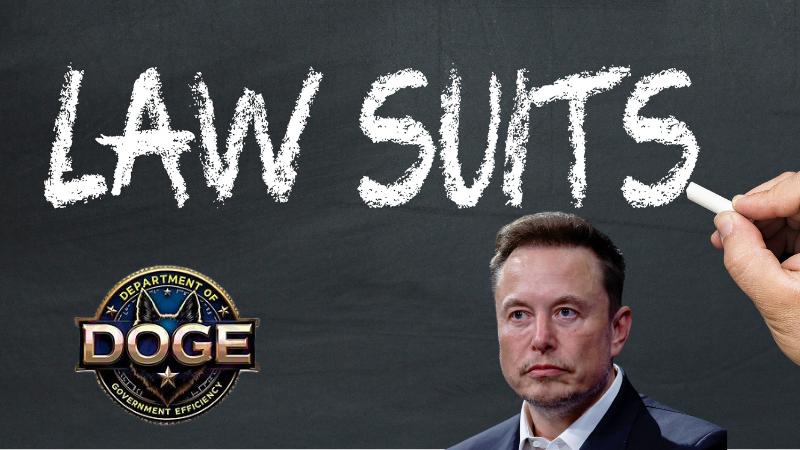
Although the bill is not expected to advance in a Republican-controlled House, its sponsors believe it can serve as a legislative framework for future sessions. The lawmakers behind the proposal have expressed concern that recent executive decisions have blocked or frozen federal grants and appropriations, disproportionately affecting institutions and states with Democratic leanings. These abrupt spending cuts have been traced to DOGE, an entity within the government responsible for such funding decisions, which has garnered criticism for bypassing longstanding processes and causing confusion across sectors like research, education, and public service.
Representative Liccardo explained that the bill is meant to act as a safeguard against future misuse of executive authority and ensure the Constitution’s directives are upheld, regardless of which party holds power. He cited scenarios in which NIH research grants could be arbitrarily revoked simply for including the word “diversity.” In such a case, the bill would give affected institutions or employees the right to sue for damages resulting from the canceled funding.
The legislation proposes significant reforms to the federal accountability system. Among its provisions, it would allow plaintiffs to challenge funding cuts in court and include mechanisms to strip qualified immunity from federal officials in specific circumstances. According to Liccardo, this could mean that if someone like Elon Musk, who has gained influence over public programs, played a role in harmful or unlawful spending cuts, they could be held personally liable for financial damages. The bill would also guarantee legal support for plaintiffs pursuing such cases and would triple the amount of financial damages awarded if a court finds that funding was withheld in bad faith.
Representative Dave Min emphasized the urgency of the bill, stating that the executive branch is making rapid decisions that have sweeping consequences, such as dissolving entire agencies or laying off workers. Even when courts later determine these actions were illegal, the consequences—job losses, disrupted services, and financial instability—cannot always be reversed. He argued that this legislation is essential to slow down such reckless decisions and ensure a legal path to undo the damage they cause.
Despite its slim chances of passing, the bill highlights a broader concern among Democrats about growing executive overreach, particularly under administrations that may prioritize partisan agendas over legislative intent. Representative Min noted that while it’s unlikely the bill would move forward on its own, there’s a potential for its provisions to be added to a larger, must-pass legislative package if Republicans face difficulties uniting their own caucus.
Ultimately, the Protect Our Constitution and Communities Act is designed to reinforce congressional authority over federal spending and ensure individuals or institutions harmed by abrupt policy changes have a means of recourse. The bill reflects growing frustration with what many see as an erosion of legislative power and a lack of accountability in executive decisions that bypass both Congress and public transparency.