US President Donald Trump announced on Thursday that he has signed an executive order initiating a significant change in federal marijuana policy, directing that cannabis be reclassified as a less dangerous drug under US law. The move represents one of the most notable shifts in national drug policy in recent years, although it stops short of legalizing marijuana for recreational use at the federal level.
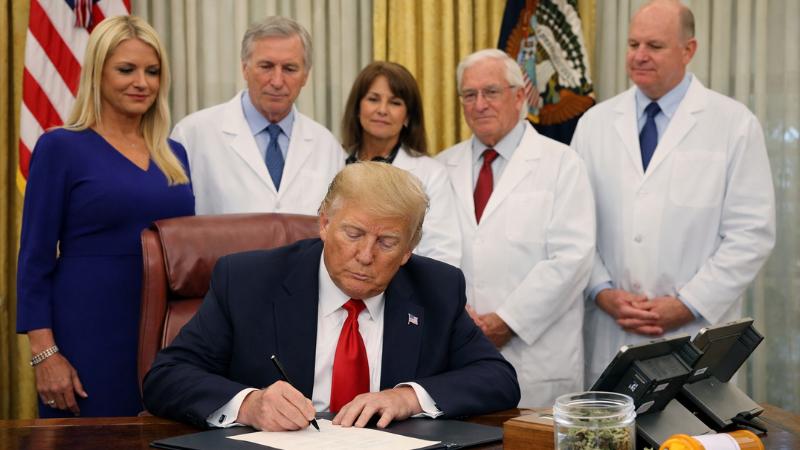
Speaking from the Oval Office, Trump said the order would begin the process of moving marijuana from Schedule I of the Controlled Substances Act to Schedule III, a category that recognizes accepted medical uses and a lower potential for abuse. He emphasized that the decision was intended to support scientific research and medical development rather than signal approval of recreational consumption.
Under current federal law, marijuana has been classified as a Schedule I substance, alongside drugs such as heroin and LSD. Substances in this category are defined as having a high potential for abuse and no accepted medical use. By contrast, Schedule III drugs, which include ketamine and certain anabolic steroids, are considered to have legitimate medical applications and a more limited risk of dependency.
Surrounded by medical professionals during the announcement, Trump made clear that the executive order does not amount to legalization. He stressed that the federal government would continue to oppose recreational drug use, stating that the policy change should not be interpreted as an endorsement of marijuana consumption outside approved medical contexts. Trump also referenced his long-standing personal stance against drugs, alcohol, and smoking.
The reclassification effort is expected to reduce barriers that have long limited cannabis research in the United States. Researchers seeking to study Schedule I substances face extensive regulatory hurdles, often requiring multiple layers of federal approval. Moving marijuana to Schedule III could streamline that process, making it easier for scientists and medical institutions to conduct clinical studies on potential therapeutic benefits.
The decision may also have financial and regulatory consequences for the cannabis industry. Federal tax rules currently restrict deductions for businesses dealing in Schedule I substances, even when those businesses operate legally under state law. A shift in classification could ease those restrictions, potentially altering the tax landscape for companies involved in cultivating and selling cannabis products.
While the president cannot directly reclassify a controlled substance, the executive order instructs Attorney General Pam Bondi to expedite the review and rescheduling process. Federal agencies are expected to evaluate the scientific evidence and regulatory implications as part of that effort.
The announcement comes after years of debate at both the federal and state levels. Dozens of states already operate medical marijuana programs, and many have approved recreational use under state law. Currently, small amounts of marijuana are legal for recreational use in 24 states and in Washington, DC, creating a complex patchwork of regulations across the country.
Trump noted earlier in the week that public support for reclassification has been driven in part by the promise of expanded research opportunities. He said easing federal restrictions could unlock studies that have been difficult or impossible to conduct under existing rules.
The previous administration under President Joe Biden had also explored reclassifying marijuana, but those efforts stalled and were not completed before Trump assumed office in early 2025. With this executive order, the administration is signaling a renewed push to modernize federal drug policy while maintaining clear limits on recreational legalization.
As the review process moves forward, federal officials, state governments, medical researchers, and industry stakeholders are expected to closely watch how the reclassification unfolds and what it ultimately means for public health policy in the United States.