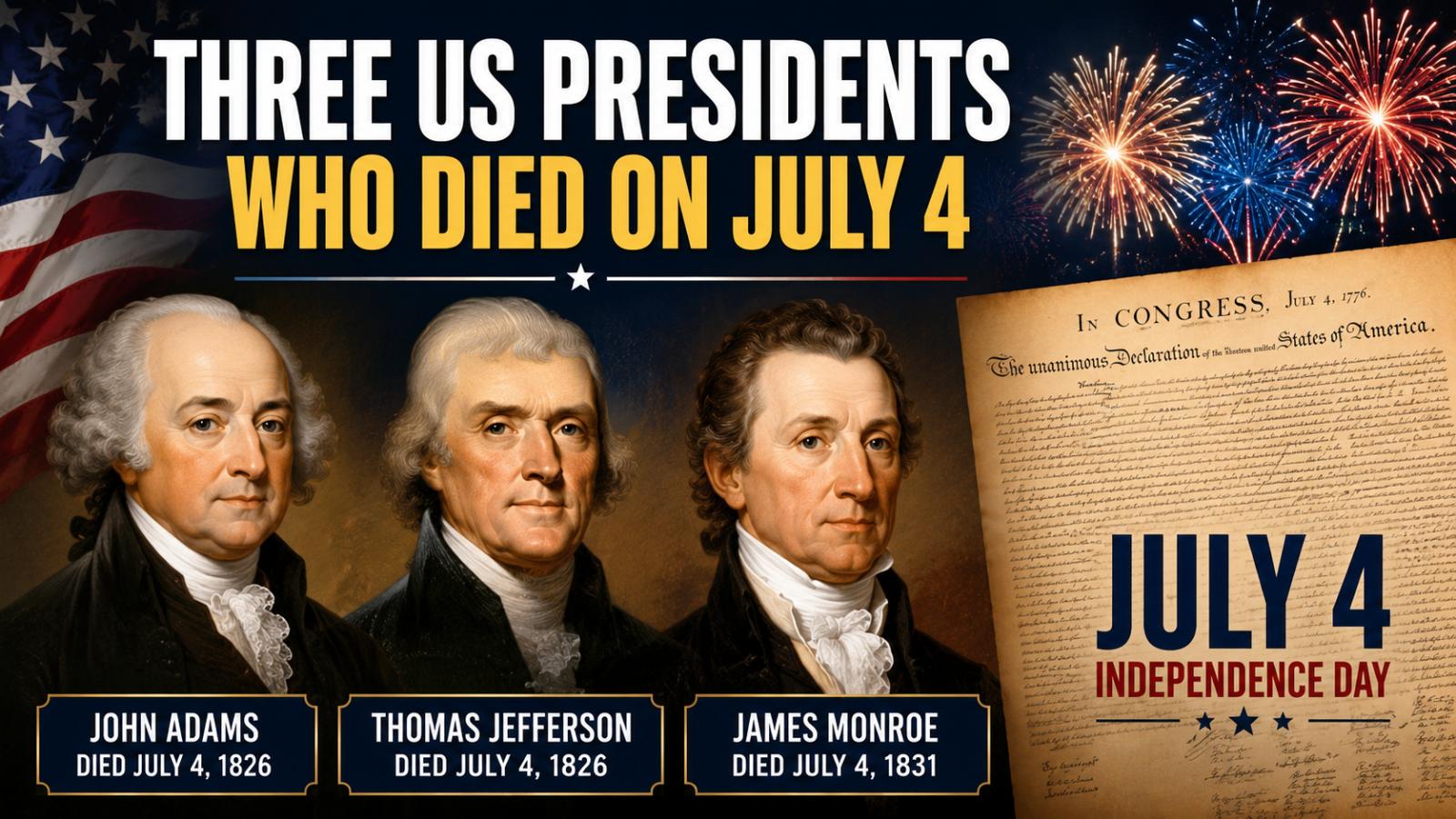
Three US presidents who died on July 4 remain part of one of the most striking coincidences in American history.
As the United States marks the 250th anniversary of American independence in 2026, the story of John Adams, Thomas Jefferson and James Monroe adds a remarkable historical layer to Independence Day.
Adams and Jefferson Died on America’s 50th Anniversary
The most famous case came on July 4, 1826, exactly 50 years after the Declaration of Independence was adopted.
John Adams and Thomas Jefferson, two Founding Fathers and former presidents, died within hours of each other. Both men had helped shape the American Revolution, and both served on the committee connected to the Declaration of Independence, with Jefferson writing the first draft and Adams helping move the document through debate.
Their relationship was complicated. Adams and Jefferson were allies during the Revolution, later became bitter political rivals, and then reconciled in 1812. Their renewed friendship produced years of letters about government, philosophy and the future of the republic.
Jefferson died at Monticello in Virginia after a long illness. Adams died later the same day in Massachusetts. According to historical accounts, Adams’ final reported words suggested that Jefferson still lived, though Jefferson had already died.
James Monroe Also Died on Independence Day
The July 4 presidential coincidence did not end with Adams and Jefferson.
On July 4, 1831, James Monroe, the fifth US president, also died. Monroe served from 1817 to 1825 and is widely remembered for the Monroe Doctrine, which warned European powers against further colonization or interference in the Americas.
His death made him the third US president to die on Independence Day.
Why the July 4 Coincidence Still Matters
No other date is so closely tied to the deaths of American presidents. The coincidence is especially powerful because Adams and Jefferson died on the 50th anniversary of the Declaration of Independence, a milestone both men had lived long enough to see.
For Americans celebrating July 4, the story is more than historical trivia. It connects the country’s founding, its early political divisions and its long memory of the leaders who helped define the republic.