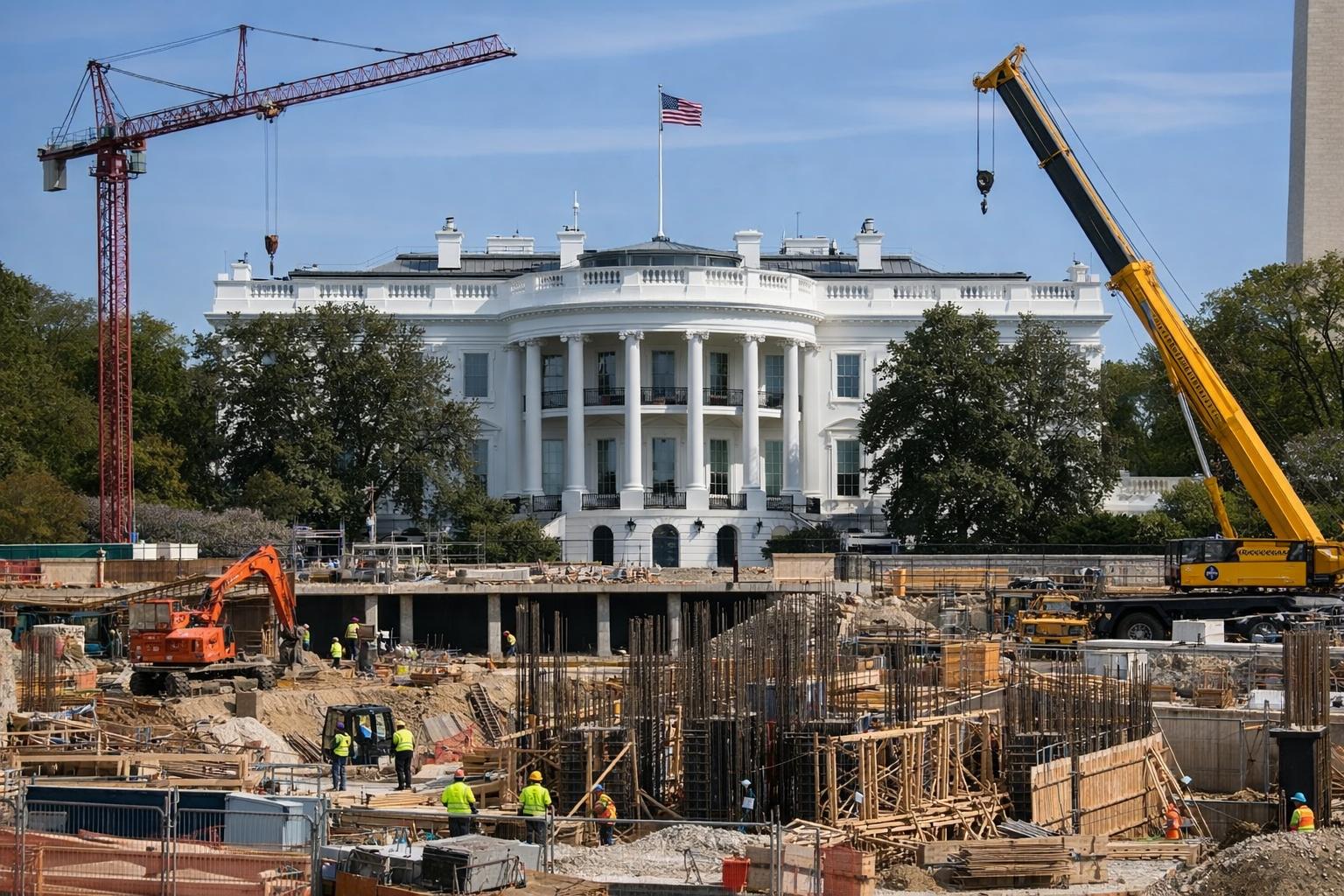
WASHINGTON — The National Capital Planning Commission approved plans for a new White House ballroom on Thursday, April 2, 2026, moving forward with a major expansion proposal despite an ongoing legal dispute that could delay construction. The decision came just days after a federal judge ordered a temporary halt to certain construction activities unless Congress grants authorization for the project.
According to commission officials, the approval process continued because the ruling issued on Tuesday, March 31, 2026, by U.S. District Judge Richard Leon applies specifically to construction work, not to planning approvals. However, the legal challenge introduces uncertainty around the timeline for what would be one of the most significant structural changes to the White House in more than 70 years.
The ballroom project, estimated at $400 million, is part of a broader effort by President Donald Trump to reshape parts of the White House complex before the end of his term in early 2029. The planned addition spans approximately 90,000 square feet and has drawn attention for both its scale and its potential impact on a historic landmark.
The commission’s vote had originally been scheduled for March but was delayed to Thursday, April 2, 2026, due to high public interest. During the meeting, public feedback was overwhelmingly opposed to the project, reflecting concerns from preservation advocates and members of the public.
Ahead of the vote, officials reviewed design revisions that included removing a large staircase on the south side and adding an uncovered porch on the west side of the proposed structure. The changes followed criticism from architects who had questioned the functionality and scale of the original design.
The project has faced legal opposition from the National Trust for Historic Preservation, which filed a lawsuit after the East Wing was demolished in October 2025 to make way for the new structure. The organization argues that congressional approval is required before proceeding with such a significant alteration.
In his ruling, Judge Leon emphasized that the president serves as a steward, not an owner, of the White House, indicating that the legal authority claimed for the project may not be sufficient. While construction tied to security upgrades can continue, broader building activity could be delayed if the court order takes effect.
Despite the ruling, work at the site has continued in limited capacity, with visible progress on preparatory construction. The administration maintains that similar projects in the past did not require congressional approval, setting the stage for a continued legal and political dispute over the future of the expansion.
According to commission officials, the approval process continued because the ruling issued on Tuesday, March 31, 2026, by U.S. District Judge Richard Leon applies specifically to construction work, not to planning approvals. However, the legal challenge introduces uncertainty around the timeline for what would be one of the most significant structural changes to the White House in more than 70 years.
The ballroom project, estimated at $400 million, is part of a broader effort by President Donald Trump to reshape parts of the White House complex before the end of his term in early 2029. The planned addition spans approximately 90,000 square feet and has drawn attention for both its scale and its potential impact on a historic landmark.
The commission’s vote had originally been scheduled for March but was delayed to Thursday, April 2, 2026, due to high public interest. During the meeting, public feedback was overwhelmingly opposed to the project, reflecting concerns from preservation advocates and members of the public.
Ahead of the vote, officials reviewed design revisions that included removing a large staircase on the south side and adding an uncovered porch on the west side of the proposed structure. The changes followed criticism from architects who had questioned the functionality and scale of the original design.
The project has faced legal opposition from the National Trust for Historic Preservation, which filed a lawsuit after the East Wing was demolished in October 2025 to make way for the new structure. The organization argues that congressional approval is required before proceeding with such a significant alteration.
In his ruling, Judge Leon emphasized that the president serves as a steward, not an owner, of the White House, indicating that the legal authority claimed for the project may not be sufficient. While construction tied to security upgrades can continue, broader building activity could be delayed if the court order takes effect.
Despite the ruling, work at the site has continued in limited capacity, with visible progress on preparatory construction. The administration maintains that similar projects in the past did not require congressional approval, setting the stage for a continued legal and political dispute over the future of the expansion.