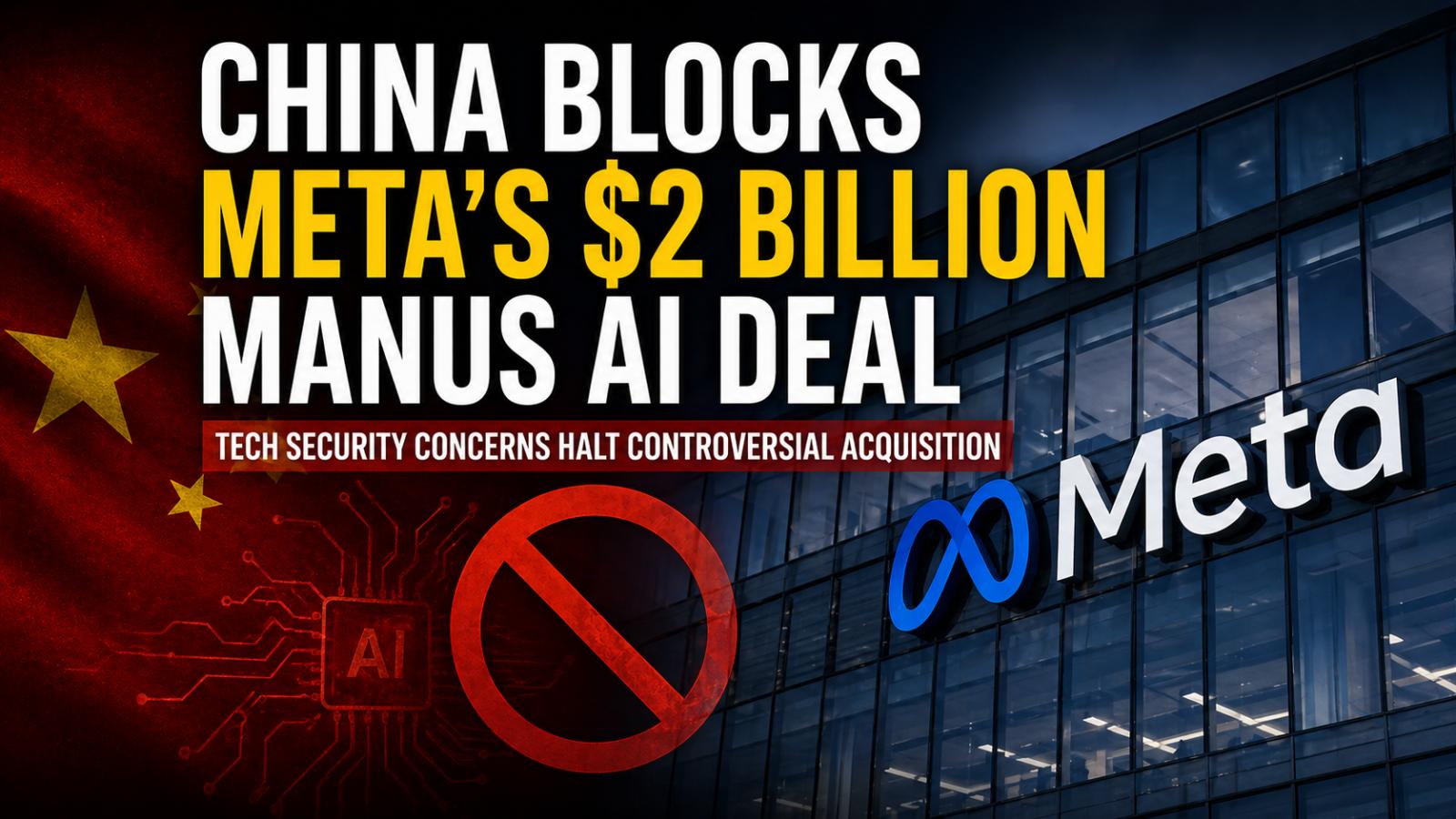
China’s decision to block the acquisition of Manus AI by Meta marks a major shift in global technology deals, as authorities cited concerns over technology transfer and national interests. The country’s top economic planner, the National Development and Reform Commission, ordered the cancellation of the $2 billion deal, effectively stopping Meta from gaining control of the AI startup.
The move highlights China’s growing caution around foreign investment in sensitive sectors such as artificial intelligence. Officials stated that the acquisition violated regulatory frameworks and required both parties to withdraw from the agreement. While no detailed explanation was provided, the decision reflects broader efforts to protect domestic innovation and prevent advanced technologies from moving abroad.
Meta had acquired Manus in December to strengthen its position in AI agents, a fast-growing field where systems perform complex tasks like coding, research, and data analysis. The Manus AI platform was considered a breakthrough, with capabilities aimed at competing with offerings from Microsoft, Alphabet Inc., OpenAI, and Anthropic.
Initially, the deal was seen as a model for cross-border collaboration, but it quickly drew criticism within China. Analysts and policymakers raised alarms about losing valuable AI technology to a geopolitical rival. This concern has intensified amid ongoing tensions between the United States and China over technology dominance and data security.
Manus, often compared to emerging AI leaders, developed general-purpose AI agents capable of handling complex workflows. Although founded in China, the company later moved operations to Singapore, adding another layer of regulatory scrutiny. Its innovations positioned it as a key player in the AI race, making the blocked deal even more significant.
The decision is expected to impact Meta’s long-term AI strategy, slowing its efforts to expand capabilities in intelligent automation. At the same time, it signals China’s intent to retain control over critical technologies and limit foreign influence in its rapidly evolving AI ecosystem.