What is the Living Wage for All Act? It aims to raise minimum wage to $25
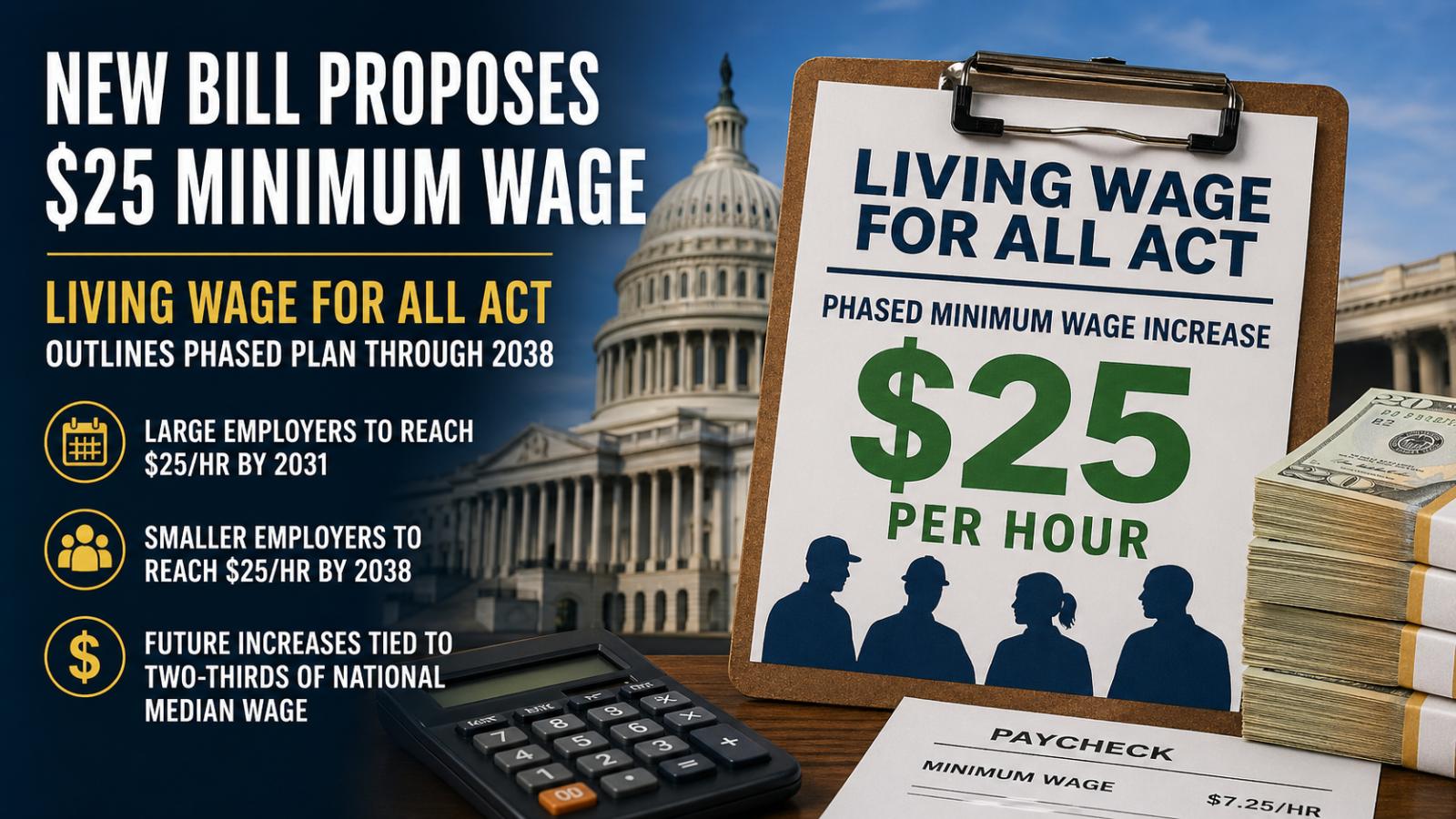
A new legislative proposal introduced on Tuesday seeks to significantly raise the federal minimum wage in the United States, setting a long-term target of $25 per hour through a phased implementation plan. The measure, known as the Living Wage for All Act, was introduced by a group of Democratic lawmakers aiming to address ongoing affordability concerns and wage stagnation.
Proposed timeline for phased wage increases across employers
Under the proposal, large employers—defined as companies with at least 500 employees nationwide or annual revenues exceeding $1 billion—would be required to reach the $25 hourly wage threshold by 2031. Smaller businesses would be given additional time, with a compliance deadline extending to 2038. The legislation also includes provisions to tie future wage adjustments to two-thirds of the national median wage, which currently stands near $31 per hour based on recent labor data.
Current federal wage levels and regional disparities
The federal minimum wage has remained at $7.25 per hour since 2009, although many states have enacted higher local minimums. However, several states still rely entirely on the federal baseline, while others maintain lower statutory levels that are superseded by federal law. The proposal would also eliminate subminimum wage structures, including tipped wages that currently allow base pay as low as $2.13 per hour.
Economic arguments and research findings on wage increases
The proposed wage increase has reignited longstanding debates about its potential economic effects. Critics argue that higher labor costs could result in reduced hiring or increased consumer prices, particularly for small businesses. Supporters, however, point to recent studies suggesting that wage increases can improve worker retention and business revenue without significant negative impacts. Other research indicates that while short-term gains may occur, long-term adjustments could reduce lower-skilled job opportunities.
Workforce impact and political outlook in Congress
Data shows that millions of U.S. workers earn below $25 per hour, highlighting the scale of the proposed change. While public support for increasing wages remains relatively strong, previous legislative efforts to raise the federal minimum have faced challenges in Congress. The future of the bill remains uncertain, but advocates argue that growing concerns about economic survival and cost of living may increase pressure on lawmakers to act.