Trump Orders US Troops Withdrawal From Germany
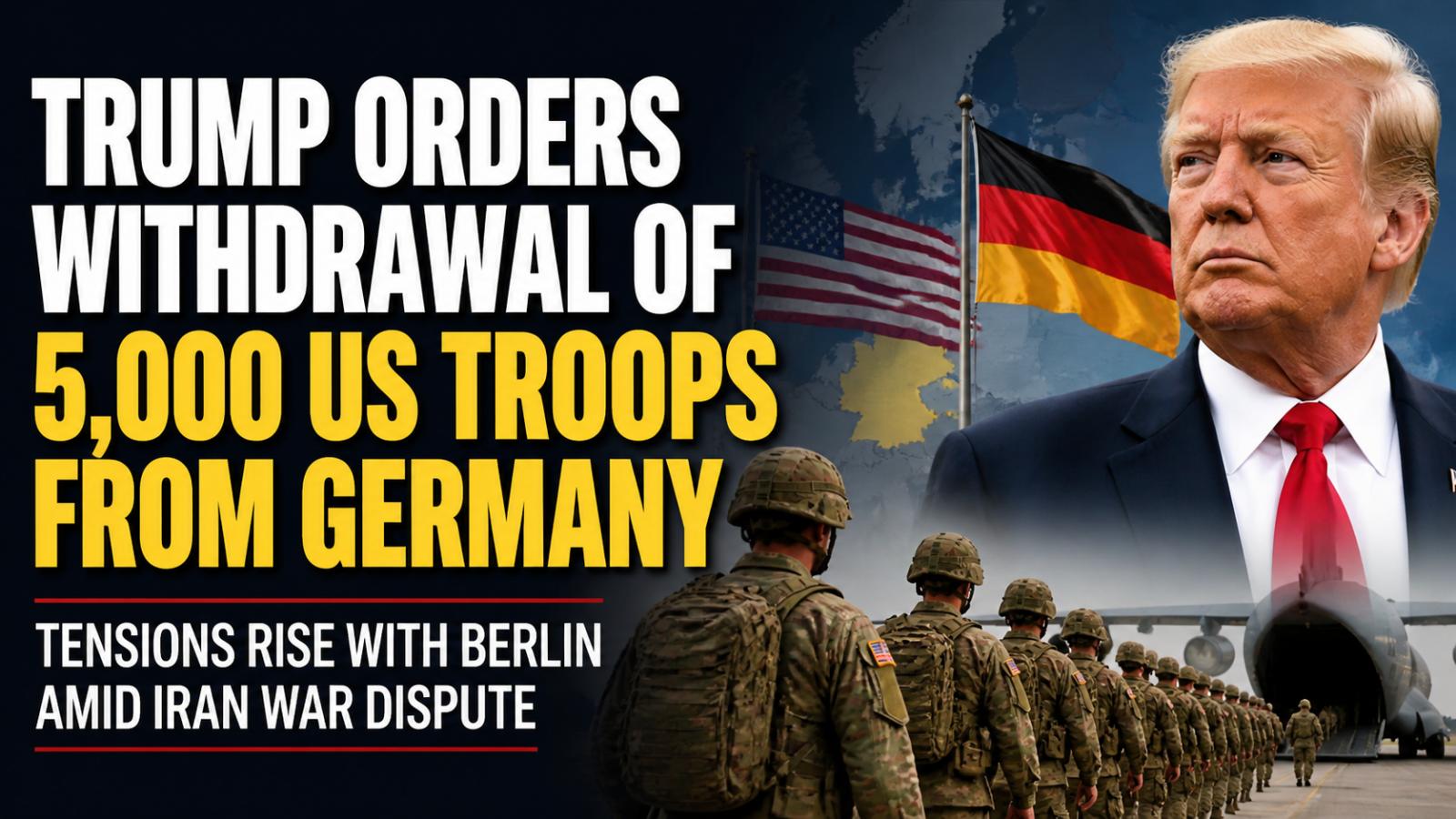
President Donald Trump has ordered the withdrawal of 5,000 US troops from Germany, escalating tensions with Berlin and NATO allies. This decision comes amid ongoing disagreements over the Iran conflict and US military operations in the Middle East. The Pentagon confirmed the move on Friday, May 1, as part of a broader shift in US military strategy, which seeks to reduce America's presence in Europe while encouraging NATO countries to take more responsibility for their own defense.
Strategic Shift in US Military Posture
The Pentagon has emphasized that this troop reduction is part of its long-term goal to shift Europe towards greater self-reliance in defense. As a result, the US military is gradually reducing its footprint on the continent. Currently, Germany is home to over 36,000 US troops, making it the largest US military base in Europe. These troops play a crucial role in supporting US operations in the Middle East, particularly Operation Epic Fury, which is part of the US-led campaign against Iran.
German Leadership Criticizes Trump Over Iran Strategy
The move comes shortly after German Chancellor Friedrich Merz criticized Trump’s handling of the Iran conflict, stating that Iran’s leadership had "humiliated" the United States and questioning whether Washington had a clear exit strategy. Despite these tensions, Germany remains a critical ally for the United States, hosting key military bases like Ramstein Air Base and Landstuhl Regional Medical Center, the largest US military hospital outside the United States.
Details of the Withdrawal Plan
According to Chief Pentagon Spokesman Sean Parnell, the troop withdrawal will be completed over the next six to twelve months. The plan includes removing an Army brigade and reversing the Biden-era decision to deploy long-range missile units to Germany, which had been previously announced at the 2024 NATO summit. These cuts would return US troop levels to what they were before the Russian invasion of Ukraine in 2022.
Earlier Reductions and Future Plans
This decision follows earlier reductions, including the withdrawal of a combat brigade from Romania. Trump has also hinted at the possibility of reducing troops in Spain and Italy, criticizing Spain for its insufficient defense spending and its refusal to support US operations against Iran. On the other hand, Germany has been praised for increasing its military spending, despite political tensions between the two countries.
Germany's Willingness to Cooperate With the US
Despite the strain, German officials have shown a commitment to maintaining strong cooperation with Washington. Foreign Minister Johann Wadephul stated, “We are prepared for it. We are discussing the matter closely and in a spirit of trust within all NATO bodies.” He emphasized that decisions should be made in a manner that is appropriate among NATO allies and partners.
The Broader US Military Strategy
The broader US strategy is not solely focused on Europe but includes a long-term realignment of forces toward the Western Hemisphere and Indo-Pacific region. While the European footprint shrinks, the US continues to maintain strong alliances, particularly in the Indo-Pacific, as part of a broader global defense posture.
A Shift in US Military Presence
The first Trump administration’s plan to reduce nearly 12,000 US troops from Germany was initially framed as a shift in strategy and a response to Germany’s defense spending. This plan was later put on hold by President Biden, but the recent decision to withdraw 5,000 troops signals that the United States is sticking to its vision of a reduced military presence in Europe. Despite the tensions, the UK has allowed US forces to conduct bombing missions against Iran from British soil, highlighting the continued military collaboration between Washington and its key allies.