Alberta’s independence movement is gaining momentum—but can Alberta actually leave Canada?
The short answer: not easily. Yet a new referendum push is forcing the question back into national debate.
Alberta referendum gains traction
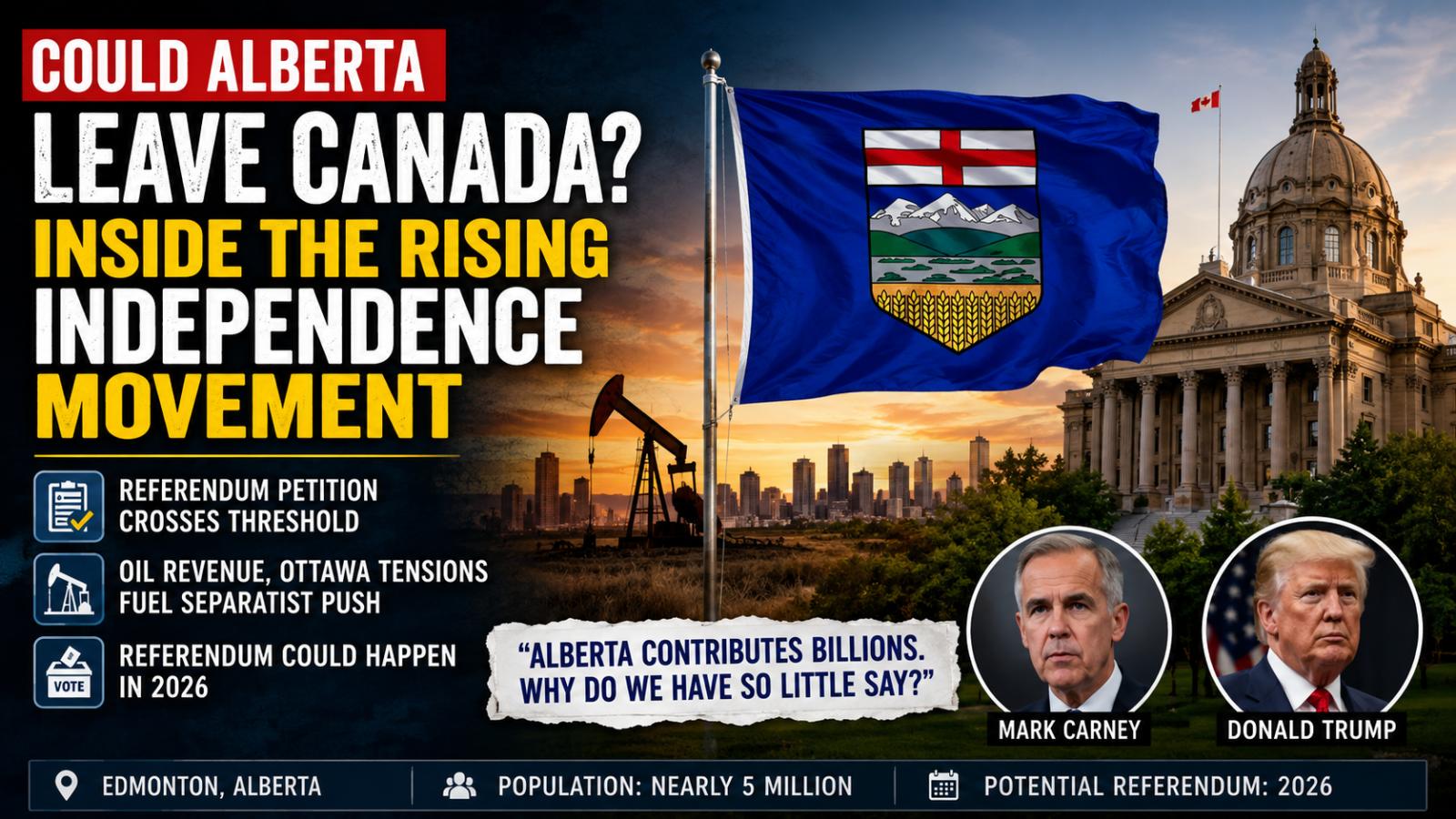
A pro-independence group has submitted over 300,000 signatures—far above the ~178,000 required—to trigger a potential Alberta referendum in 2026. Officials say this reflects growing frustration with federal policies and Ottawa’s influence over the province.
Why Alberta wants independence
At the center is Alberta’s oil-driven economy. As Canada’s energy powerhouse, many residents argue the province contributes heavily to national revenue but receives limited control in return.
Critics point to federal environmental regulations and equalization payments, claiming they restrict growth and redistribute Alberta’s wealth unfairly.
Ottawa tensions and global pressures
Strained relations between Prime Minister Mark Carney and U.S. President Donald Trump have added pressure. Trade uncertainty and energy export concerns are fueling calls for greater autonomy in Western Canada.
Can Alberta legally leave Canada?
Legally, separation is complex. Canada’s constitution does not allow a province to unilaterally secede. Any move would require negotiations with Ottawa and likely approval from other provinces.
What happens next?
Even if approved, the Alberta referendum would measure public opinion—not guarantee independence. Analysts say the province remains divided, with many favoring reform within Canada rather than full separation.
Still, the momentum signals a deeper shift: Alberta’s political future is now a national question.