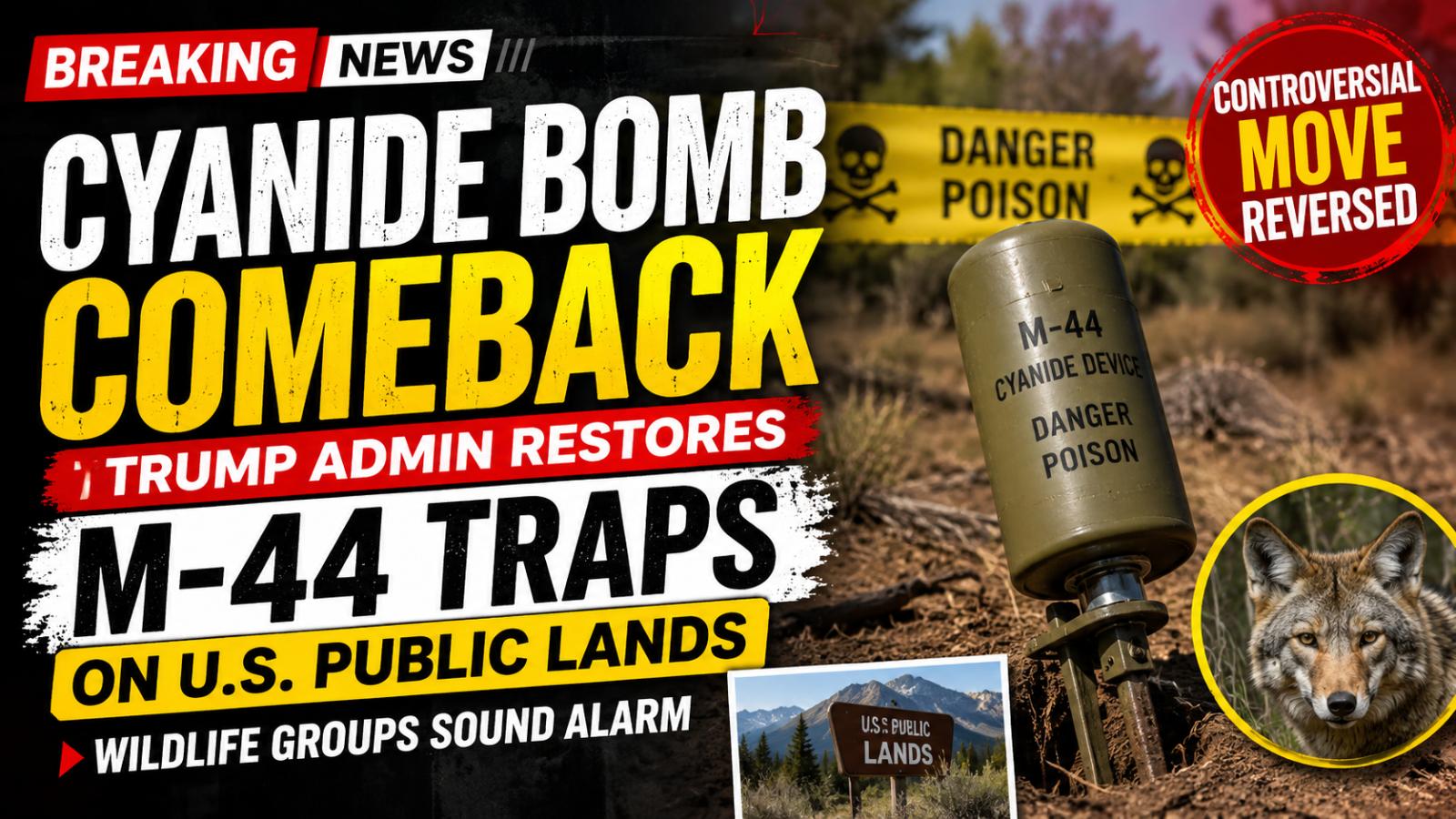
The Trump administration has moved to restore the use of controversial M-44 cyanide traps on public lands across the United States, reviving a predator control method that had previously faced restrictions due to environmental and public safety concerns. The decision follows a memorandum signed in April between the Bureau of Land Management and the Agriculture Department’s Wildlife Services program, allowing the agencies to coordinate the possible deployment of restricted pesticides, including sodium cyanide devices commonly referred to as cyanide bombs.
M-44 traps are designed to target predators such as coyotes by ejecting sodium cyanide powder when triggered. Critics argue that the devices are highly indiscriminate and frequently harm animals beyond their intended targets. Wildlife advocacy organizations have long opposed the use of the poison traps, warning that endangered species, native predators, pets, and other wildlife can unintentionally activate the devices. Environmental groups also claim the traps pose a serious risk to people who may come into contact with them while visiting public lands.
Conservation organizations reacted strongly to the policy shift, describing the devices as dangerous tools that threaten ecosystems and public safety. Activists maintain that warning signs placed near deployment areas are not sufficient to prevent accidental exposure involving animals or humans. Several groups have indicated they are preparing legal and environmental challenges aimed at preventing broader use of the devices on federal lands.
Federal officials, however, stated that the new memorandum does not automatically expand or authorize widespread use of M-44 traps. According to agency representatives, any deployment would still remain subject to existing environmental laws, federal review procedures, and Environmental Protection Agency regulations governing restricted-use pesticides. The Bureau of Land Management also noted that Wildlife Services must notify local field offices before any pesticide activity takes place.
The renewed debate has intensified concerns surrounding predator control policies in the United States, especially as environmental organizations continue urging federal agencies to adopt wildlife management methods that reduce risks to native species, domestic animals, and public health.