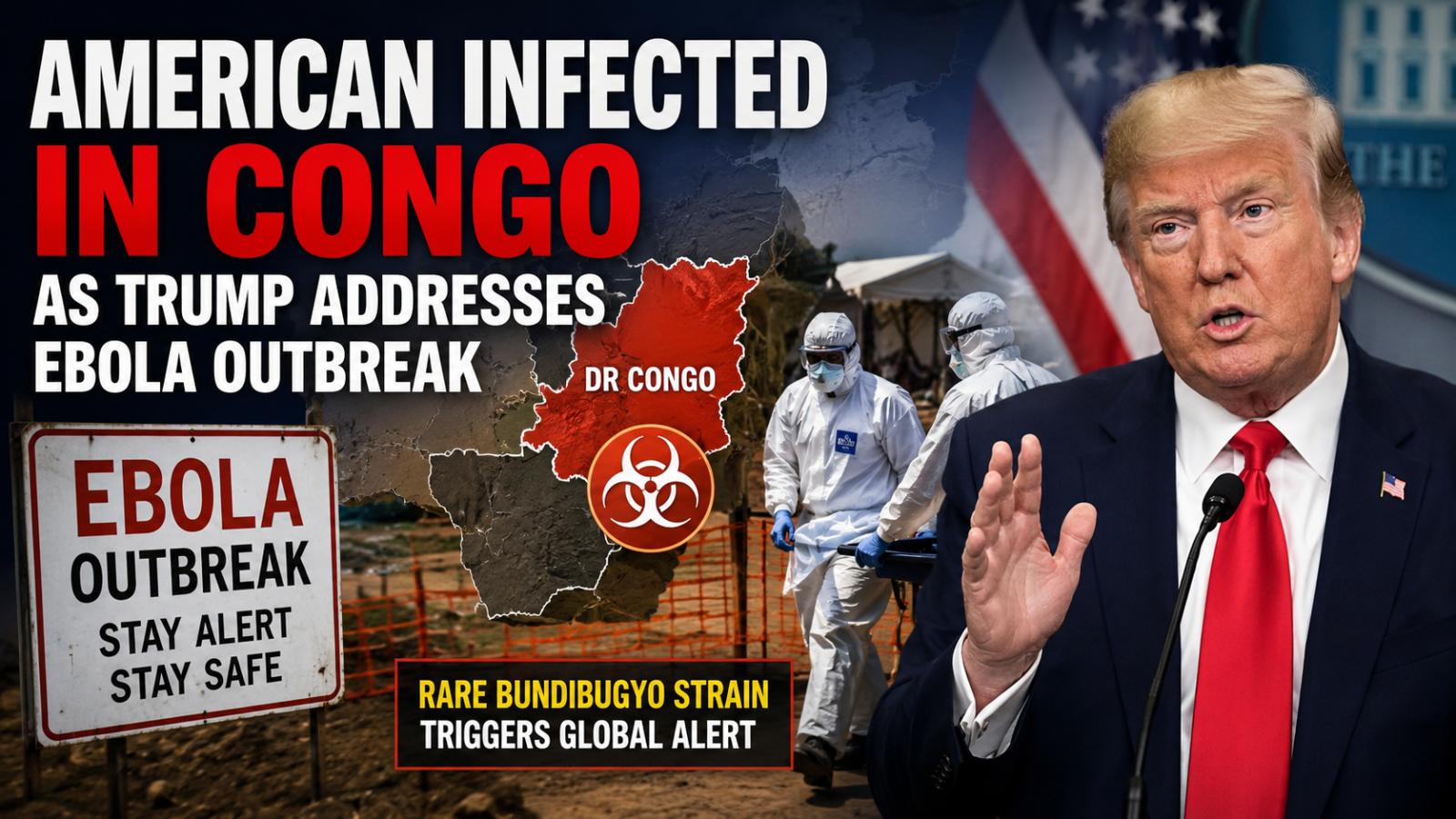
The DRC Ebola outbreak has drawn international concern after an American doctor working with patients in the Democratic Republic of Congo tested positive for the rare Bundibugyo strain.
The US Centers for Disease Control and Prevention said the American tested positive on Sunday, May 17, 2026, after being exposed while caring for patients in the DRC. The CDC said the patient is being moved to Germany for treatment, along with high-risk contacts linked to the exposure. Reuters reported that the Christian mission organization Serge identified the infected physician as Dr. Peter Stafford.
DRC Ebola outbreak confirmed as Bundibugyo strain
WHO said it was alerted on Tuesday, May 5, 2026, to a high-mortality illness in Mongbwalu Health Zone in Ituri Province. On Friday, May 15, 2026, laboratory testing by the Institut National de Recherche Biomédicale in Kinshasa confirmed Bundibugyo virus disease in eight of 13 blood samples.
The DRC Health Ministry declared the country’s 17th Ebola outbreak on Friday, May 15, 2026, in the Rwampara, Mongbwalu and Bunia health zones. WHO later determined on Saturday, May 16, 2026, that the outbreak in the DRC and Uganda met the criteria for a public health emergency of international concern.
Why the Bundibugyo strain is alarming
Bundibugyo virus disease is a form of Ebola disease, but CDC says there are currently no approved vaccines or specific treatments to prevent or treat it. Early supportive care can improve survival, making rapid testing, isolation and contact tracing especially important.
WHO said the first currently known suspected case was a health worker who developed symptoms on Friday, April 24, 2026, and later died at a medical center in Bunia. By Friday, May 15, 2026, officials had reported 246 suspected cases and 80 deaths in three affected health zones, with additional suspected clusters under investigation.
CDC says US risk remains low
CDC said on Monday, May 18, 2026, that no Ebola cases linked to this outbreak had been confirmed in the United States and that the overall risk to the American public remains low. However, the agency has implemented enhanced travel screening and monitoring for travelers from affected areas.
For more background on the US response, read our report on [American infected in Congo as Trump addresses Ebola outbreak].
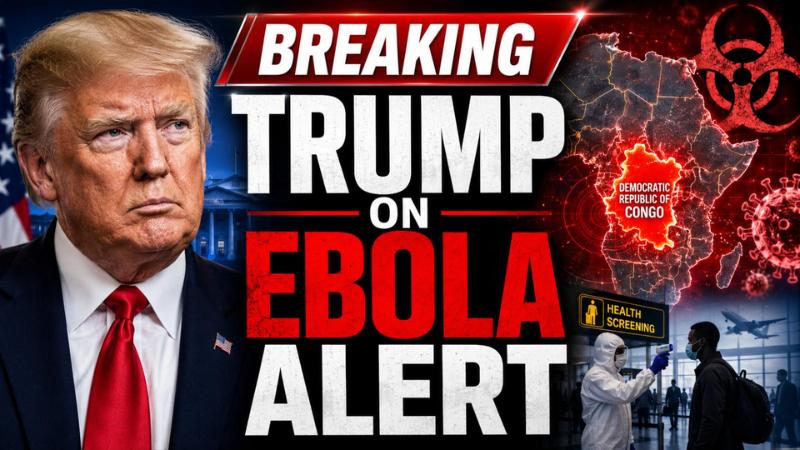
CDC’s latest travel notice recommends avoiding nonessential travel to Ituri and North Kivu provinces in the DRC. Officials are also monitoring Uganda, where WHO confirmed imported cases in Kampala among people who had traveled from the DRC.
The outbreak matters because eastern Congo is already affected by insecurity, population movement and strained health systems. WHO warned that those conditions, combined with limited vaccine and treatment options for Bundibugyo virus disease, raise the risk of further regional spread if surveillance and isolation efforts fall behind.