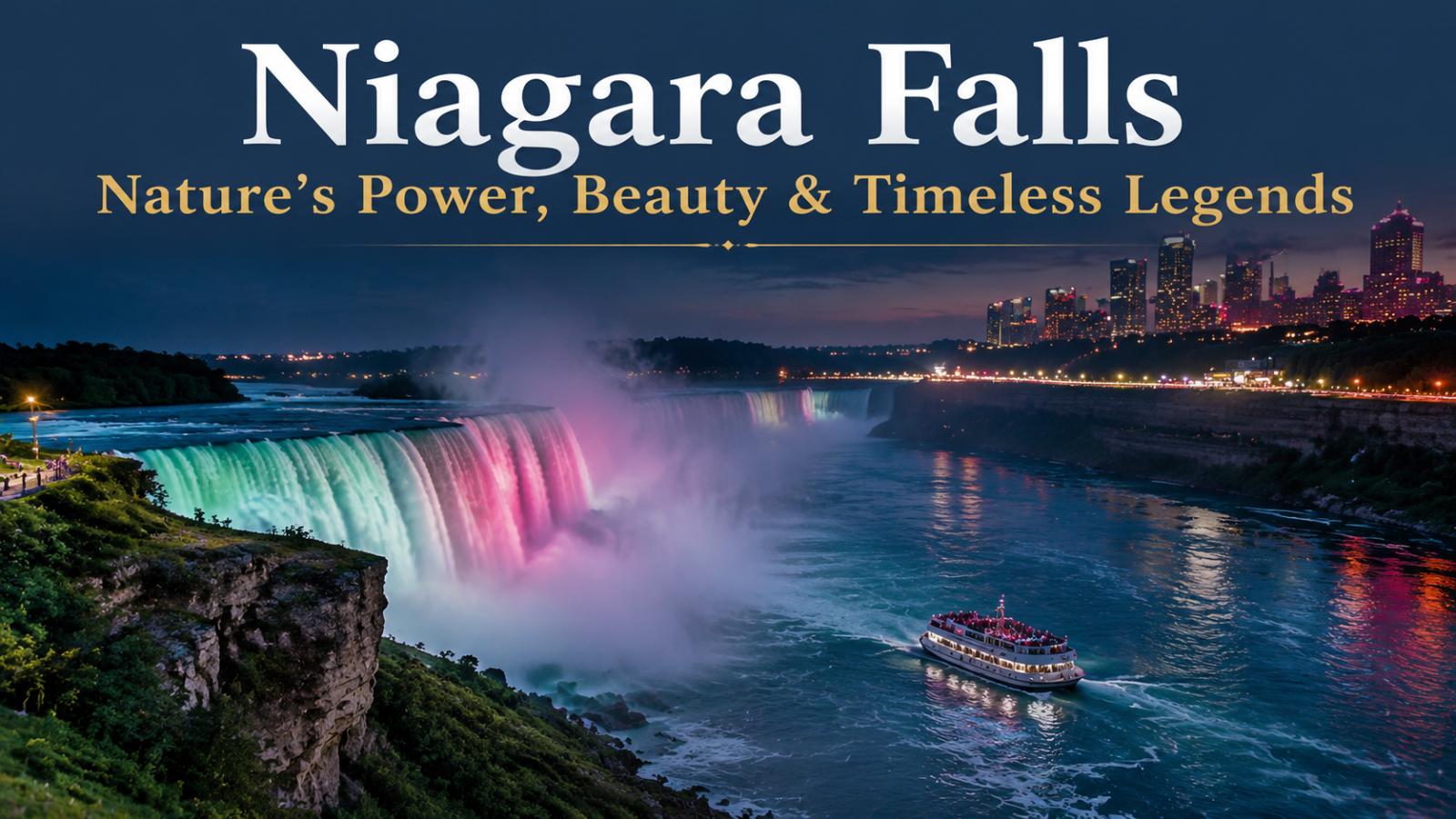
Niagara Falls, one of the world’s most iconic waterfalls, spans the border of New York, USA, and Ontario, Canada. The landmark features three distinct waterfalls—Horseshoe Falls, American Falls, and Bridal Veil Falls—along the Niagara River. Formed about 12,000 years ago after the last Ice Age, the falls are a powerful symbol of natural force. With a height of 167 feet and an average flow rate of 85,000 cubic feet per second, Niagara Falls showcases immense water power while attracting millions of visitors annually. The Maid of the Mist boat tour, observation decks, and surrounding parks allow tourists to experience both the grandeur and the history of the falls.
Geological formation and ongoing erosion
Niagara Falls continues to migrate upstream due to the erosion of softer rock beneath its dolomite capstone. This slow but constant retreat demonstrates the ongoing power of nature and is closely monitored by scientists. The Niagara Escarpment, shaped over millennia, provides a clear view of geological change. Its layered rock formations are both a natural classroom and a visual spectacle.
Hydroelectric power and engineering significance
Beyond its scenic beauty, Niagara Falls is a major site for hydroelectric energy. Early 20th-century projects, including the Robert Moses Power Plant in the U.S. and the Sir Adam Beck Generating Stations in Canada, leverage the massive water flow for electricity. Treaties between the two countries ensure that energy production coexists with the preservation of natural beauty, balancing economic and ecological priorities.
Cultural and spiritual heritage
Niagara Falls has inspired countless artists, writers, and filmmakers. Indigenous legends, such as that of Lelawala and the Thunder Being He-No, add depth to the falls’ cultural significance. These stories highlight the falls as a sacred and symbolic site, intertwining natural power with spiritual narratives. The falls also gained fame as a honeymoon destination in the 19th century, cementing their place in popular culture.
Visitor experience and natural phenomena
Visitors witness extraordinary natural phenomena at Niagara Falls, including rainbows and rare moonbows, which form when sunlight or moonlight refracts through the mist. Nighttime illuminations transform the waterfalls into a vibrant spectacle of LED lights and fireworks. The Canadian side provides panoramic views of the full curve of the falls, while attractions like the Skylon Tower, Niagara SkyWheel, and Journey Behind the Falls enhance the visitor experience. Both day and night visits reveal unique aspects, from the raw power of rushing water to magical, illuminated vistas.
Niagara Falls continues to captivate audiences worldwide, offering not only breathtaking natural beauty but also rich history, culture, and technological innovation. Its combination of geology, legend, and tourism infrastructure ensures it remains a must-visit destination for travelers of all ages.