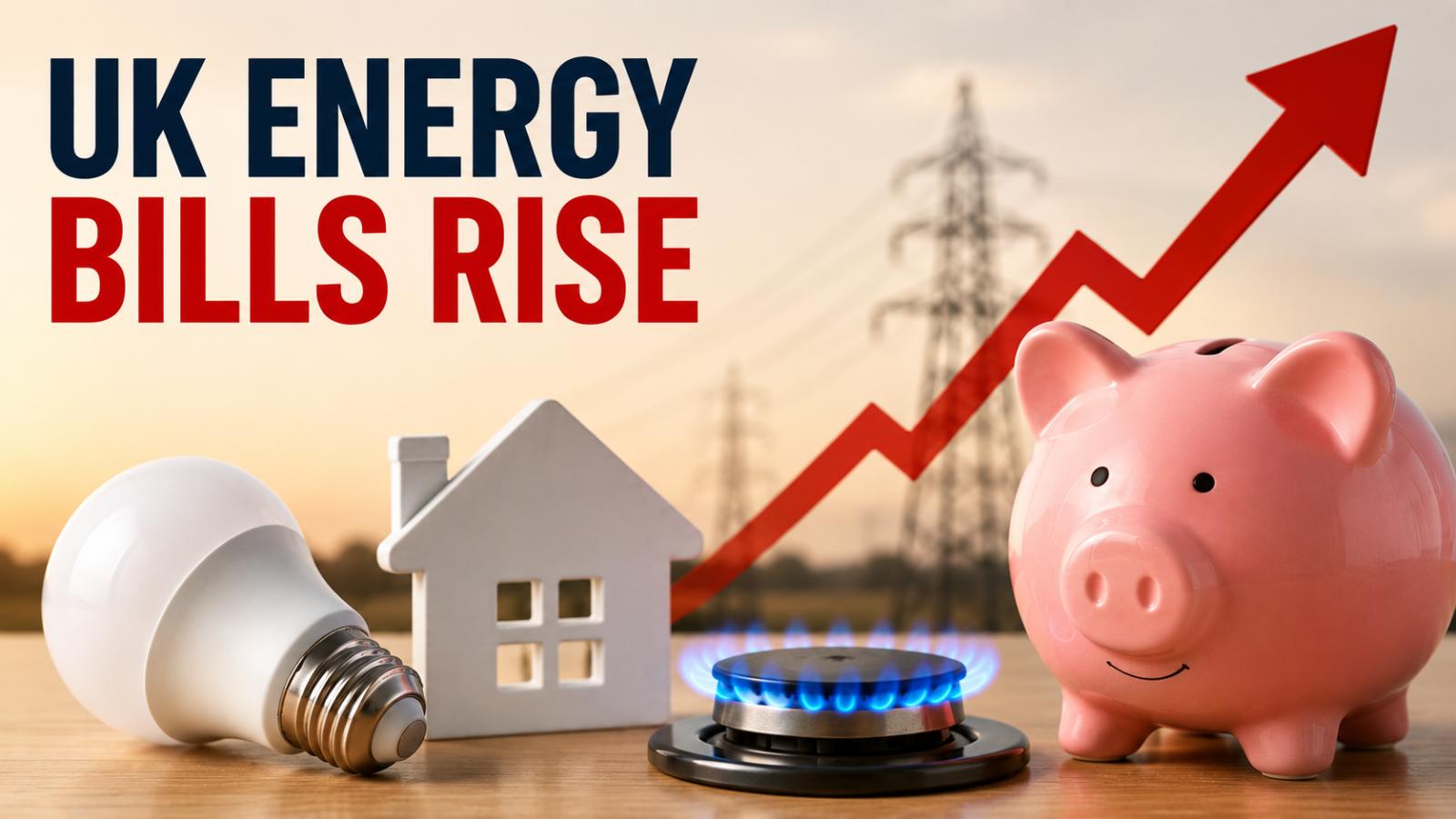
The Ofgem July price cap 2026 will raise typical UK household energy costs from July as higher wholesale gas prices continue to affect Britain’s energy market.
Ofgem announced on Wednesday, May 27, 2026, that the energy price cap for Great Britain will rise by 13% for the period from Wednesday, July 1, 2026, to Wednesday, September 30, 2026. Under the existing typical household usage measure, the annual figure will rise from £1,641 to £1,862.
Why UK Household Energy Bills Are Going Up
The regulator said the increase is mainly linked to higher wholesale gas prices caused by continuing conflict in the Middle East. Gas bills are expected to rise more sharply than electricity bills, with Ofgem saying gas costs will climb about 24%, while electricity bills will rise around 5%.
The price cap does not set a household’s total bill. Instead, it limits the unit rates and standing charges suppliers can apply to customers on default tariffs. Actual bills still depend on how much gas and electricity each home uses.
Explainer: Who Pays More and Who Is Protected?
Who may pay more:
Households on standard variable energy tariffs are most exposed to the July price cap rise. Homes that use more gas for heating, hot water, and cooking may feel the increase more strongly because gas bills are rising faster than electricity bills.
Who is protected:
Customers on fixed-rate energy tariffs are generally protected from this specific July increase until their contract ends. Ofgem said about 40% of energy accounts, or around 22 million accounts, are on fixed tariffs and will not be affected by the July price cap rise.
What households can do:
Households can compare fixed tariff options, check direct debit savings, and use smart meter-linked offers where available. Ofgem said some customers may save by switching payment methods or using cheaper time-based electricity deals.
Why it matters:
The July increase shows how global gas market volatility can affect household energy costs in Britain, especially for customers who are not locked into fixed-rate contracts.
Who Will Be Affected by the July Price Cap?
The rise mainly affects households on standard variable tariffs. Ofgem said about 40% of accounts, or roughly 22 million accounts, are on fixed tariffs and will not be affected by this specific July rise.
Ofgem also said households are using less energy than before, with electricity use down about 7% and gas use down about 17% compared with the last review. That lower usage will be reflected in updated consumption figures from July.
October Energy Price Cap Forecast Adds More Pressure
Cornwall Insight expects the cap could rise again in October, with its latest forecast pointing to around £1,899 if market pressure continues. Reuters also reported that analysts expect further pressure if disruption linked to the Strait of Hormuz persists.
For households, the July increase matters because it comes during a wider cost-of-living squeeze and shows how global gas market shocks can quickly affect domestic energy bills in Britain.