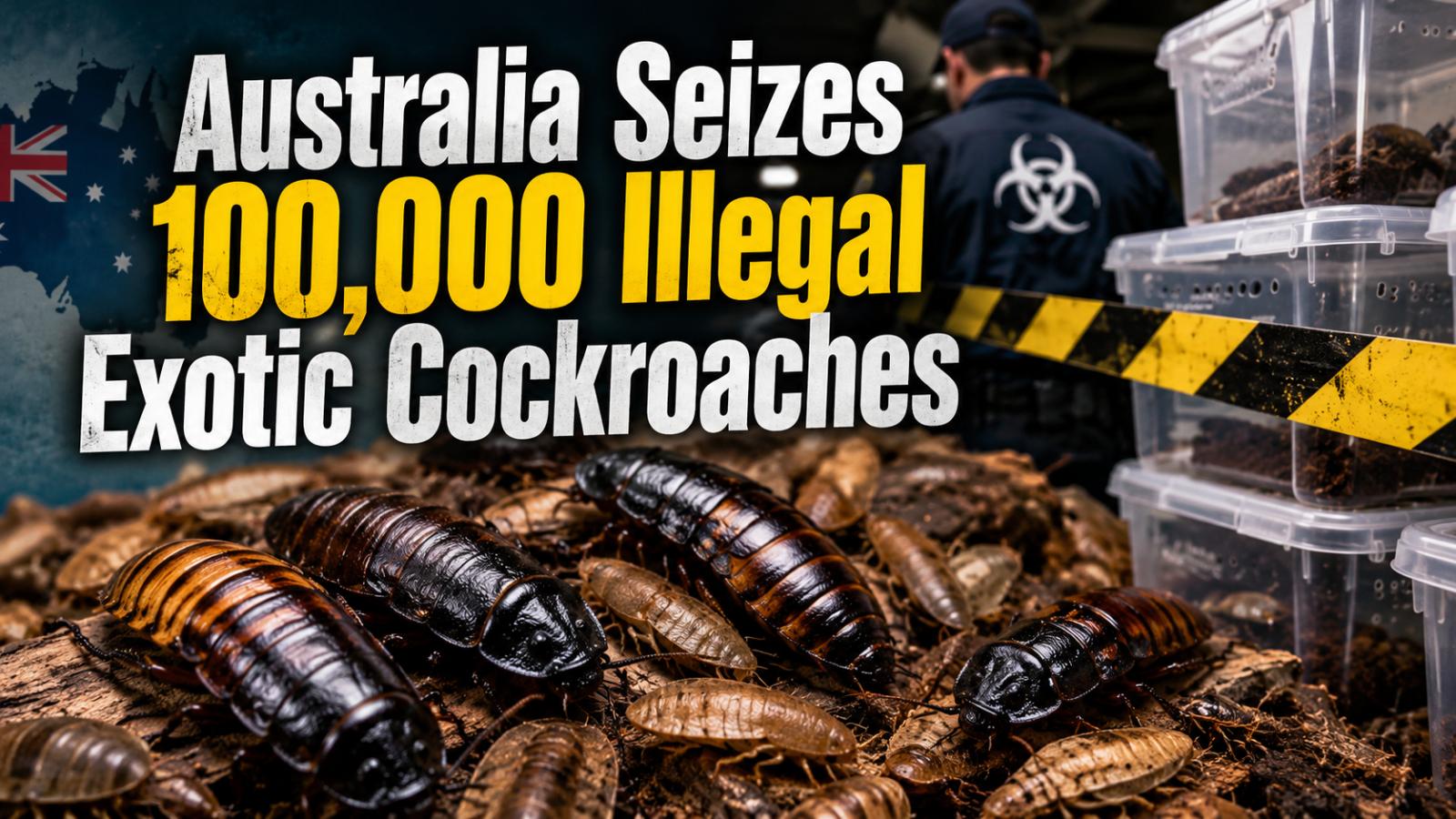
Australian biosecurity officials have seized more than 100,000 live exotic cockroaches from a commercial breeding site in Bathurst, New South Wales, in what has been described as the country’s largest seizure of illegal exotic invertebrates. The seized insects reportedly included dubia cockroaches and Madagascar hissing cockroaches, both of which are banned in Australia. Authorities valued the insects at up to AU$200,000.
Illegal Cockroach Breeding Site Found in Bathurst
The raid took place at a commercial breeder in Bathurst, a city in the Central Tablelands region of New South Wales. Officials found thousands of live exotic cockroaches being kept and bred despite strict Australian biosecurity rules.
Authorities said these species cannot be legally imported, kept, bred, sold or traded in Australia. Even if the insects were obtained locally, officials made it clear that their possession remains illegal because they have not been approved under Australian environmental and biosecurity laws.
The case has drawn attention because exotic cockroaches are often traded quietly through reptile and insect hobbyist networks. Some buyers use them as feeder insects for reptiles, frogs and other pets because they are large, easy to breed and cheaper than some legal alternatives.
Why Dubia and Hissing Roaches Are Banned ?
Dubia roaches and Madagascar hissing cockroaches are popular in the global reptile-feeding market, but Australia treats them as a serious biosecurity concern.
Madagascar hissing cockroaches are among the larger cockroach species in the world. Dubia roaches are also widely bred because they reproduce easily and are commonly used as live food for reptiles. That convenience is exactly why officials are worried. If these insects escape into the environment, they could become difficult to control.
Authorities warned that exotic cockroaches may carry diseases, parasites or microorganisms that are not normally present in Australia’s environment. They could also compete with native species, affect local ecosystems and create new risks for agriculture.
Biosecurity Risk to Farms, Wildlife and Public Health
Australia has some of the world’s strictest biosecurity rules because its agriculture, native wildlife and natural ecosystems are highly vulnerable to invasive species.
A small illegal breeding operation may look harmless to pet owners, but the risk becomes serious when thousands of insects are involved. If exotic cockroaches escape, they could spread rapidly, especially in warm or sheltered environments. That could create problems for farms, food storage areas, native insects and local wildlife.
Officials said the seized species had not gone through environmental risk assessment in Australia. Without that assessment, there is no safe way to know how they could behave if released into the wild.
Reptile Owners Urged to Use Legal Feeder Insects
The seizure has also sent a direct warning to reptile owners. Authorities said banned cockroaches should not be bought, sold or used as reptile food, even if they are advertised online or through private sellers.
Legal feeder options such as crickets and approved wood roaches are available in Australia. Officials urged pet owners to check whether feeder insects are permitted before buying them.
The bigger issue is not just one breeder. Online insect sales have made it easier for illegal species to move between buyers without proper checks. Many people may not fully understand that buying a banned feeder insect can create a real biosecurity problem.
What Happens Next ?
The seized cockroaches will be destroyed by New South Wales authorities to prevent any chance of escape or spread. Officials have also warned that people involved in keeping, breeding or selling illegal exotic insects may face enforcement action under federal law.
The Bathurst cockroach raid is a reminder that exotic pest trade is not a small issue. A cheap feeder insect for one pet owner can become a major risk for farms, wildlife and public health if it enters the environment.
Australia’s message is straightforward: exotic cockroach ban rules are not optional. They exist to protect the country from invasive species before a small illegal trade becomes a much larger environmental problem.