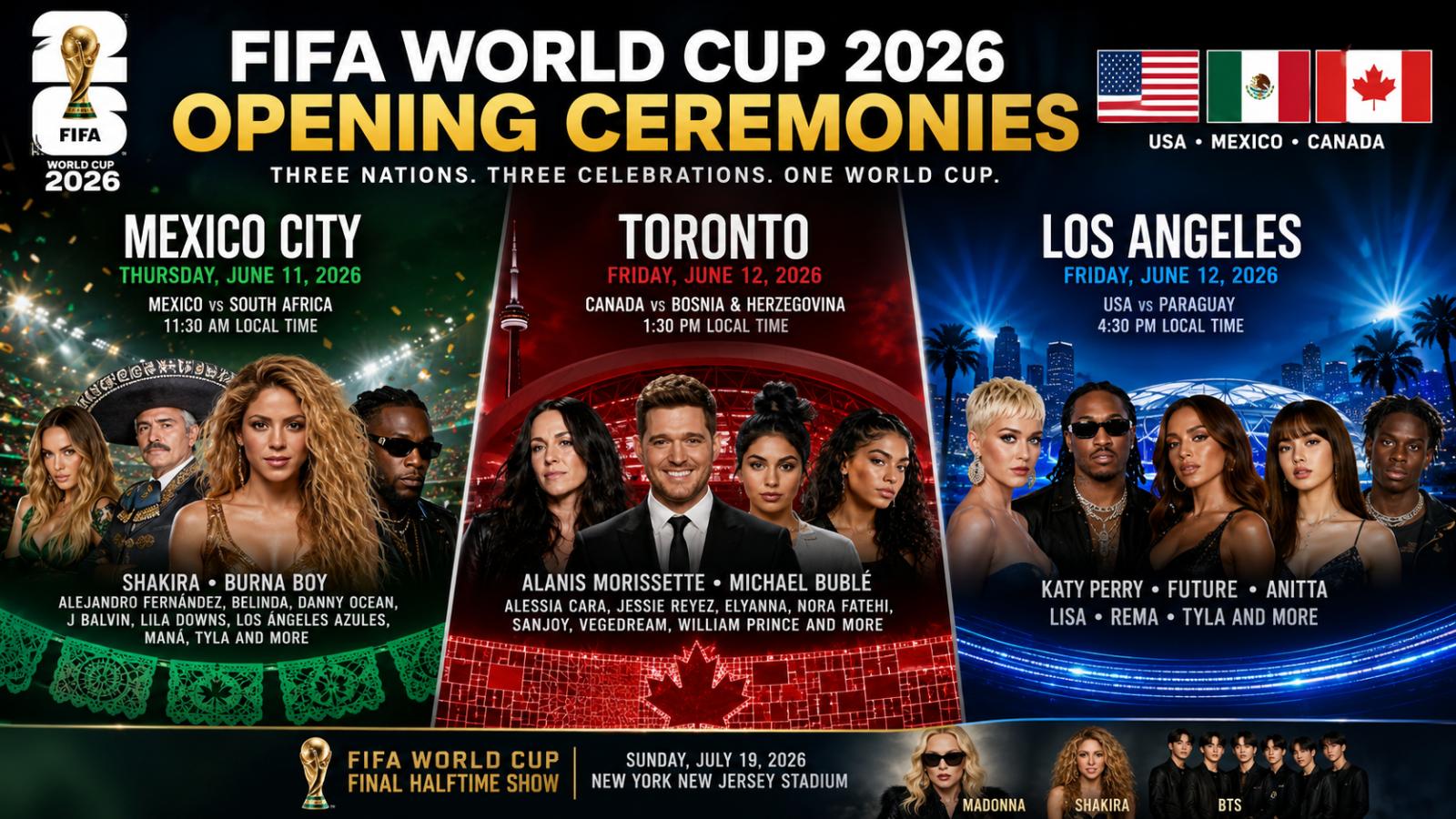
The World Cup 2026 opening ceremony schedule will feature three separate host-nation events in Mexico, Canada and the United States, giving each country its own launch moment before the tournament begins.
FIFA’s plan marks a major change from the traditional single opening ceremony format. The shows are being produced by Italian creative director Marco Balich and Balich Wonder Studio, with each event built around soccer, national identity and the FIFA World Cup trophy.
World Cup 2026 Opening Ceremony Schedule by Host Country
The first ceremony is set for Thursday, June 11, 2026, at Mexico City Stadium before Mexico plays South Africa. The Mexico event is expected to include Shakira and Burna Boy performing “Dai Dai,” the tournament’s official song, along with Alejandro Fernández, Belinda, Danny Ocean, J Balvin, Lila Downs, Los Ángeles Azules, Maná and Tyla.
Canada’s ceremony is scheduled for Friday, June 12, 2026, at Toronto Stadium before Canada faces Bosnia and Herzegovina. The Toronto lineup includes Alanis Morissette, Michael Bublé, Alessia Cara, Jessie Reyez, Elyanna, Nora Fatehi, Sanjoy, Vegedream and William Prince.
The U.S. ceremony is also scheduled for Friday, June 12, 2026, at Los Angeles Stadium before the United States plays Paraguay. Katy Perry, Future, Anitta, LISA, Rema and Tyla are among the performers announced for the Los Angeles event.
What Fans Can Expect From the FIFA Host Nation Ceremonies
The ceremonies are expected to be pre-match celebrations rather than Super Bowl-style halftime shows. Organizers have described a format that includes music, flags, match-ball presentation, formal welcomes and cultural themes tied to each host nation.
Mexico’s design theme includes papel picado, Canada’s uses a mosaic concept, and the U.S. show is built around a bright trophy-inspired visual identity.
A separate FIFA World Cup Final Halftime Show is planned for Sunday, July 19, 2026, at New York New Jersey Stadium, with Madonna, Shakira and BTS announced as headliners.
The three-country ceremony format gives FIFA a wider entertainment platform while helping fans in Mexico, Canada and the United States see the tournament opening as a shared North American event.