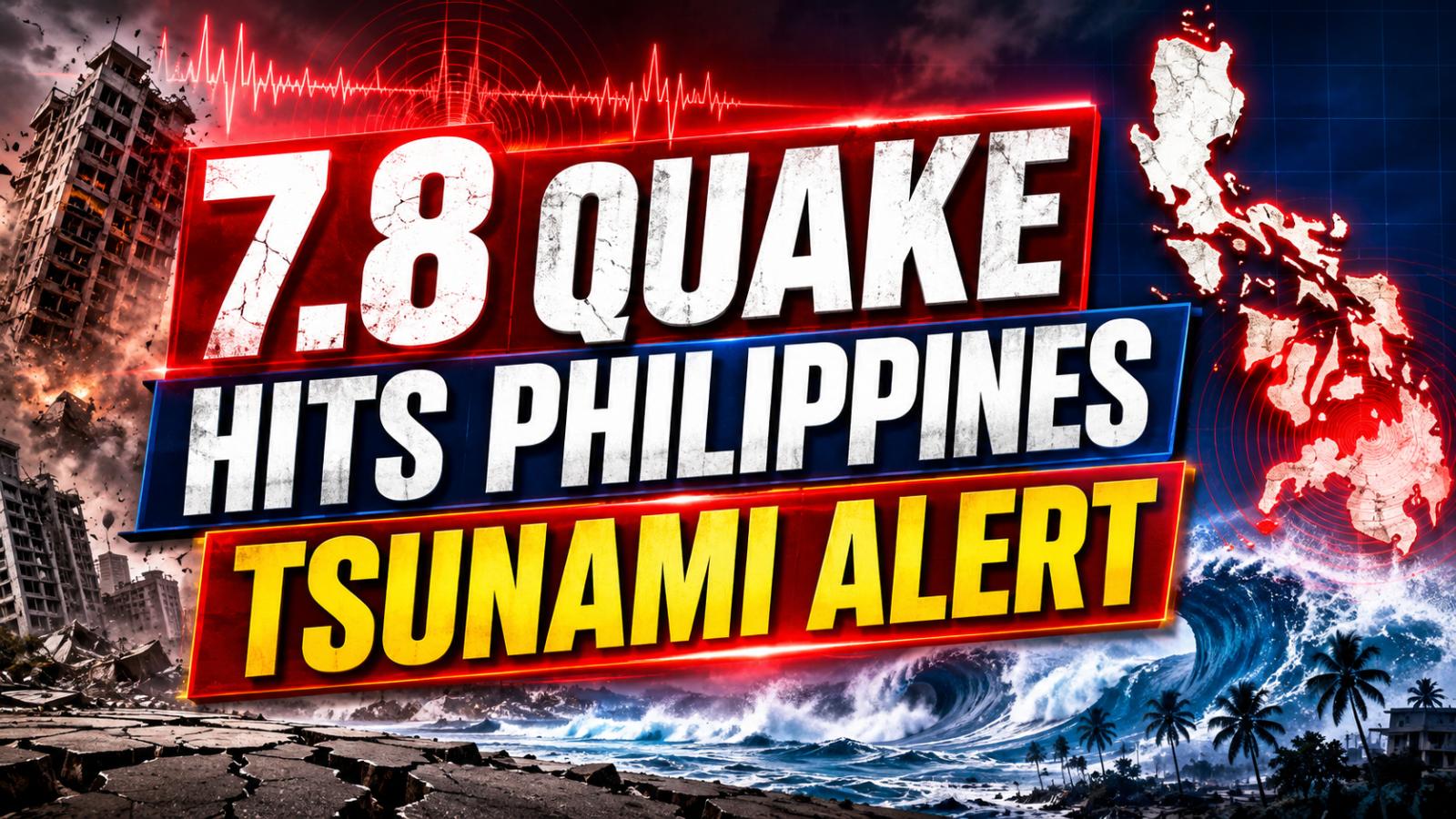
Powerful Quake Strikes Near Mindanao
A powerful 7.8-magnitude earthquake struck near the southern Philippines on Monday, June 8, prompting tsunami warnings and emergency alerts across parts of the region. The quake was reported near Mindanao, one of the country’s largest islands, and was strong enough to trigger concern across coastal communities. Early reports said the offshore quake caused violent shaking, while videos circulating online appeared to show damaged buildings and dust rising from collapsing structures. Authorities were still assessing the scale of damage, and residents in affected areas were urged to follow official safety instructions as aftershocks remained possible.
Tsunami Threat Puts Coasts On Alert
The Pacific Tsunami Warning Center said tsunami waves were possible along parts of the Philippines and nearby coastlines, with regional alerts also covering Indonesia, Palau, Taiwan and Papua New Guinea. Some advisories warned that waves could arrive within hours of the earthquake, making immediate coastal evacuation critical in exposed areas. Officials urged people near the shoreline to move to higher ground and avoid beaches, ports and river mouths until authorities declared the threat over. The tsunami concern added urgency to disaster response efforts, especially in low-lying coastal communities vulnerable to sudden sea-level changes.
Emergency Teams Assess Damage
Emergency services began assessing damage after the quake, while local officials monitored reports of structural collapse, power disruption and possible injuries. The earthquake’s depth and offshore location made rapid assessment difficult, and authorities warned that early information could change as field reports come in. The Philippines lies along the Pacific Ring of Fire, a highly active seismic zone where earthquakes and volcanic activity are common. Because of that risk, disaster agencies regularly advise residents to prepare emergency supplies, know evacuation routes and remain alert after major tremors.
Region Braces For Aftershocks
The immediate priority is public safety as officials track aftershocks, inspect damaged buildings and monitor tsunami gauges. Even after the strongest shaking ends, aftershocks can damage weakened structures and complicate rescue work. For coastal residents, the safest response is to wait for official all-clear notices before returning home. The quake is a major regional disaster alert, not just a local tremor, because potential tsunami effects can cross borders and affect several Pacific-facing coastlines within hours.