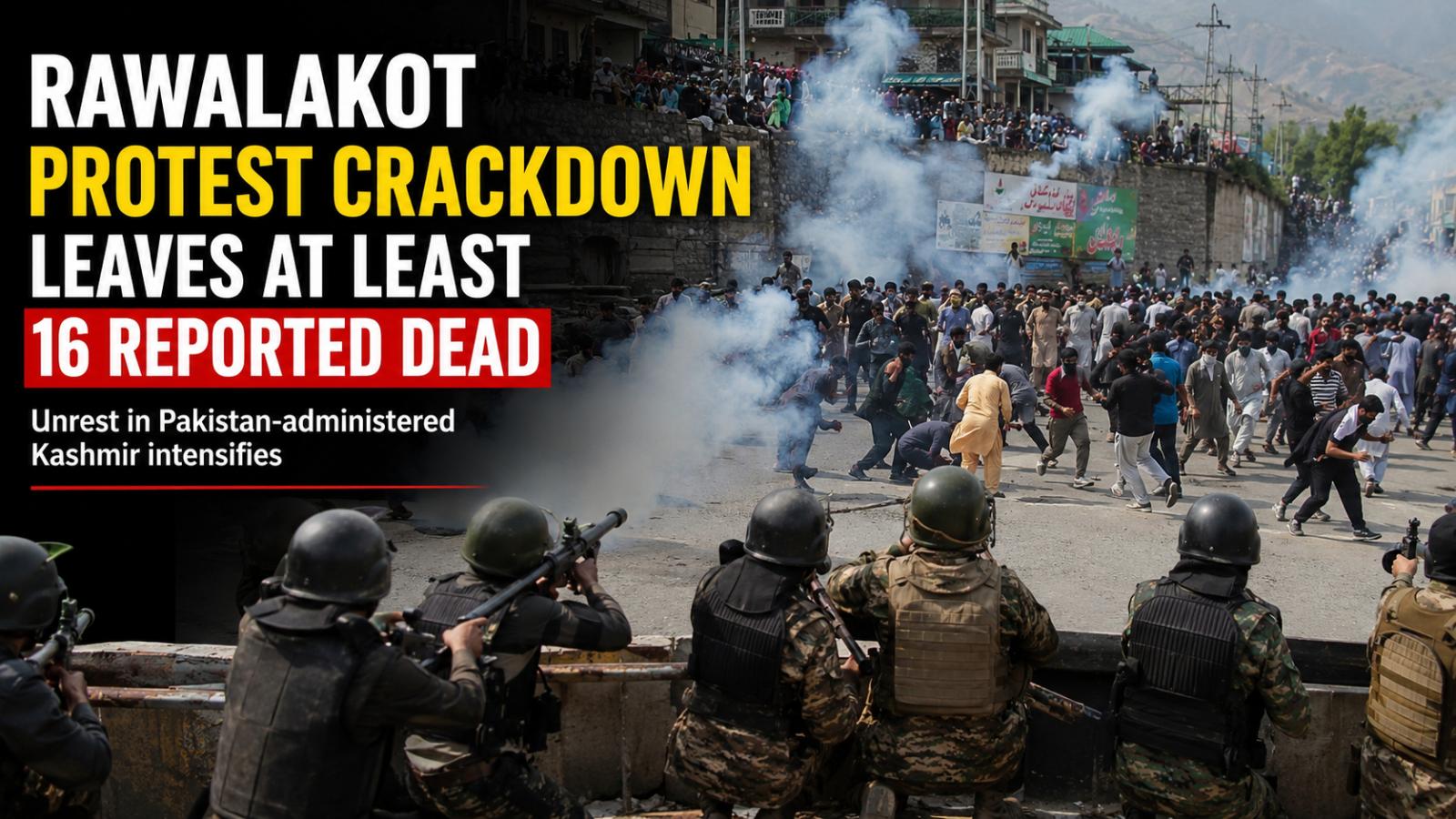
Reports of a deadly Rawalakot protest crackdown intensified scrutiny of Pakistan’s handling of unrest in Pakistan-administered Kashmir on Thursday, June 11, 2026.
At least 16 people were reported killed and 37 others injured after Pakistani army personnel and Rangers allegedly opened fire on demonstrators gathered at Eidgah Ground in Rawalakot, according to accounts from protest leaders and activists.
Rawalakot Protest Crackdown Raises Human Rights Concerns
Protesters said tens of thousands of people had gathered to demand affordable flour, rice, electricity and broader political rights. The gathering, described by organizers as peaceful, turned violent after security forces allegedly used tear gas and then opened fire.
Witnesses said at least one demonstrator died at the protest site from gunshot wounds, while others suffered bullet and shrapnel injuries. Families were also reported to be searching for missing relatives after the firing.
JAAC Protest Linked to Wider Kashmir Unrest
The unrest has been led by the Joint Awami Action Committee, or JAAC, a civil society alliance that has pressed demands over food prices, electricity costs and political representation. The group was later outlawed by the regional administration under anti-terrorism legislation, escalating tensions before regional elections.
The latest violence followed earlier clashes in Pakistan-administered Kashmir. The provided account said 30 people were killed and 200 injured on Tuesday, June 9, 2026, though casualty figures from the region have varied across reports.
Why the Rawalakot Unrest Matters
A key grievance is a system reserving 12 assembly seats for non-resident Kashmiris living in mainland Pakistan. Critics say the arrangement weakens local representation, while authorities have treated the protests as a public-order and security issue.
Political activist Sardar Aman Khan said the rights movement would continue despite the deaths. Local leaders and JAAC representatives called for an independent investigation and urged international human rights groups to press for justice.
Amnesty International has condemned the broader crackdown in Pakistan-administered Kashmir, citing excessive force, suppression of dissent and violations of fundamental rights.
For US readers, the Rawalakot violence matters because it highlights a worsening rights and governance crisis in a disputed region claimed by both Pakistan and India, where local protests can quickly become part of a broader regional flashpoint.