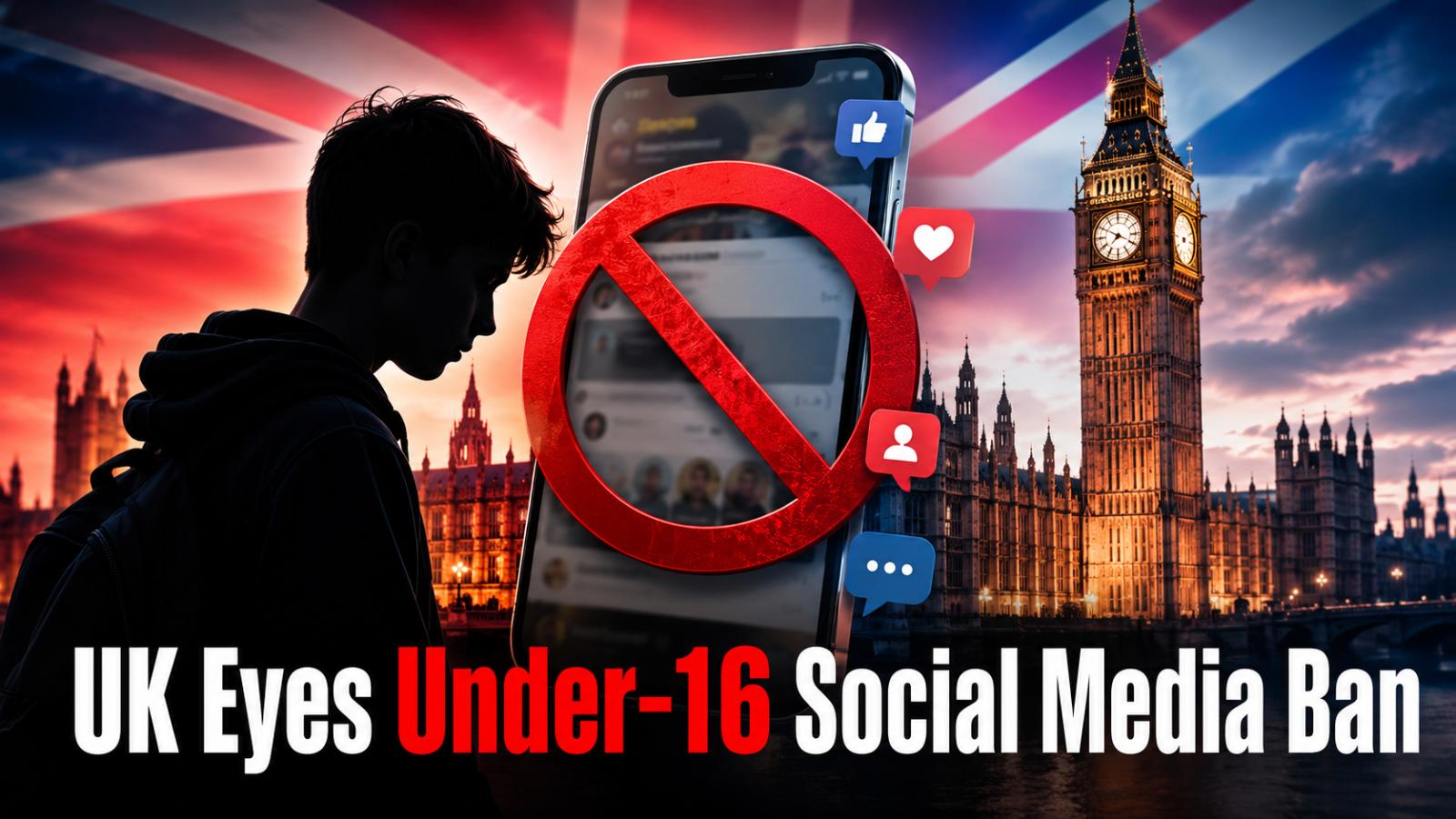
The UK government is preparing stricter online safety measures that could stop children under 16 from using major social media platforms. Prime Minister Keir Starmer has backed stronger action, saying families need more protection from the risks children face on apps, gaming platforms and other online services. The proposal is expected to form part of a wider child online safety plan aimed at reducing harmful content, unwanted contact, bullying, coercion and sextortion.
Why ministers are pushing the ban
The debate has grown as parents raise concerns about how much time children spend online and what kind of material they are exposed to. Many families say they struggle to control social media use at home because apps are designed to keep users scrolling for long periods. The government says the responsibility should not fall only on parents, and that technology companies must build safer systems for young users.
A recent consultation received more than 116,000 responses from parents, young people, teachers and safety groups. Supporters of the plan argue that a clear age limit would give parents more confidence and reduce pressure on children to join social media too early. The proposal may also include stronger checks on platforms that allow strangers to contact minors.
Teen screen time also under review
The planned rules may not stop with under-16 users. Officials are also considering limits on features used by older teenagers, including late-night infinite scrolling, disappearing messages, location sharing and chat functions that connect children with unknown users. Ministers believe these features can affect sleep, attention, mental health and family life when left unchecked.
The government is also looking at risks linked to gaming, livestreaming and AI chatbot services. The focus is not only on banning accounts, but also on reducing features that make platforms more addictive or unsafe for young people.
Tech firms face stronger pressure
Technology companies are expected to face greater responsibility if the rules move forward. Platforms may have to improve age checks, block harmful contact, and prevent children from accessing inappropriate content. The UK has already pushed firms to strengthen protections against nude image sharing, online grooming and sextortion.
However, the plan may face challenges. Critics warn that children could bypass age checks, use unregulated apps or move to private online spaces that are harder to monitor. Privacy concerns may also rise if strict age verification becomes mandatory. For the policy to work, the government will need a careful balance between child safety, privacy and practical enforcement.
The UK’s move shows how online safety has become a major public issue. If approved, the rules could reshape how children access social media and increase pressure on global tech companies to change the way young users are protected.