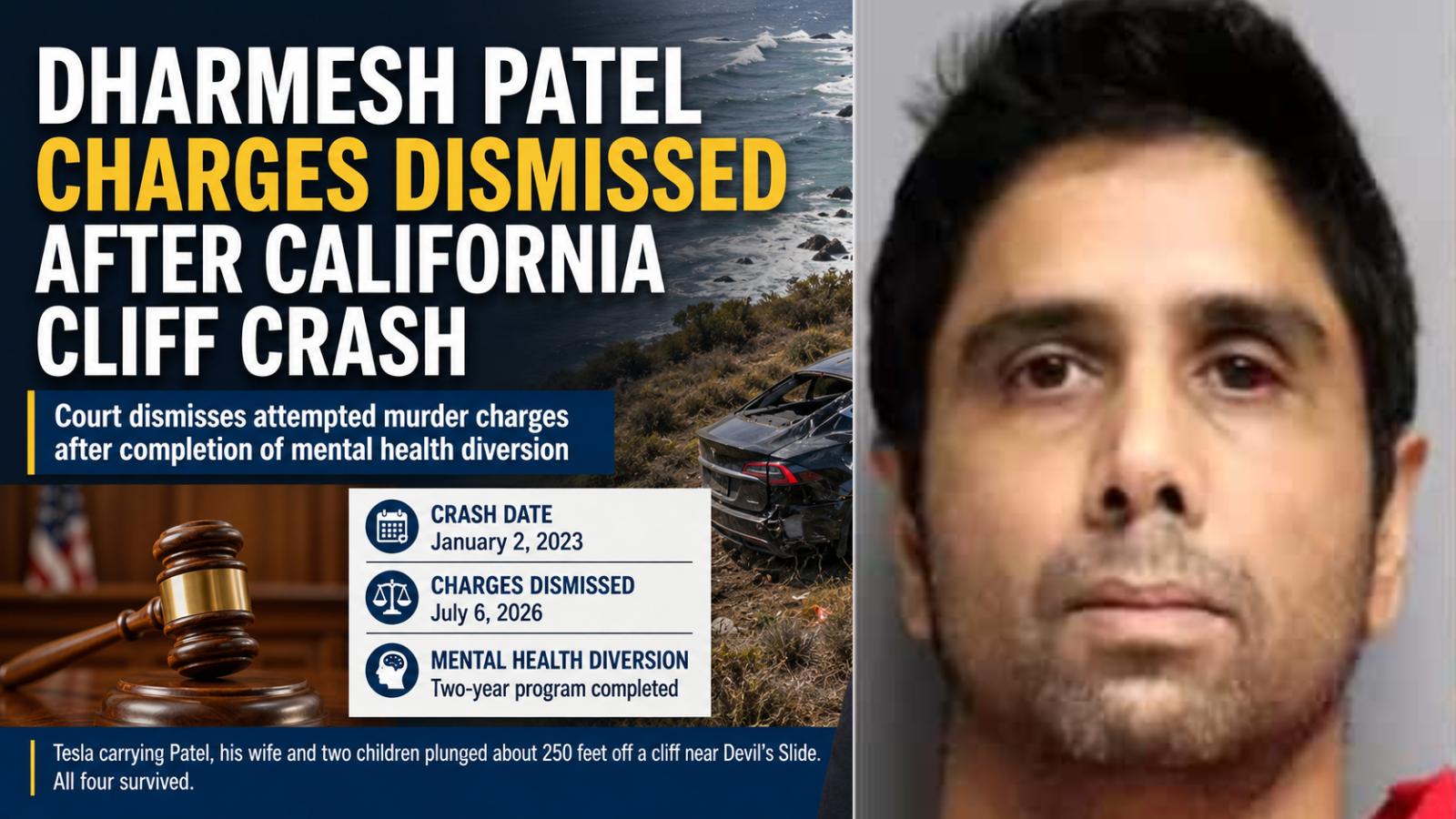
A California court has dismissed attempted murder charges against Indian-origin radiologist Dharmesh Patel after he completed a mental health diversion program connected to a 2023 cliff crash in San Mateo County.
The case drew national attention after a Tesla carrying Patel, his wife and their two young children plunged about 250 feet off a cliff along the Pacific Coast Highway near Devil’s Slide on Monday, January 2, 2023. All four family members survived the crash.
Dharmesh Patel Case Ends After Mental Health Diversion
A San Mateo County judge dismissed the charges on Monday, July 6, 2026, after Patel completed a two-year mental health diversion program. Patel had faced three counts of attempted murder after prosecutors accused him of intentionally driving the vehicle off the cliff.
Under California’s mental health diversion process, eligible defendants may receive supervised treatment instead of going to trial when a qualifying mental illness substantially contributed to the alleged offense. According to the case details, dismissal was required after Patel completed the treatment plan and met the court’s conditions.
What Happened in the California Cliff Crash
Patel, an Indian-American radiologist, was accused of driving the family’s Tesla off the road during what was described in court as a severe mental health crisis. His wife initially told emergency responders that he drove off the road on purpose, but later told the court she did not want him prosecuted and supported his treatment and family reunification.
During earlier hearings, mental health experts testified that Patel had experienced depression, paranoia, hallucinations and delusional fears involving threats to his children. The court later found him eligible for diversion based on those evaluations.
After his release from jail in 2024, Patel was placed under strict conditions, including GPS monitoring, travel restrictions, surrendering his passport and driver’s license, and regular court reporting.
Why the Dharmesh Patel Ruling Matters
The dismissal ends the criminal case, but it also leaves broader questions about how courts should handle serious violent allegations when mental illness is central to the case. Prosecutors opposed diversion, while the defense argued Patel’s actions were tied to a treatable psychiatric condition.
The crash remains one of California’s most closely watched mental health diversion cases because it involved severe allegations, a family survival story and a legal outcome focused on treatment rather than trial.