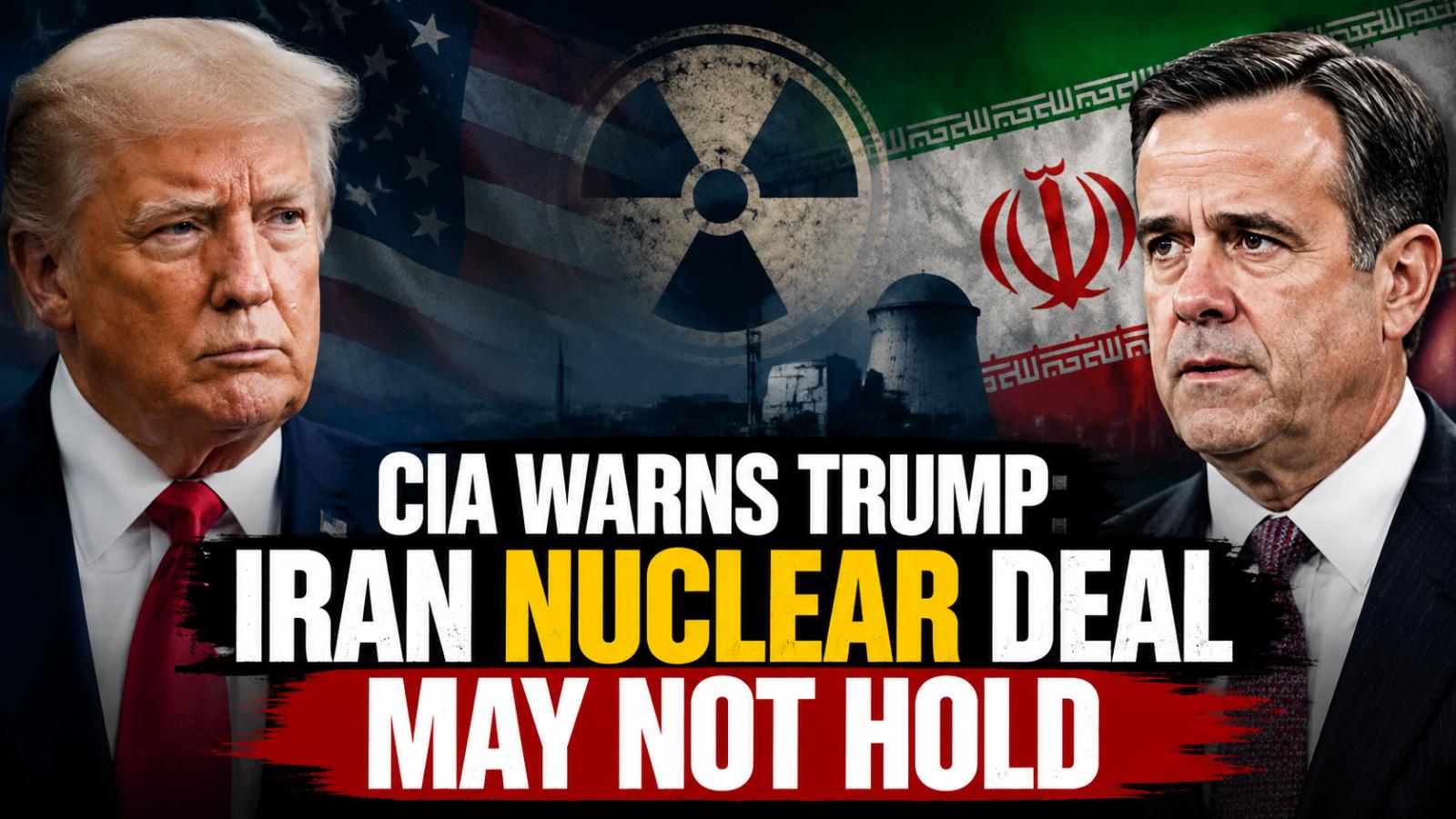
US intelligence officials have reportedly raised fresh concerns over the durability of a recently discussed nuclear understanding with Iran, warning that the framework may not be strong enough to ensure long-term compliance. The assessment, attributed to CIA Director John Ratcliffe, suggests that while the agreement is designed to reduce immediate tensions, its enforcement structure could leave significant gaps in verification and oversight.
Intelligence assessment questions verification strength
According to senior-level briefings, the central issue flagged by US intelligence is not the existence of an agreement, but the ability to enforce it consistently. Analysts argue that monitoring mechanisms tied to Iran’s nuclear activity may not provide sufficient transparency to confirm whether commitments are being fully followed. This includes concerns over inspection access, reporting delays, and technical limitations in tracking enrichment-related activity over time.
Policy divide emerges inside Washington
The assessment has also intensified differences within the US policy establishment. One faction, including key security officials, is said to view the arrangement as structurally weak without stronger inspection guarantees and clearer enforcement triggers. Their concern is that insufficient oversight could allow gradual non-compliance without immediate detection.
Another group within the administration supports continued diplomatic engagement, arguing that maintaining dialogue reduces the risk of escalation in the Gulf region and keeps communication channels open with Tehran. This divide reflects a broader strategic debate between prioritizing strict enforcement versus maintaining diplomatic flexibility.
Broader geopolitical implications remain uncertain
The uncertainty surrounding the agreement has wider implications for regional stability and global energy security. Markets and allied governments are closely watching whether the arrangement can hold under political pressure from both sides. Analysts note that without unified policy direction in Washington and stronger verification tools on the ground, the agreement could face implementation challenges even if it remains intact on paper.
For now, the situation remains fluid, with intelligence assessments shaping internal debate and raising questions about whether diplomatic progress can translate into sustained nuclear restraint.