






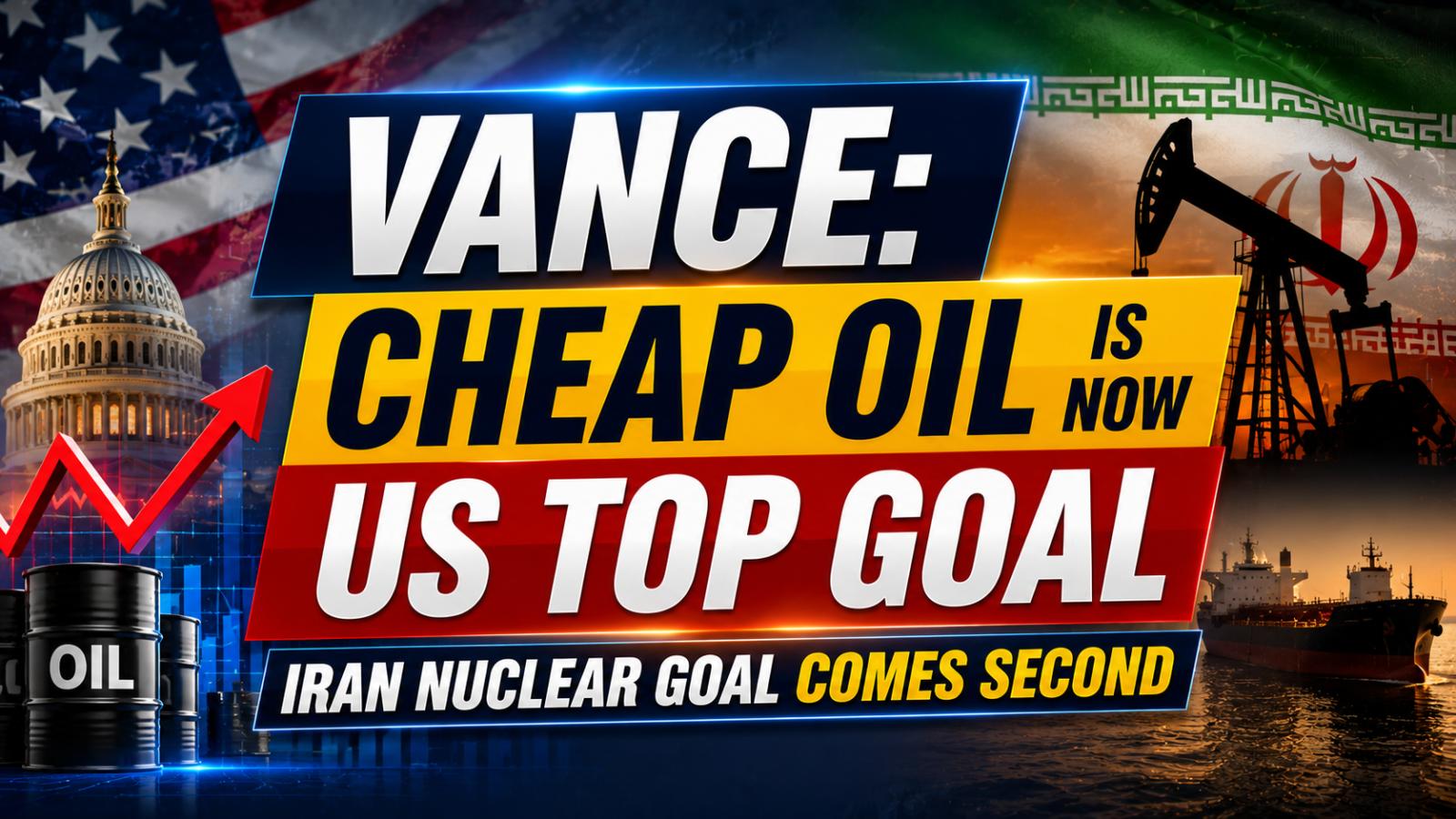

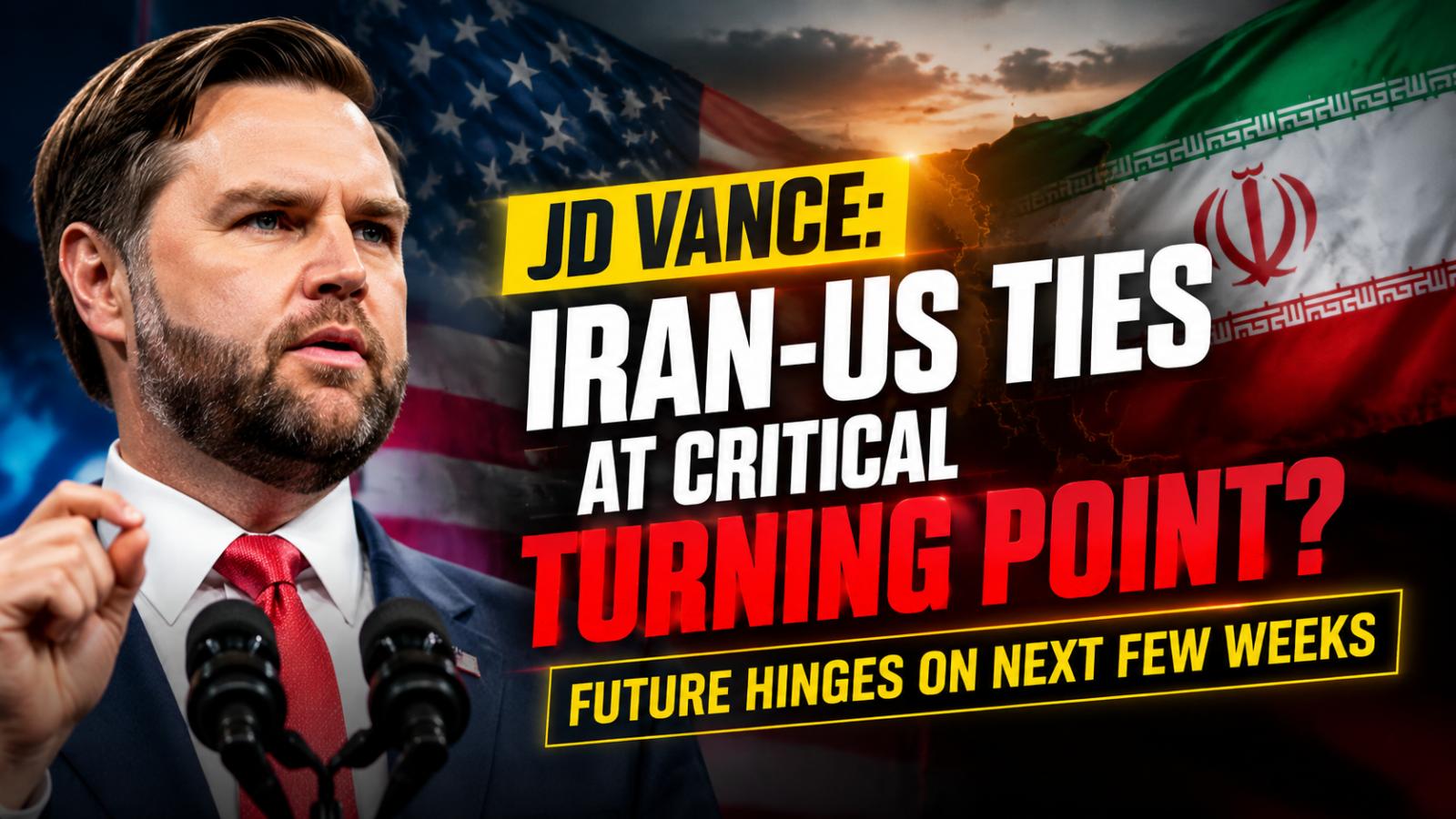











JD Vance says Iran-US relations at critical turning point
Washington Signals Uncertain Phase in Iran Relations US Vice President JD Vance has suggested that the coming weeks could play a decisive role in shaping future relations between Washington and Tehran, while emphasizing that outcomes remain highly uncertain. Speaking on a media program, he described the current situation as a potentially significant turning point in l
JD Vance says Iran-US relations at critical turning point
Washington Signals Uncertain Phase in Iran Relations US Vice President JD Vance has suggested that the coming weeks could play a decisive role in shaping future relations between Washington and Tehran, while emphasizing that outcomes remain highly uncertain. Speaking on a media program, he described the current situation as a potentially significant turning point in l
Iran emphasizes nuclear deterrence to counter U.S. and Israel
Iran Highlights Nuclear Deterrence as Strategic Priority A commentary published by Iran’s semi-official Fars news agency has presented a position suggesting the country may need to pursue nuclear deterrence to protect itself from potential military threats. The unsigned article asserts that nuclear capabilities would ensure Iran can negotiate from a position of strength, reducing the likelihood of armed conflict and increasing leverage in future disputes.
Iran emphasizes nuclear deterrence to counter U.S. and Israel
Iran Highlights Nuclear Deterrence as Strategic Priority A commentary published by Iran’s semi-official Fars news agency has presented a position suggesting the country may need to pursue nuclear deterrence to protect itself from potential military threats. The unsigned article asserts that nuclear capabilities would ensure Iran can negotiate from a position of strength, reducing the likelihood of armed conflict and increasing leverage in future disputes.
India Tests Nuclear Heat Hydrogen Production at Kalpakkam
India has launched a pilot facility for nuclear heat hydrogen production at Kalpakkam in Tamil Nadu. The Department of Atomic Energy inaugurated the technology demonstrator on Friday, June 26, 2026, at the Indira Gandhi Centre for Atomic Research. The department described the project as the first hydrogen facility to use heat drawn directly from a nuclear reactor rather than depending mainly on electricity. The plant remains a
India Tests Nuclear Heat Hydrogen Production at Kalpakkam
India has launched a pilot facility for nuclear heat hydrogen production at Kalpakkam in Tamil Nadu. The Department of Atomic Energy inaugurated the technology demonstrator on Friday, June 26, 2026, at the Indira Gandhi Centre for Atomic Research. The department described the project as the first hydrogen facility to use heat drawn directly from a nuclear reactor rather than depending mainly on electricity. The plant remains a
B-52 nuclear alert during Cuban missile crisis explained simply
The discovery of Soviet missiles in Cuba pushed the United States and the Soviet Union into a direct nuclear confrontation. With only a short distance separating missile sites from U.S. territory, decision-makers in Washington treated the situation as an immediate existential threat rather than a routine diplomatic crisis. Shift to maximum military readiness As intelligence confirmed missile dep
B-52 nuclear alert during Cuban missile crisis explained simply
The discovery of Soviet missiles in Cuba pushed the United States and the Soviet Union into a direct nuclear confrontation. With only a short distance separating missile sites from U.S. territory, decision-makers in Washington treated the situation as an immediate existential threat rather than a routine diplomatic crisis. Shift to maximum military readiness As intelligence confirmed missile dep
Iran Slams US Officials Over Contradictory Nuclear and Trade Claims
Iran Criticises Contradictory US Statements on MoU Iran’s Foreign Ministry has raised concerns over what it described as inconsistent statements from US officials regarding a memorandum of understanding aimed at ending recent conflict-related tensions. According to Foreign Ministry spokesperson Esmaeil Baghaei, the differing positions from Washington are reinforcing
Iran Slams US Officials Over Contradictory Nuclear and Trade Claims
Iran Criticises Contradictory US Statements on MoU Iran’s Foreign Ministry has raised concerns over what it described as inconsistent statements from US officials regarding a memorandum of understanding aimed at ending recent conflict-related tensions. According to Foreign Ministry spokesperson Esmaeil Baghaei, the differing positions from Washington are reinforcing
US–Iran tensions rise as Trump demands full IAEA inspection access
Trump signals pressure over nuclear inspections US President Donald Trump has stated that he is prepared to cancel ongoing technical discussions with Iran if Tehran refuses to allow full inspections by the International Atomic Energy Agency. He emphasized that Washington already believes an agreement on inspection access has been reached and dismissed concerns raised about Iran’s willingness to comply with
US–Iran tensions rise as Trump demands full IAEA inspection access
Trump signals pressure over nuclear inspections US President Donald Trump has stated that he is prepared to cancel ongoing technical discussions with Iran if Tehran refuses to allow full inspections by the International Atomic Energy Agency. He emphasized that Washington already believes an agreement on inspection access has been reached and dismissed concerns raised about Iran’s willingness to comply with
Tensions rise as North Korea boosts destroyers and nuclear naval capability
North Korea expands nuclear naval ambitions North Korean leader Kim Jong Un has announced a major expansion of the country’s naval strategy, stating that Pyongyang will move forward with plans to develop a nuclear-armed fleet. The announcement was made during a ceremony marking the commissioning of a new 5,000-ton destroyer, highlighting the country’s continued efforts to strengthen its maritime military capabilities despite international sanctions. New destroyer signals naval modernization push State media reported that the newly commissioned vessel, identified as the Choe Hyon, represents one of the most advanced warships developed by North Korea to date. Officials described it as heavily armed and part of a broader strategy to modernize the navy. Kim indicated that additional warships, including larger destroyers and strategic vessels, are already in development and will enter service in phases. Nuclear integration into maritime forces Kim Jong Un stated that integrating nuclear capability into the navy is a strategic priority aimed at ensuring operational readiness and expanding deterrence capacity. According to his remarks, future naval platforms will be designed to support more advanced weapons systems, marking a shift in how North Korea plans to structure its maritime defense posture. Rising tensions on the Korean Peninsula The announcement comes amid ongoing tensions between North Korea, the United States, and South Korea, with repeated exchanges over military exercises and regional security concerns. Pyongyang has consistently accused its rivals of escalating pressure, while maintaining that its military expansion is necessary for national defense. Analysts note that the latest naval developments further intensify concerns over stability in the region, particularly as both naval and nuclear capabilities continue to evolve.
Tensions rise as North Korea boosts destroyers and nuclear naval capability
North Korea expands nuclear naval ambitions North Korean leader Kim Jong Un has announced a major expansion of the country’s naval strategy, stating that Pyongyang will move forward with plans to develop a nuclear-armed fleet. The announcement was made during a ceremony marking the commissioning of a new 5,000-ton destroyer, highlighting the country’s continued efforts to strengthen its maritime military capabilities despite international sanctions. New destroyer signals naval modernization push State media reported that the newly commissioned vessel, identified as the Choe Hyon, represents one of the most advanced warships developed by North Korea to date. Officials described it as heavily armed and part of a broader strategy to modernize the navy. Kim indicated that additional warships, including larger destroyers and strategic vessels, are already in development and will enter service in phases. Nuclear integration into maritime forces Kim Jong Un stated that integrating nuclear capability into the navy is a strategic priority aimed at ensuring operational readiness and expanding deterrence capacity. According to his remarks, future naval platforms will be designed to support more advanced weapons systems, marking a shift in how North Korea plans to structure its maritime defense posture. Rising tensions on the Korean Peninsula The announcement comes amid ongoing tensions between North Korea, the United States, and South Korea, with repeated exchanges over military exercises and regional security concerns. Pyongyang has consistently accused its rivals of escalating pressure, while maintaining that its military expansion is necessary for national defense. Analysts note that the latest naval developments further intensify concerns over stability in the region, particularly as both naval and nuclear capabilities continue to evolve.
Strait of Hormuz crisis and Iran ceasefire spark global political debate
Ceasefire agreement raises human rights concerns The recent ceasefire understanding between the United States and Iran has triggered debate over its wider political and humanitarian implications. While the agreement aims to stabilize relations after months of conflict, critics argue that its language on non-interference could limit external pressure on Iran’s internal human rights situation. The inclusion of sovereignty clauses has been interpreted by analysts as a significant shift in diplomatic posture compared to earlier US positions. Debate over sovereignty and internal affairs The memorandum reportedly emphasizes mutual respect for sovereignty and non-interference in domestic matters. Observers note that this marks a departure from previous rhetoric that supported political change within Iran through public pressure and international condemnation. Human rights groups have expressed concern that such provisions may reduce accountability mechanisms at a time when reports of arrests, executions, and suppression of dissent continue to emerge. Humanitarian impact and ongoing instability Independent reports referenced in international discussions point to continued unrest and a heavy human cost during and after the conflict period. Allegations of mass detentions and restrictions on civil liberties have further intensified scrutiny of the ceasefire framework. Advocacy organizations warn that stabilizing military conditions without parallel human rights safeguards risks entrenching existing governance structures without addressing underlying grievances. Regional conflict and global economic disruption The broader conflict, including disruptions in the Strait of Hormuz, has had significant consequences for global energy flows and maritime trade. Temporary closure of key shipping routes led to economic pressure across multiple regions dependent on oil and liquefied natural gas supplies. While diplomatic mediation involving regional actors helped establish a pathway toward de-escalation, analysts caution that long-term stability will depend on sustained negotiations and enforcement clarity within the agreement framework.
Strait of Hormuz crisis and Iran ceasefire spark global political debate
Ceasefire agreement raises human rights concerns The recent ceasefire understanding between the United States and Iran has triggered debate over its wider political and humanitarian implications. While the agreement aims to stabilize relations after months of conflict, critics argue that its language on non-interference could limit external pressure on Iran’s internal human rights situation. The inclusion of sovereignty clauses has been interpreted by analysts as a significant shift in diplomatic posture compared to earlier US positions. Debate over sovereignty and internal affairs The memorandum reportedly emphasizes mutual respect for sovereignty and non-interference in domestic matters. Observers note that this marks a departure from previous rhetoric that supported political change within Iran through public pressure and international condemnation. Human rights groups have expressed concern that such provisions may reduce accountability mechanisms at a time when reports of arrests, executions, and suppression of dissent continue to emerge. Humanitarian impact and ongoing instability Independent reports referenced in international discussions point to continued unrest and a heavy human cost during and after the conflict period. Allegations of mass detentions and restrictions on civil liberties have further intensified scrutiny of the ceasefire framework. Advocacy organizations warn that stabilizing military conditions without parallel human rights safeguards risks entrenching existing governance structures without addressing underlying grievances. Regional conflict and global economic disruption The broader conflict, including disruptions in the Strait of Hormuz, has had significant consequences for global energy flows and maritime trade. Temporary closure of key shipping routes led to economic pressure across multiple regions dependent on oil and liquefied natural gas supplies. While diplomatic mediation involving regional actors helped establish a pathway toward de-escalation, analysts caution that long-term stability will depend on sustained negotiations and enforcement clarity within the agreement framework.
US Senate votes 50-48 to limit Iran conflict authority
Senate challenges executive war authority The US Senate has approved a resolution opposing continued military involvement tied to Iran, signaling widening friction between Congress and the executive branch over war powers. The measure passed narrowly at 50–48 and had already cleared the House, reflecting rare bipartisan concern over the direction of US military engagement in the region. Although the resol
US Senate votes 50-48 to limit Iran conflict authority
Senate challenges executive war authority The US Senate has approved a resolution opposing continued military involvement tied to Iran, signaling widening friction between Congress and the executive branch over war powers. The measure passed narrowly at 50–48 and had already cleared the House, reflecting rare bipartisan concern over the direction of US military engagement in the region. Although the resol
Trump says Iran will accept major weapons inspections
Trump says Iran will allow inspections US President Donald Trump said Monday,June 22,2026 that Iran would agree to extensive weapons inspections as part of efforts to ensure what he called “nuclear honesty” in the years ahead. In a post on Truth Social, Trump said he believed Iran would accept major inspections to support long-term verification. His comments came as Washington described recent US Iran talks in Burgenstock, Switzerland, as
Trump says Iran will accept major weapons inspections
Trump says Iran will allow inspections US President Donald Trump said Monday,June 22,2026 that Iran would agree to extensive weapons inspections as part of efforts to ensure what he called “nuclear honesty” in the years ahead. In a post on Truth Social, Trump said he believed Iran would accept major inspections to support long-term verification. His comments came as Washington described recent US Iran talks in Burgenstock, Switzerland, as
US-Iran talks set 60-day roadmap after Swiss summit
US-Iran talks in Switzerland have ended with cautious progress after senior officials from Washington and Tehran agreed to continue discussions through a 60-day roadmap. The meeting, supported by Pakistan and Qatar as mediators, did not deliver a final agreement, but it gave both sides a structured process to address sanctions, nuclear concerns, regional security and the safety of shipping through the Strait of Hormuz. The talks were held
US-Iran talks set 60-day roadmap after Swiss summit
US-Iran talks in Switzerland have ended with cautious progress after senior officials from Washington and Tehran agreed to continue discussions through a 60-day roadmap. The meeting, supported by Pakistan and Qatar as mediators, did not deliver a final agreement, but it gave both sides a structured process to address sanctions, nuclear concerns, regional security and the safety of shipping through the Strait of Hormuz. The talks were held
Netanyahu rejects claims Trump controls Israel decisions
Netanyahu rejects influence claims Israeli Prime Minister Benjamin Netanyahu has rejected claims that US President Donald Trump controls his decisions or that he directs Trump’s actions, saying both leaders act independently in the interests of their own countries. Speaking at the JNS Summit in Jerusalem on Sunday, June 21, Netanyahu addressed speculation over whether the two leaders influence each other’s positions on the Iran war and br
Netanyahu rejects claims Trump controls Israel decisions
Netanyahu rejects influence claims Israeli Prime Minister Benjamin Netanyahu has rejected claims that US President Donald Trump controls his decisions or that he directs Trump’s actions, saying both leaders act independently in the interests of their own countries. Speaking at the JNS Summit in Jerusalem on Sunday, June 21, Netanyahu addressed speculation over whether the two leaders influence each other’s positions on the Iran war and br
US Iran talks end with 60-day roadmap in Switzerland
US Iran talks end with cautious optimism The first round of US Iran talks in Switzerland has concluded with cautious optimism, according to a joint statement issued by mediators Pakistan and Qatar on Monday, June 22. The discussions, held at the Lake Lucerne Summit, focused on ending the wider Middle East conflict and creating a framework for continued negotiations. Mediators described the session as constructive and positive, while noting th
US Iran talks end with 60-day roadmap in Switzerland
US Iran talks end with cautious optimism The first round of US Iran talks in Switzerland has concluded with cautious optimism, according to a joint statement issued by mediators Pakistan and Qatar on Monday, June 22. The discussions, held at the Lake Lucerne Summit, focused on ending the wider Middle East conflict and creating a framework for continued negotiations. Mediators described the session as constructive and positive, while noting th
US Iran talks continue in Switzerland despite walkout
US Iran talks face early tension in Switzerland US and Iranian negotiators continued discussions in Switzerland into the early hours of Monday, June 22, as both sides attempted to advance a fragile diplomatic process aimed at reducing months of conflict across the Middle East. The talks, held at the Swiss resort of Burgenstock, focused on regional security issues and efforts to prevent further escalation that has unsettled global energy marke
US Iran talks continue in Switzerland despite walkout
US Iran talks face early tension in Switzerland US and Iranian negotiators continued discussions in Switzerland into the early hours of Monday, June 22, as both sides attempted to advance a fragile diplomatic process aimed at reducing months of conflict across the Middle East. The talks, held at the Swiss resort of Burgenstock, focused on regional security issues and efforts to prevent further escalation that has unsettled global energy marke
Why Israel Fears the US-Iran Deal Could Leave Key Threats Unresolved
The US-Iran deal has opened a 60-day diplomatic window, but it has also sharpened security concerns in Israel. Israeli officials and analysts worry that Tehran could receive economic relief while decisions on uranium enrichment, ballistic missiles and regional armed groups remain unsettled. The negotiation period began on Thursday, June 18, 2026, under an interim memorandum approved by President Donald Trump and Iranian leaders. The framework seeks to halt hostiliti
Why Israel Fears the US-Iran Deal Could Leave Key Threats Unresolved
The US-Iran deal has opened a 60-day diplomatic window, but it has also sharpened security concerns in Israel. Israeli officials and analysts worry that Tehran could receive economic relief while decisions on uranium enrichment, ballistic missiles and regional armed groups remain unsettled. The negotiation period began on Thursday, June 18, 2026, under an interim memorandum approved by President Donald Trump and Iranian leaders. The framework seeks to halt hostiliti
Us Iran diplomatic framework signed at Versailles sparks debate
A high-level diplomatic engagement involving the United States and Iran, held in Versailles, has triggered widespread discussion across international policy circles. The meeting, attended by senior representatives including Donald Trump and Emmanuel Macron, focused on a proposed framework addressing Iran’s nuclear activities, sanctions policy, and regional stability concerns. Rather than being presented as a finalized agreement, officials described the discussions as an early-stag
Us Iran diplomatic framework signed at Versailles sparks debate
A high-level diplomatic engagement involving the United States and Iran, held in Versailles, has triggered widespread discussion across international policy circles. The meeting, attended by senior representatives including Donald Trump and Emmanuel Macron, focused on a proposed framework addressing Iran’s nuclear activities, sanctions policy, and regional stability concerns. Rather than being presented as a finalized agreement, officials described the discussions as an early-stag
US Iran MoU deal raises doubts over ceasefire framework
The recent US Iran MoU agreement, discussed during a diplomatic gathering in France, is being viewed as an early-stage framework aimed at reducing long-standing tensions between Washington and Tehran. The document outlines intentions for reduced hostilities and future negotiations, but many of its provisions remain open-ended, leaving room for differing interpretations from both sides. While the agreement signals a willingness to engage, it stops short of offering a fully defined roadmap for
US Iran MoU deal raises doubts over ceasefire framework
The recent US Iran MoU agreement, discussed during a diplomatic gathering in France, is being viewed as an early-stage framework aimed at reducing long-standing tensions between Washington and Tehran. The document outlines intentions for reduced hostilities and future negotiations, but many of its provisions remain open-ended, leaving room for differing interpretations from both sides. While the agreement signals a willingness to engage, it stops short of offering a fully defined roadmap for
US-Iran sign deal to end conflict and restart Hormuz shipping route
US-Iran Agreement Marks Shift Toward Diplomatic Resolution US President Donald Trump and Iranian President Masoud Pezeshkian have signed a memorandum of understanding aimed at ending months of conflict between Washington and Tehran. The agreement is designed to ease tensions across the Middle East and establish a structured pathway toward renewed diplomatic engagement between the two nations.
US-Iran sign deal to end conflict and restart Hormuz shipping route
US-Iran Agreement Marks Shift Toward Diplomatic Resolution US President Donald Trump and Iranian President Masoud Pezeshkian have signed a memorandum of understanding aimed at ending months of conflict between Washington and Tehran. The agreement is designed to ease tensions across the Middle East and establish a structured pathway toward renewed diplomatic engagement between the two nations.
CIA raises concerns over Iran nuclear deal enforcement risks
US intelligence officials have reportedly raised fresh concerns over the durability of a recently discussed nuclear understanding with Iran, warning that the framework may not be strong enough to ensure long-term compliance. The assessment, attributed to CIA Director John Ratcliffe, suggests that while the agreement is designed to reduce immediate tensions, its enforcement structure could leave significant gaps in verification and oversight.
CIA raises concerns over Iran nuclear deal enforcement risks
US intelligence officials have reportedly raised fresh concerns over the durability of a recently discussed nuclear understanding with Iran, warning that the framework may not be strong enough to ensure long-term compliance. The assessment, attributed to CIA Director John Ratcliffe, suggests that while the agreement is designed to reduce immediate tensions, its enforcement structure could leave significant gaps in verification and oversight.
US Iran nuclear talks stall over uranium and inspections
Talks between the United States and Iran remain unsettled as both sides continue to disagree on how far uranium enrichment should be restricted and how compliance should be verified. Washington is pressing for tighter monitoring and clearer limits on enrichment activities, while Tehran insists that any restrictions must respect its sovereign control over its nuclear programme. The gap between both positions is preventing movement toward a structured agreement.
US Iran nuclear talks stall over uranium and inspections
Talks between the United States and Iran remain unsettled as both sides continue to disagree on how far uranium enrichment should be restricted and how compliance should be verified. Washington is pressing for tighter monitoring and clearer limits on enrichment activities, while Tehran insists that any restrictions must respect its sovereign control over its nuclear programme. The gap between both positions is preventing movement toward a structured agreement.


