Washington Signals Uncertain Phase in Iran Relations
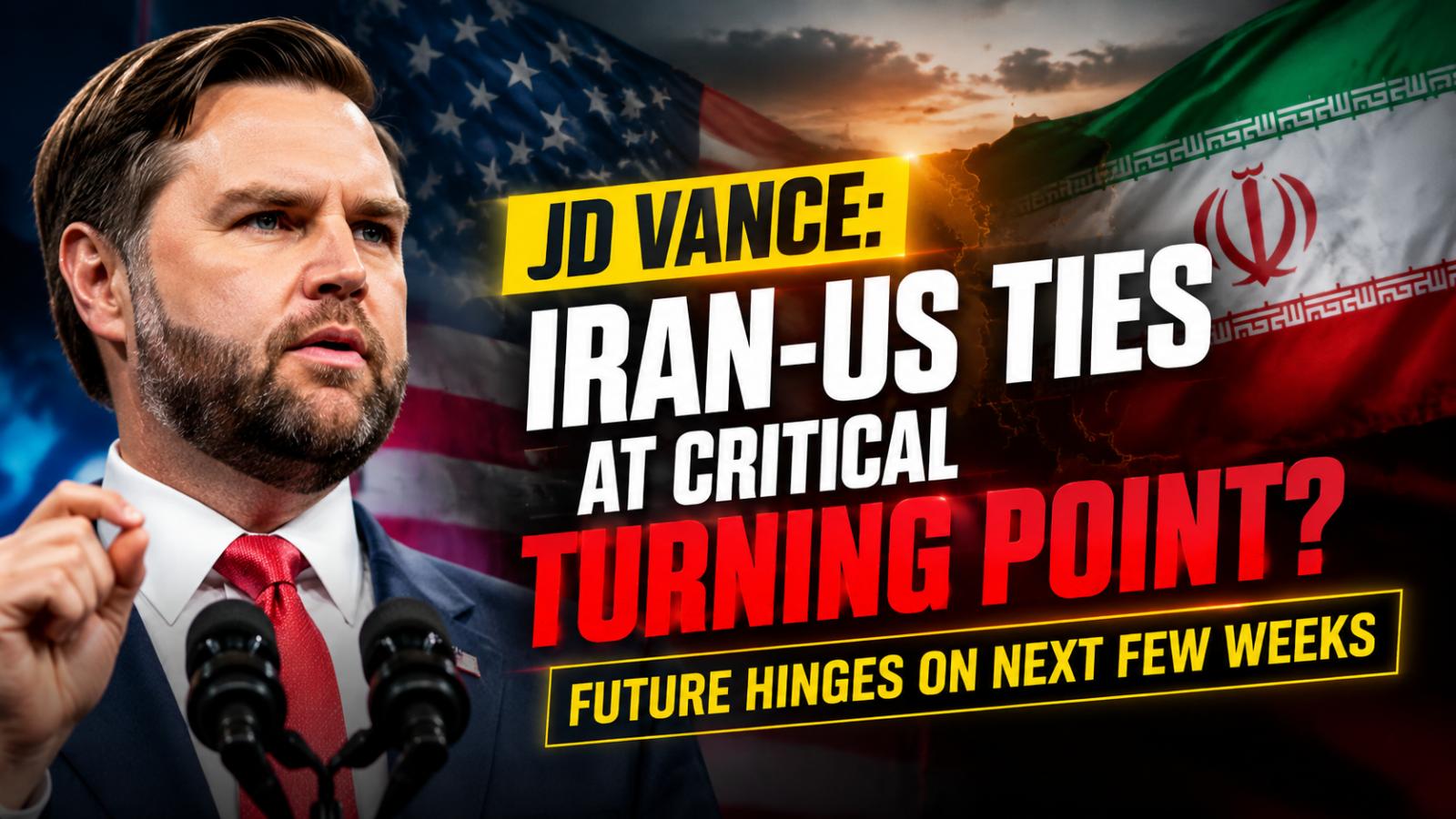
US Vice President JD Vance has suggested that the coming weeks could play a decisive role in shaping future relations between Washington and Tehran, while emphasizing that outcomes remain highly uncertain. Speaking on a media program, he described the current situation as a potentially significant turning point in long-standing tensions between the two countries, though he avoided suggesting any assured progress.
Diplomatic Pressure and Conditional Outcomes
Vance highlighted that the Trump administration’s approach toward Iran is centered on applying sustained diplomatic and economic pressure, with results depending heavily on Tehran’s response. He noted that while there is cautious optimism within parts of the administration, there is also strong skepticism about whether meaningful progress will materialize. According to him, any improvement in relations would depend entirely on how Iran engages with the leverage currently being applied by Washington.
He added that failure to respond positively could lead to continued escalation of pressure, while cooperative behavior might open the door to a shift in tone between the two countries. However, he stressed that no definitive outcome can be assumed at this stage.
Broader Regional Security Considerations
The vice president also indicated that US objectives extend beyond a traditional nuclear agreement, focusing instead on verifiable commitments and long-term monitoring mechanisms. He described discussions around broader regional stability involving Gulf states, Israel, and Lebanon as part of a wider strategic framework being considered by Washington.
According to Vance, the goal is to evaluate how any potential arrangement could contribute to a more stable security environment across the Middle East rather than focusing solely on bilateral agreements. He emphasized that multiple regional actors will influence how the situation evolves.
Ongoing Uncertainty in Negotiation Process
Referring to remarks made by senior officials, Vance characterized the current diplomatic phase as “the end of the beginning,” suggesting that negotiations are still in early stages and far from resolution. He cautioned against interpreting recent developments as final breakthroughs, noting that many variables remain in play.
He also reiterated that the administration retains multiple policy tools should negotiations stall, reinforcing the idea that both pressure and diplomacy remain active components of Washington’s strategy.