Plesetsk launch
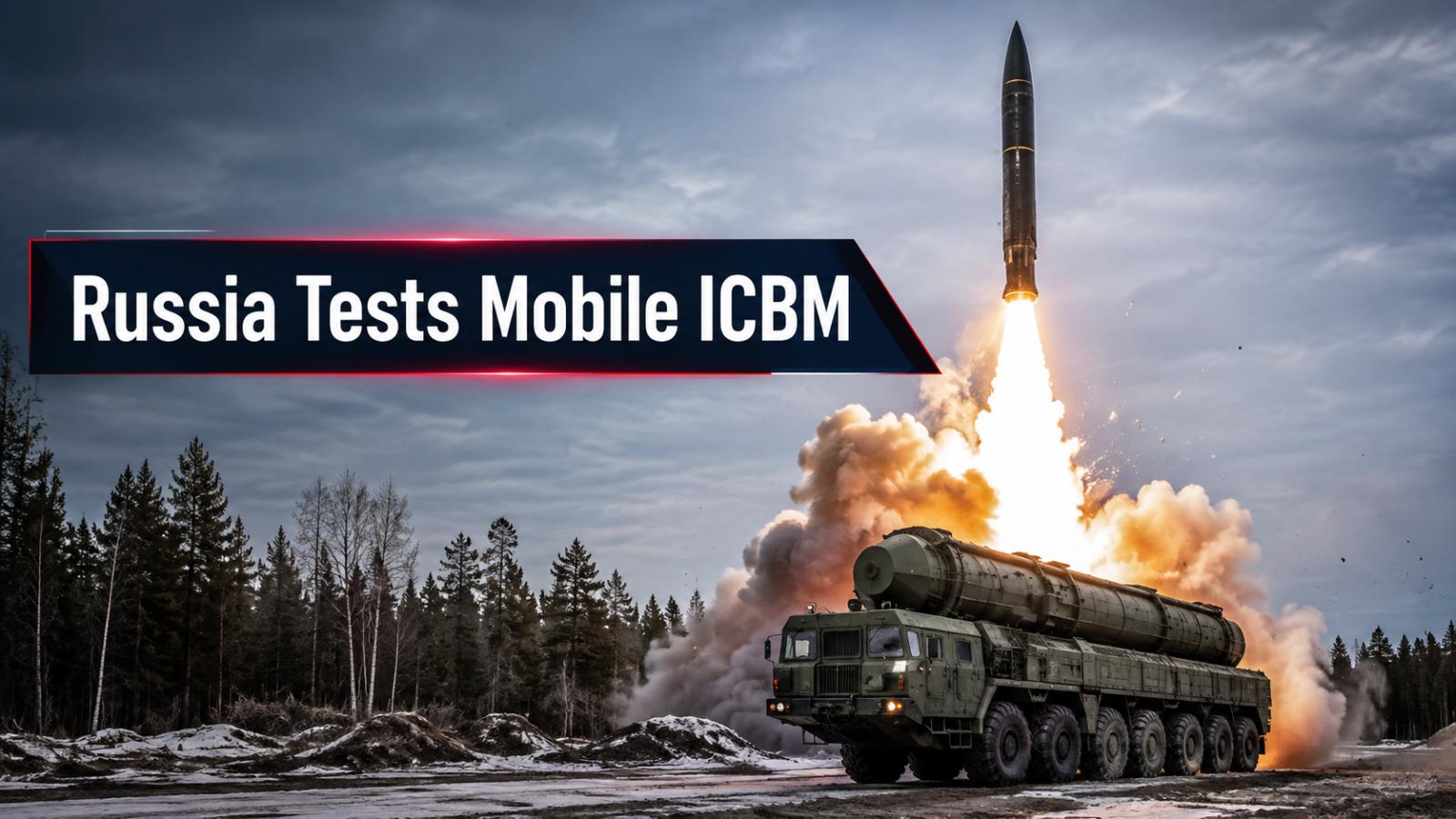
The Russian Defence Ministry said the Strategic Missile Forces carried out a combat-training launch from the Plesetsk State Test Cosmodrome in the Arkhangelsk region. According to the ministry, the weapon was a mobile-based, solid-fuel intercontinental ballistic missile. Officials said the purpose was to confirm the tactical, technical and flight characteristics of the missile system.
The exercise went beyond a standard range firing. Crews practiced moving a launch battery to a remote area, preparing the system and completing the firing sequence away from a fixed underground silo. This field deployment element provided an additional test of operational readiness.
Kura range test
The ministry said the training warheads reached the designated area at the Kura test range on the Kamchatka Peninsula. The flight crossed Russia from the northwest toward the Far East over an intercontinental distance, providing a realistic test of long-range missile performance.
Officials said all assigned tasks were completed. The Defence Ministry did not identify the exact missile model involved in the exercise. Therefore, describing the August 28 launch specifically as an RS-24 Yars test would go beyond what officials publicly confirmed.
Mobile TEL drill
A major part of the exercise involved a transporter erector launcher, commonly known as a TEL. Unlike a missile deployed permanently inside an underground silo, a mobile ICBM can move between operating locations, increasing deployment flexibility and making its position more difficult to predict.
The Strategic Missile Forces practiced redeployment, launch preparation and firing from a remote area. The exercise therefore tested more than missile performance. It also assessed crew readiness, vehicle mobility, communications and launch procedures under field conditions.
Solid fuel ICBM
Solid-fuel missiles are well suited to high-readiness operations because they generally require less launch preparation than liquid-fuel systems. Russia maintains both mobile and silo-based systems within its land-based strategic forces, including the RS-24 Yars and RS-28 Sarmat.
However, those systems should be treated as background context rather than identification of the missile fired on August 28. The official Defence Ministry statement described the tested weapon only as a mobile-based, solid-fuel intercontinental ballistic missile.
Missile flight
The launch forms part of Russia’s continuing strategic missile training programme. The Defence Ministry described the event as a combat-training launch intended to verify the missile system’s stated tactical, technical and flight characteristics rather than announce the introduction of a new weapon.
For readers following global defence developments, the most significant verified element was the combination of long-range missile flight and mobile field deployment. The exercise demonstrated how Russia’s Strategic Missile Forces train to relocate a launch unit, prepare a mobile solid-fuel ICBM and execute a launch from a remote operating area.