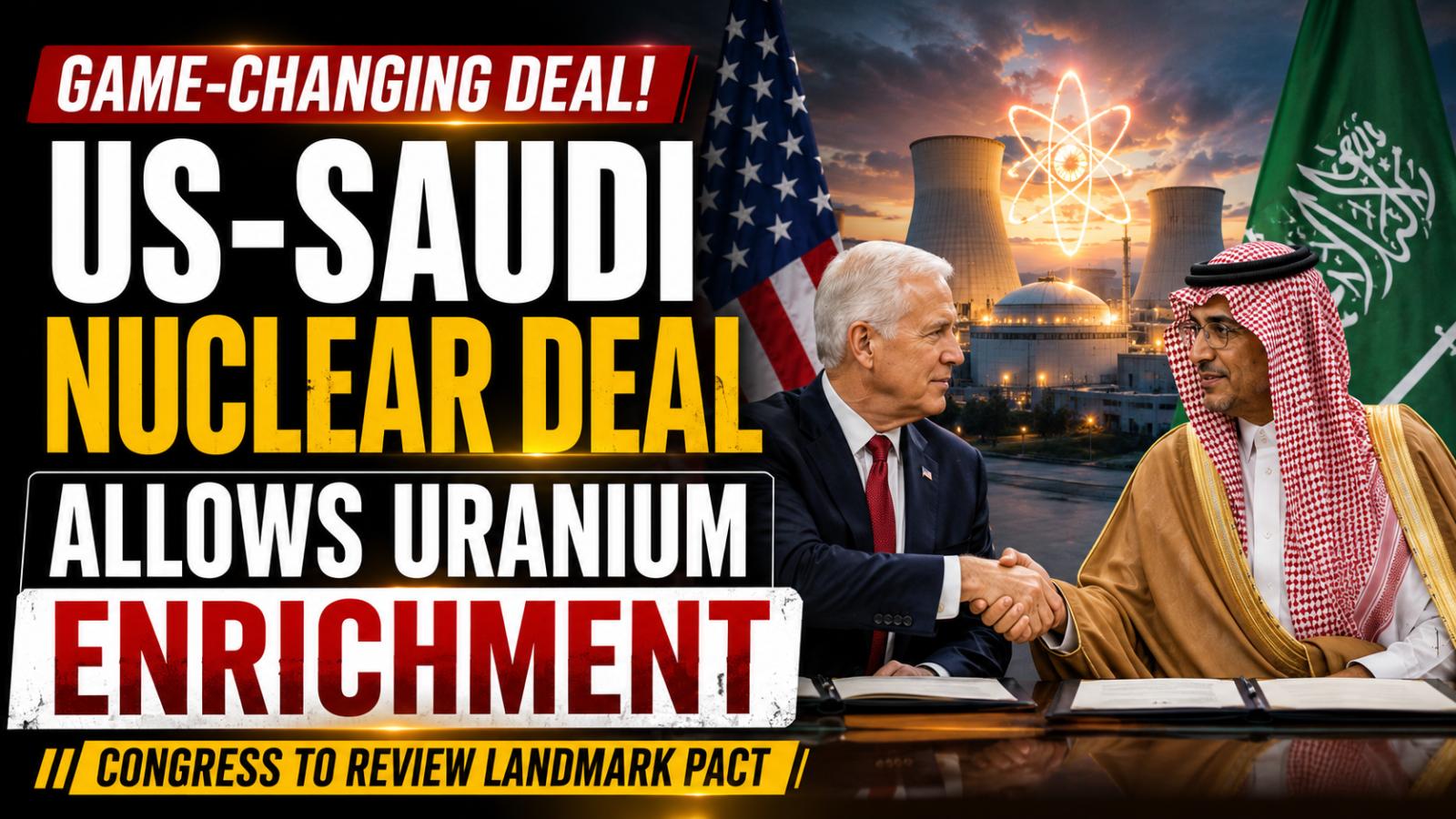
The US-Saudi nuclear deal creates a legal path for American companies to build civilian reactors in the kingdom while allowing Saudi uranium enrichment and reprocessing. The agreement promises jobs and energy security but faces scrutiny over safeguards and proliferation risks.
US-Saudi nuclear deal signed
The United States and Saudi Arabia have signed a landmark civil nuclear cooperation agreement that could reshape their energy partnership and expand the kingdom’s access to sensitive nuclear technology.
US Energy Secretary Chris Wright and Saudi Energy Minister Prince Abdulaziz bin Salman signed the peaceful nuclear cooperation agreement on Wednesday, July 22. They also approved a separate bilateral safeguards arrangement, according to the US Department of Energy.
The pact is known as a Section 123 Agreement, named after the part of the US Atomic Energy Act that governs civilian nuclear trade with foreign countries. It establishes the legal framework required for American companies to transfer nuclear reactors, equipment, fuel and technical expertise to Saudi Arabia.
Saudi uranium enrichment permitted
The agreement allows Saudi Arabia to enrich uranium and reprocess spent nuclear fuel, according to details reported after the signing. These technologies can support civilian power generation, but they can also produce materials relevant to nuclear weapons if governments misuse them.
The framework could eventually support the construction of a uranium-enrichment facility inside Saudi Arabia following a joint US-Saudi study. The agreement reportedly covers 30 years and places American firms at the centre of the kingdom’s planned nuclear programme.
That provision separates the Saudi deal from the United States’ 2009 nuclear agreement with the United Arab Emirates. The UAE accepted restrictions on domestic enrichment and fuel reprocessing, creating what US officials had promoted as a stronger nonproliferation model.
US nuclear exports and Saudi energy plans
The Energy Department said the partnership would increase American nuclear technology exports, support high-paying US jobs and strengthen energy and national security. Wright said the agreements reflected a shared commitment to deeper commercial relations and greater security cooperation.
Saudi Arabia wants nuclear power to help meet rising electricity demand, reduce its dependence on oil-fired generation and support its wider economic diversification plans. Building nuclear plants could allow the kingdom to preserve more crude oil for export while developing a broader domestic energy mix.
Westinghouse Electric Company is expected to compete for a role in the Saudi programme. Chief executive Dan Sumner called the announcement a landmark step that could expand opportunities for American industry and generate long-term investment in both countries.
Nuclear safeguards face scrutiny
The administration says the deal maintains high nuclear-safety and nonproliferation standards. However, several important safeguards remain unclear because the government has released limited technical details.
Current reporting indicates that the agreement does not require Saudi Arabia to adopt the International Atomic Energy Agency’s Additional Protocol, which gives inspectors wider access and stronger verification powers. That omission is likely to become a central issue during congressional review.
Lawmakers may also examine how the agreement controls enrichment levels, monitors nuclear material, restricts access to sensitive technology and responds to possible violations. These questions matter because enrichment and reprocessing can serve both civilian and military purposes.
Congress reviews nuclear agreement
The administration will send the agreement to the US Congress for a 90-day review under the Atomic Energy Act. Congress can approve the pact by allowing the review period to expire or attempt to block it through legislation.
The timing adds political sensitivity. Washington remains involved in a widening conflict with Iran while arguing that Tehran must not gain access to nuclear-weapons capability. Allowing Saudi Arabia to enrich uranium may therefore prompt accusations of inconsistent nuclear policy and increase concerns about a regional arms race.
Supporters say US involvement offers stronger oversight than a Saudi partnership with China or Russia. Critics argue that permitting enrichment weakens established nonproliferation standards. The agreement’s long-term significance will depend on the safeguards, inspection rules and enforcement measures disclosed during the congressional review.