Andy Burnham Cabinet Reshuffle Removes Starmer Allies
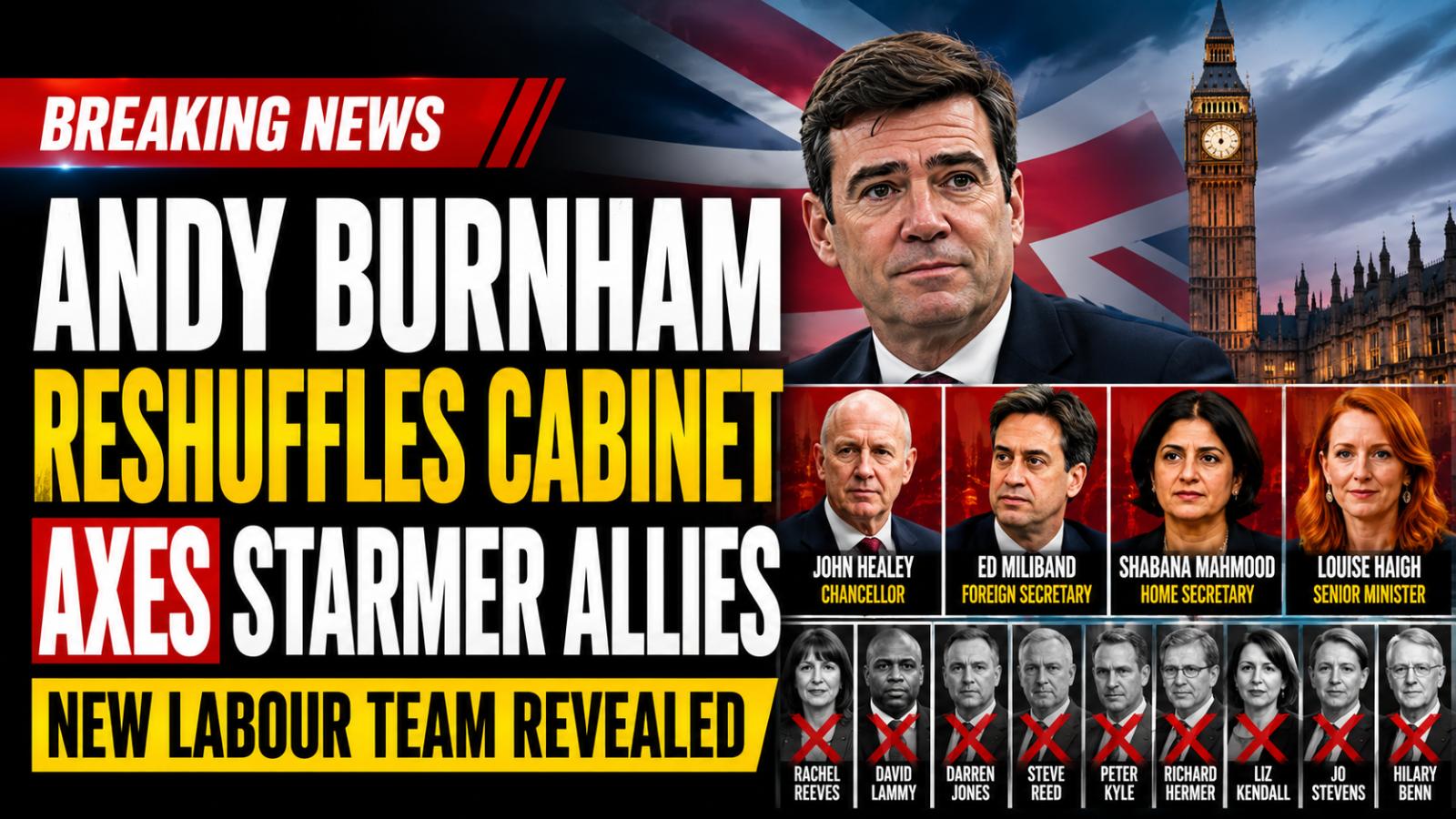
Andy Burnham’s cabinet reshuffle has placed trusted allies and experienced Labour figures in senior government roles while removing several ministers associated with Keir Starmer. The appointments signal a change in political direction as the new prime minister begins shaping his economic and domestic agenda.
Andy Burnham Cabinet Takes Shape
Prime Minister Andy Burnham has formed his first cabinet after succeeding Keir Starmer on July 20, making several major appointments while removing prominent figures from the previous administration. Burnham became prime minister after meeting King Charles III and being invited to form a government.
Burnham had promised to draw talent from different parts of the Labour Party. His final team includes several experienced ministers, returning figures and political allies who supported his leadership. However, the scale of the departures also shows that he intends to establish control quickly rather than preserve most of Starmer’s governing team.
The reshuffle accompanies Burnham’s promise to pursue a new economic model, reindustrialise Britain, decentralise political power and provide relief for households facing cost-of-living pressure.
John Healey Becomes Chancellor
John Healey has been appointed Chancellor of the Exchequer, replacing Rachel Reeves in one of the most significant changes announced by the new prime minister. Healey previously served as defence secretary and has extensive government experience dating back to the Labour administrations of Tony Blair and Gordon Brown.
His appointment suggests that defence investment, industrial policy and economic renewal could become closely connected under Burnham’s government. Healey said after accepting the role that the administration would focus on building a new economy and advancing the interests of working people.
Shabana Mahmood remains Home Secretary, providing continuity in a department responsible for immigration, policing and national security. Her retention also shows that Burnham has not removed every senior figure who served under Starmer.
Ed Miliband and Louise Haigh Gain Senior Roles
Former Labour leader Ed Miliband has become Foreign Secretary, keeping him at the centre of government after speculation that he could receive an economic role. His appointment gives an experienced cabinet figure responsibility for Britain’s international relations during a period of continuing geopolitical and economic uncertainty.
Louise Haigh has returned to cabinet as First Secretary of State and Chancellor of the Duchy of Lancaster. As one of Burnham’s key political allies, she is expected to coordinate government activity and help oversee delivery across Whitehall. The seniority of the appointment effectively makes her one of the most powerful figures in the new administration.
Other confirmed changes include Yvette Cooper moving to the health portfolio, Wes Streeting becoming defence secretary and Angela Rayner returning as housing secretary.
Starmer-Era Ministers Leave Government
Rachel Reeves has left the Treasury following Burnham’s decision to appoint Healey as Chancellor. Her departure marks a clear break from the fiscal leadership of the Starmer government and gives Burnham greater freedom to develop his promised economic programme.
David Lammy has also left government following the leadership transition. Lammy said publicly that he would have been proud to continue serving but accepted the new prime minister’s right to choose his team. Peter Kyle was another senior minister confirmed to have departed.
Several other Starmer-associated figures, including Jo Stevens, also lost their positions as Burnham moved to reshape the government. The changes have widely been interpreted as an effort to remove much of the former prime minister’s inner circle while promoting figures more closely aligned with Burnham’s leadership.
Reshuffle Signals New Labour Direction
The new Labour government now faces pressure to turn its personnel changes into visible policy results. Burnham has promised action on living costs, housing, industrial renewal and regional inequality, but he inherits weak economic growth, strained public finances and rising political competition.
His cabinet combines continuity in some departments with a decisive shift in senior economic and political leadership. The removal of several Starmer-era ministers may help Burnham establish authority, but it also creates the risk of deepening divisions inside Labour.
Relevant internal links include the UK Politics category, Labour Party news archive, Keir Starmer resignation coverage, Andy Burnham leadership profile and articles on Britain’s economy and cost-of-living policies.