Edit

Russia Jet-Powered Drones Intensify Daytime Attacks on Kyiv

Russia Jet-Powered Drones Intensify Daytime Attacks on Kyiv

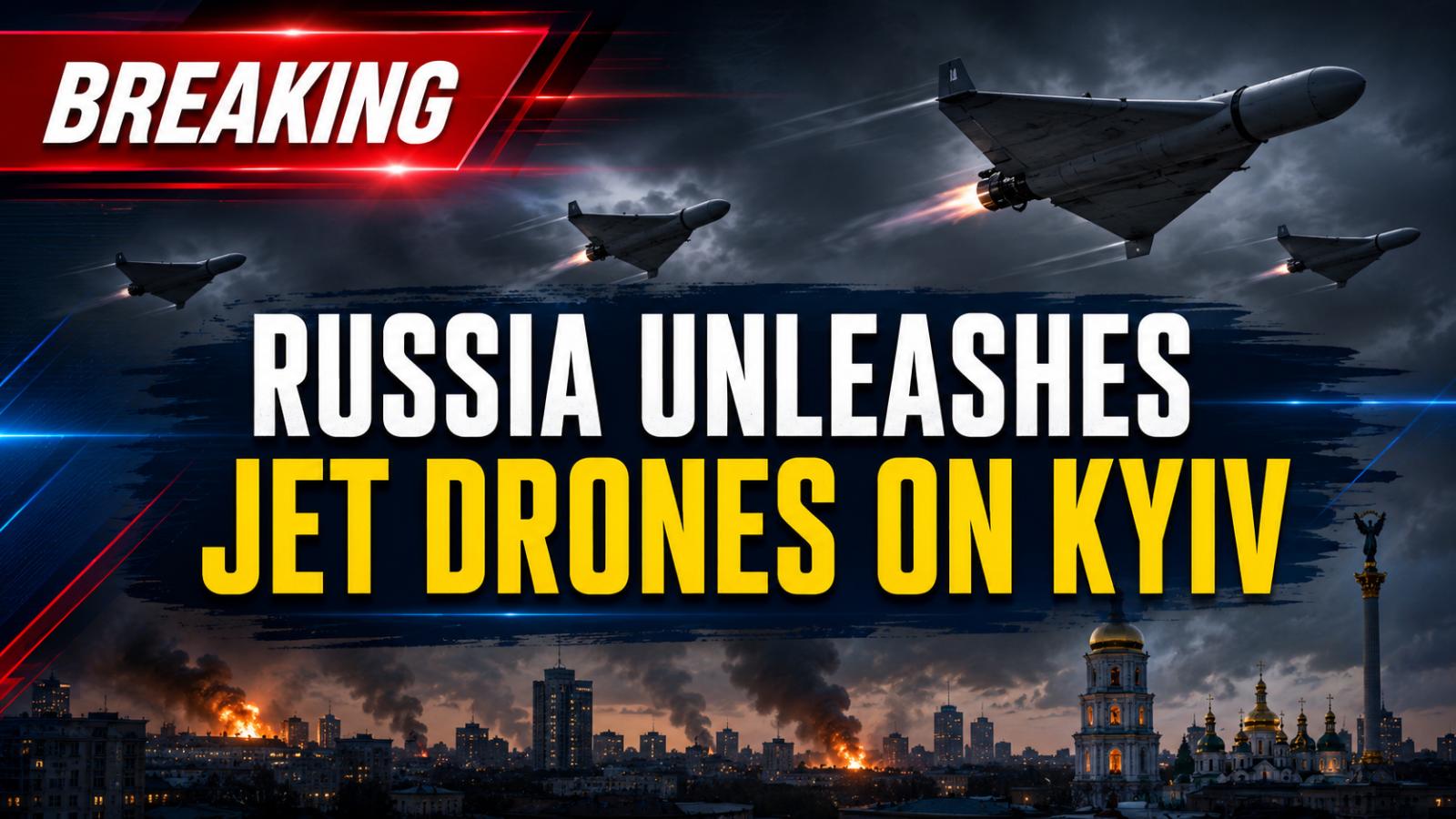
Russia’s growing use of jet-powered drones is creating a new challenge for Ukraine’s air-defence network, with Kyiv experiencing longer daytime air raid warnings. Ukrainian President Volodymyr Zelenskyy said around 800 jet-powered drones were among nearly 1,500 unmanned aircraft launched over four days.

Kyiv Drone Attacks

Russia has increasingly used daytime drone waves around the Ukrainian capital, disrupting businesses, emergency services and daily routines. Kyiv recorded eight air raid alerts by lunchtime on Monday, highlighting how frequently residents are now being forced to react to incoming threats.

The presence of additional drones after an initial strike can also complicate rescue operations. Firefighters and other emergency crews may have to leave damaged locations when another threat appears, increasing the risk that fires and structural damage will worsen before teams can safely return.

Shahed Drones Gain Speed

The newer generation of Shahed-type drones can reportedly cruise at roughly 200 to 250 mph, about twice the speed of older piston-powered versions that travel near 115 mph. That increased speed makes them more difficult for Ukraine’s existing low-cost interceptor drones to catch and destroy.

Shahed drones were originally developed in Iran before the technology reached Russia. Moscow has since expanded domestic production and introduced newer jet-powered variants, including the Geran-4 and Geran-5.

Geran-4 Drone Campaign

One Geran-4 reportedly struck an ammunition storage site in Myla, west of Kyiv, triggering hours of secondary explosions and damaging surrounding property. The source article reports 38 deaths in the attack.

Ukraine says the scale of production is also increasing rapidly. Defence technology adviser Serhii Beskrestnov said at least 2,500 jet-powered drones were launched against Ukraine during August, compared with about 1,500 in July. Some recovered components reportedly carried production dates only days before the weapons were launched.

Ukraine Air Defence

Ukraine previously built a network of inexpensive ground-launched interceptor drones designed to destroy slower Shahed models. According to the source article, those systems helped raise interception rates above 90%, but the arrival of faster jet-powered variants is putting that approach under pressure.

Zelenskyy said Ukrainian engineers are already developing faster interceptors specifically for the new threat. Four companies have produced relevant systems, with one technology described by the president as showing particularly strong results.

Drone Warfare Intensifies

The shift toward faster, mass-produced drones shows how quickly aerial warfare is evolving. Russia can increase pressure by launching large numbers of comparatively inexpensive weapons, while Ukraine must develop interceptors fast enough to catch them without relying entirely on costly aircraft or conventional air-defence missiles.

That cost equation may become increasingly important as the campaign continues. Ukraine now faces the challenge of maintaining high interception rates while Russia expands production and uses jet-powered drones in sustained daytime waves. The outcome could shape how effectively Kyiv protects cities, infrastructure and emergency services during the coming months. 

What is your response?

joyful Joyful 0%
cool Cool 0%
thrilled Thrilled 0%
upset Upset 0%
unhappy Unhappy 0%
AD
AD
AD
AD
AD
AD
AD
AD
AD