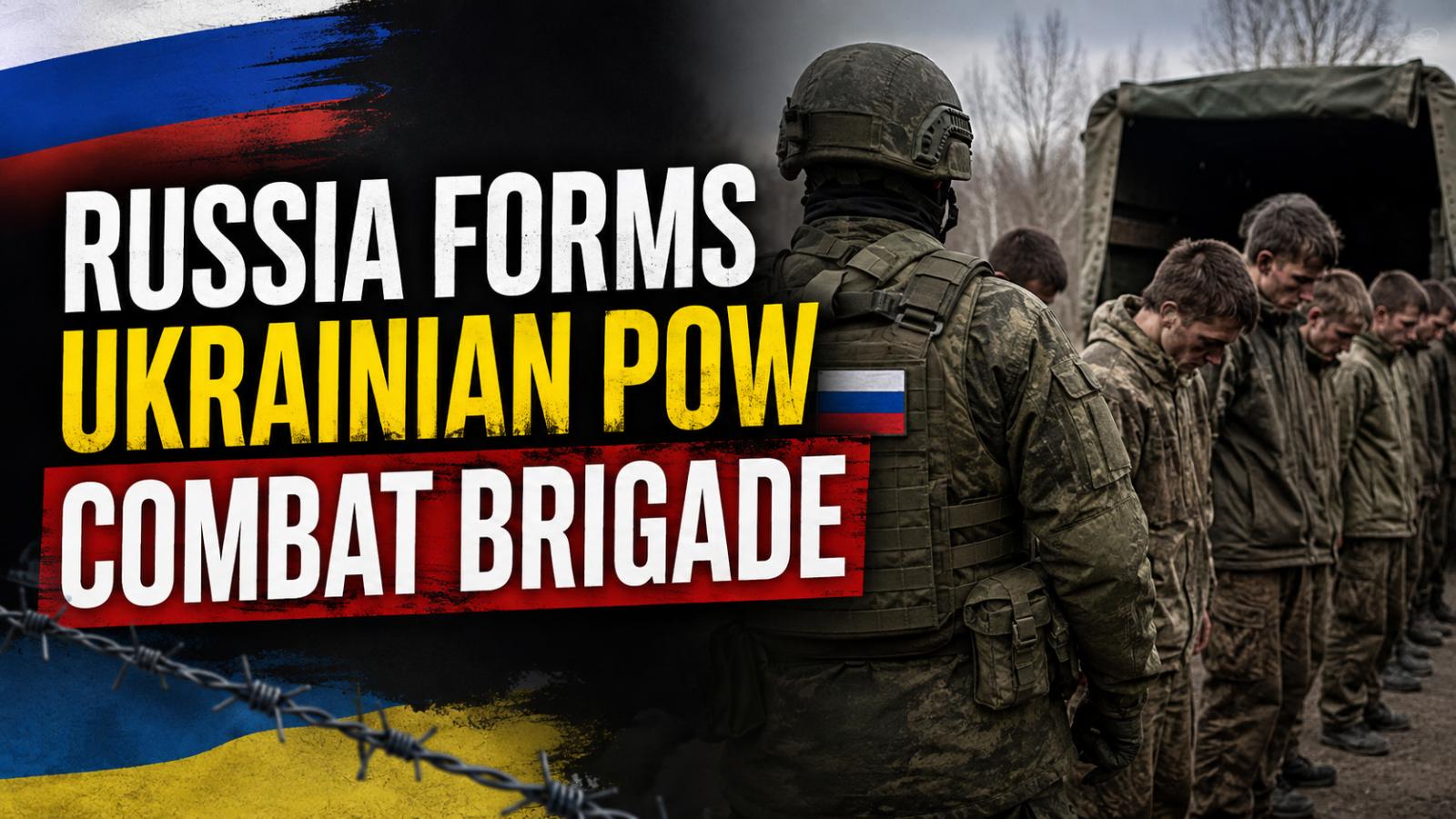
Russia has merged several irregular combat units into a new Ukrainian Volunteer Spetsnaz Brigade, according to the Institute for the Study of War (ISW). The move has renewed concerns over the alleged use of Ukrainian prisoners of war in frontline combat, raising questions about compliance with international humanitarian law.
Russia Forms Brigade Using Ukrainian POWs, Says ISW
Russia's Ministry of Defence has consolidated five irregular combat formations into a newly created Ukrainian Volunteer Spetsnaz Brigade, according to the Institute for the Study of War (ISW). The announcement marks what analysts describe as the latest stage in Russia's alleged effort to organize military units largely composed of captured Ukrainian soldiers and alleged defectors. Ukrainian officials and independent observers argue that the move formalizes a practice that has developed over several years despite international legal restrictions.
Ukrainian Volunteer Spetsnaz Brigade
According to the Russian Ministry of Defence's Volunteer Corps, the newly established brigade combines the Maxim Krivonos Battalion, Alexei Berest Battalion, Alexander Matrosov Detachment, Martyn Pushkar Detachment, and Slobodskoy Detachment under a single brigade-level command. Russian military sources continue to describe the formation as a volunteer unit.
However, ISW reported on August 6 that these formations are believed to rely heavily on Ukrainian prisoners of war and soldiers whom Russia claims voluntarily switched sides. The think tank noted that Russian military bloggers discussing the announcement avoided mentioning the brigade's reported dependence on captured Ukrainian personnel while continuing to promote its volunteer identity.
ISW Reports Earlier POW Units
ISW stated that this is not the first documented effort by Russia to build military formations from captured Ukrainian troops. The organization reported that evidence of coercive recruitment attempts first appeared in November 2022 during the early stages of the full-scale war.
By December 2023, Russian-backed authorities in the self-proclaimed Donetsk People's Republic had reportedly established the Bogdan Khmelnitsky Battalion within the Kaskad formation. According to ISW, that battalion was also composed primarily of Ukrainian prisoners of war. The newly announced brigade appears to expand this model by bringing several similar units together under one command structure, potentially increasing their operational role on the battlefield.
Geneva Convention Concerns
International humanitarian law places strict limits on how prisoners of war may be treated. The Geneva Convention relative to the Treatment of Prisoners of War prohibits detaining powers from compelling captured military personnel to participate in military operations. It also forbids placing prisoners in situations that expose them directly to combat.
If the allegations reported by Ukrainian authorities and ISW are accurate, legal experts say such practices could raise serious questions under the Geneva Convention. Russia has consistently maintained that personnel joining volunteer formations do so willingly, while Ukraine disputes those claims and argues that coercion is involved.
Ukraine Continues Accountability Efforts
Kyiv has continued pursuing legal and diplomatic measures against Russian officials over the treatment of captured Ukrainian service members. Ukrainian authorities have imposed sanctions on Russian judges accused of conducting politically motivated trials involving Ukrainian prisoners of war.
Ukrainian officials also state that thousands of military personnel remain in Russian captivity. They argue that international organizations have documented repeated allegations of abuse, mistreatment, and violations of prisoner rights. Russia has rejected many of these accusations.
The creation of the Ukrainian Volunteer Spetsnaz Brigade is likely to draw additional international scrutiny as the war continues. Human rights organizations and international observers are expected to closely monitor whether the unit's reported composition complies with international humanitarian law. The latest development also highlights the continuing humanitarian challenges surrounding prisoners of war, an issue that remains central to diplomatic discussions and future accountability efforts during the ongoing Russia-Ukraine conflict.