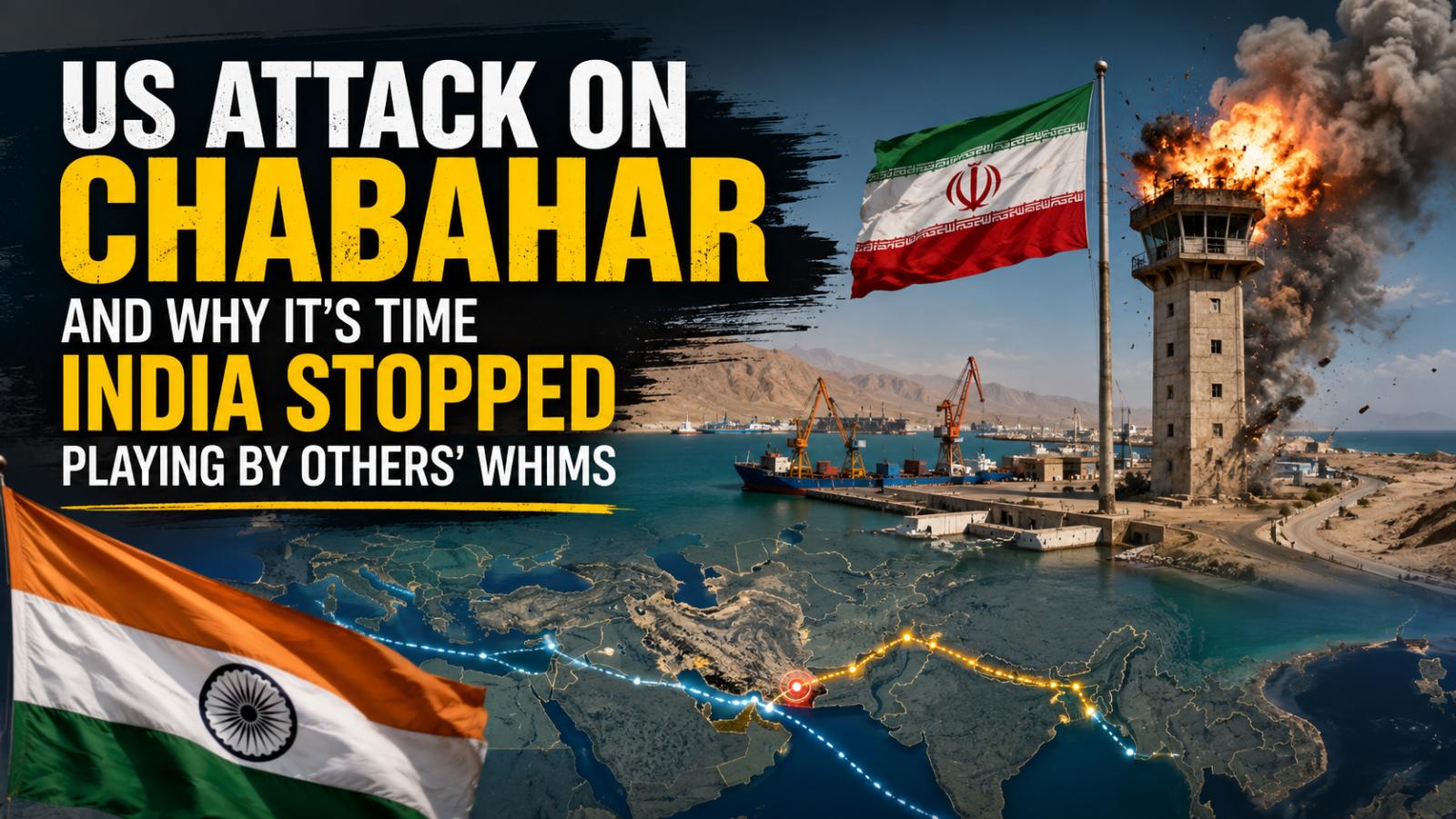
The reported US strike on a surveillance tower at Iran’s Chabahar port complex has renewed questions about India’s long-term strategy in the region. However, the incident must be described accurately. US Central Command said its forces destroyed a surveillance tower at Shahid Kalantari Port that it linked to an Iranian maritime monitoring network. Iranian port authorities disputed that characterisation, describing the installation as a civilian maritime traffic and rescue facility.
India’s investment is centred on the separate Shahid Beheshti terminal. No official evidence currently shows that the Indian-operated terminal was destroyed. Headlines claiming that the United States “destroyed Chabahar” therefore exaggerate the known damage and risk misleading readers.
India’s Chabahar Port Investment
India has treated Chabahar as a strategic connectivity project for more than a decade. In May 2016, India, Iran and Afghanistan signed a trilateral transit agreement intended to improve access to Afghanistan and Central Asia without relying on routes through Pakistan.
India Ports Global Limited later began operating parts of the Shahid Beheshti terminal. On May 13, 2024, IPGL signed a 10-year contract with Iran’s Ports and Maritime Organisation to equip and operate the terminal. India committed up to $120 million for port equipment alongside a separate credit facility for infrastructure projects.
That agreement gave India a longer operational horizon, but it did not remove the project’s exposure to sanctions, regional conflict and pressure from Washington.
Iran Sanctions and India’s Options
The United States previously provided sanctions relief that allowed India-linked work at Chabahar to continue. India’s Ministry of External Affairs confirmed that a conditional waiver was extended until April 26, 2026, while New Delhi remained in discussions with Washington over the project’s future.
This creates a difficult policy choice. Ignoring sanctions could expose Indian companies and financial institutions to penalties. Retreating whenever exemptions expire, however, weakens India’s credibility as a long-term infrastructure partner.
Strategic autonomy does not mean disregarding financial risk. It means building payment systems, insurance arrangements, diplomatic safeguards and commercial structures that prevent an important project from depending entirely on another government’s temporary permission.
INSTC Route and Eurasian Trade
Chabahar gives India a potential maritime gateway to Afghanistan and Central Asia. It can also complement the International North-South Transport Corridor, which links India with Iran, the Caspian region and Russia through a combination of sea, road and rail networks.
The port should not be presented as a simple replacement for the Suez Canal. Chabahar and the INSTC still face infrastructure gaps, customs delays, financing problems and geopolitical disruption. Their strategic value is real, but claims that the route is automatically cheaper or faster require shipment-specific evidence.
Chabahar also offers India a strategic counterweight to Pakistan’s Gwadar Port, where China has developed a major presence. Losing influence in southeastern Iran would reduce India’s options while allowing China and Pakistan greater space across the Arabian Sea and Eurasian trade network.
India Needs a Clear Chabahar Policy
The strike shows how quickly military escalation can threaten infrastructure around Chabahar. It does not prove that India’s terminal has been destroyed, nor does it justify an impulsive decision to abandon the project.
India must first assess the physical damage, operational safety and legal exposure. It should then state clearly whether it intends to maintain, pause or restructure its involvement. Continuing without a financing and sanctions strategy would waste public money, while withdrawing without securing an alternative route would surrender valuable strategic ground.
India cannot control every war, sanction or policy shift. It can control whether its Eurasian strategy remains reactive. Chabahar needs a durable national policy based on verified risks, realistic trade volumes and long-term diplomatic commitments—not temporary waivers or exaggerated geopolitical claims.