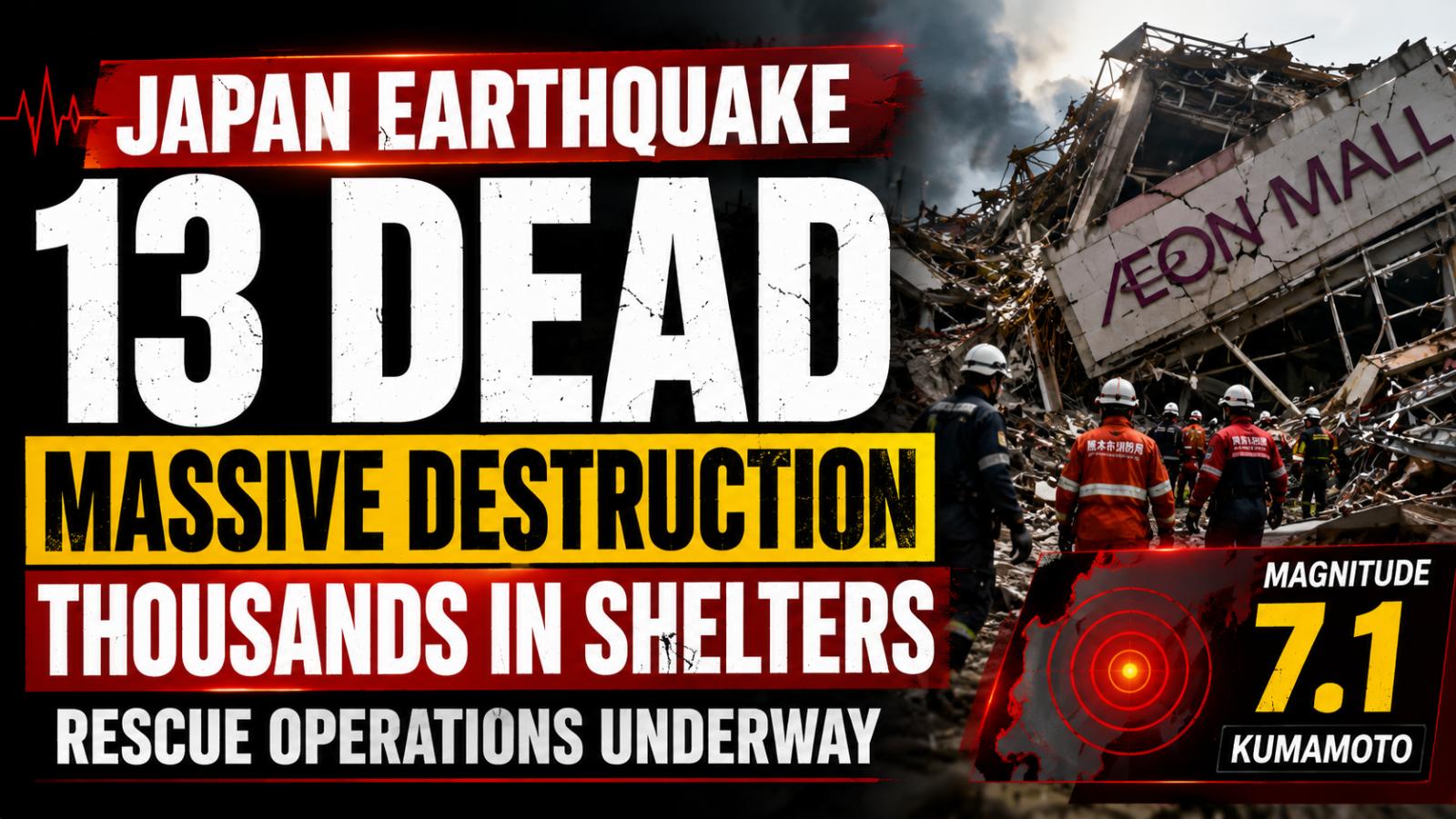
At least 13 people have died after a magnitude 7.1 earthquake struck Japan’s Kumamoto region on July 28, damaging buildings, roads and essential services across parts of Kyushu. Rescue crews continued searching collapsed structures on Wednesday as tens of thousands of residents faced evacuation orders, power cuts and the threat of further strong tremors.
Japan earthquake death toll reaches 13
Prime Minister Sanae Takaichi confirmed the revised death toll on July 29 and said emergency teams were racing to reach people believed to be trapped under debris. The government mobilized police, firefighters and Self-Defense Forces as authorities assessed damage across Kumamoto and nearby prefectures.
The earthquake struck at about 4:27 p.m. local time on July 28, with its epicentre roughly 20 kilometres south of Kumamoto City. The Japan Meteorological Agency recorded a magnitude of 7.1 and a maximum seismic intensity of 7 in the hardest-hit areas.
Officials warned residents to remain alert for powerful aftershocks and landslides during the coming week. Damaged roads and disrupted transport links have made some rescue operations more difficult.
Kumamoto mall collapse triggers major rescue effort
One of the largest operations focused on Aeon Mall Kumamoto, where part of the shopping centre collapsed after an explosion of unknown origin following the quake. Authorities are investigating whether a gas leak caused the blast.
Rescue workers pulled eight people from the wreckage. Two women in their twenties were confirmed dead, while other victims suffered injuries. Around 20 to 30 mall employees were initially unaccounted for, according to local reports cited in official disaster coverage.
The mall had recently reopened after redevelopment linked to damage from the 2016 Kumamoto earthquakes. The renewed destruction has become one of the most visible symbols of the latest disaster.
Factory collapse and power outages deepen crisis
Rescue teams also searched a Nippon Paper Industries facility after part of a chimney collapsed. Seven workers were reported missing, while several others suffered serious injuries.
The quake damaged bridges, highways and local roads, creating large cracks and slowing emergency traffic. More than 36,000 homes remained without electricity on Wednesday, while hospitals in some areas struggled with power failures and a surge in injured patients.
One hospital in Uki said it could no longer operate normally because of the outage. Another stopped accepting new patients after treating dozens of people injured during the earthquake.
Major manufacturers, including Honda and Tokyo Electron, suspended operations at regional plants. Taiwan Semiconductor Manufacturing Company temporarily evacuated workers before beginning a gradual restart.
Thousands seek shelter across Kyushu
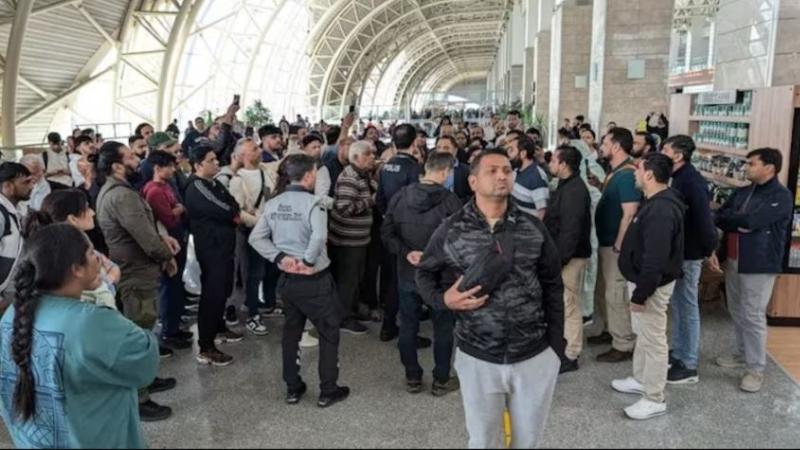
Authorities instructed about 260,000 people to move to evacuation centres, although the number staying in shelters was lower. Emergency officials also raised concerns about heat-related illness as temperatures approached 34 degrees Celsius while many households remained without electricity.
Rail services, including high-speed trains, faced disruption, and several passengers reportedly suffered injuries. Authorities said nearby nuclear facilities showed no major irregularities after the quake.
Japan sits along the Pacific Ring of Fire and regularly experiences strong earthquakes because several tectonic plates meet beneath and around the country. The Kumamoto region also suffered a destructive series of earthquakes in 2016 that killed hundreds of people and damaged thousands of buildings.
The latest disaster shows why rapid alerts, earthquake-resistant construction and secure evacuation routes remain critical. Rescue teams are still assessing the full scale of the damage, and the casualty count may change as searches continue.